News

  • Lüders Lines in Copper Tube Bending

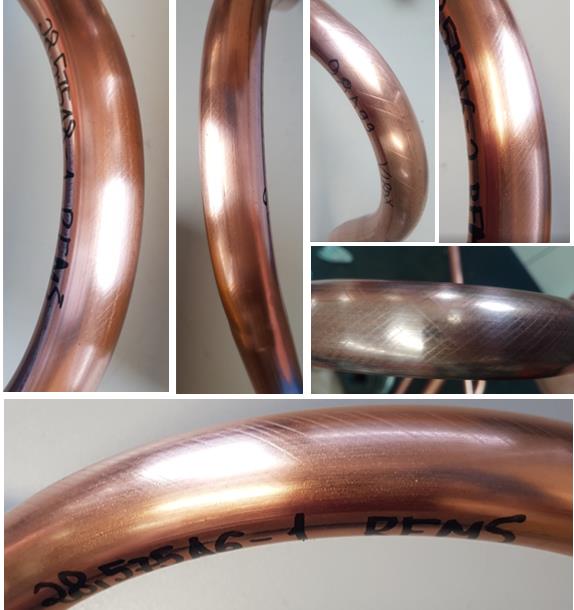
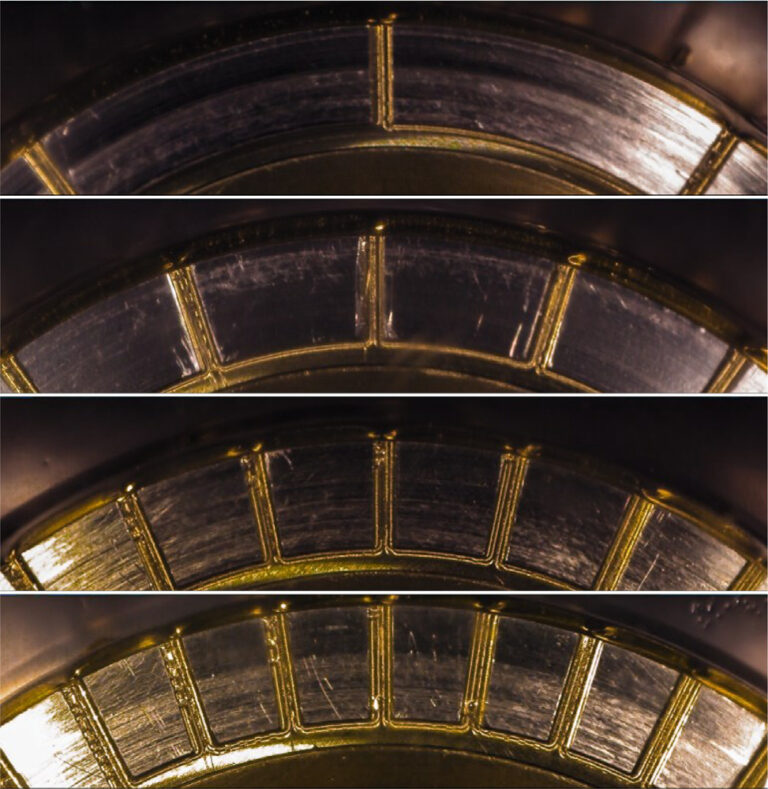
    This project, developed with Halcor, investigates why visible Lüders lines form on hard copper tubes during bending and how their appearance can be predicted before production. Using industrial bending-test data, material characterization, geometrical measurements, semi-empirical formulas and microscopy, the work turns a surface-quality defect into practical process guidance for copper tube manufacturing.

  • Digitization of the Last European Elephant

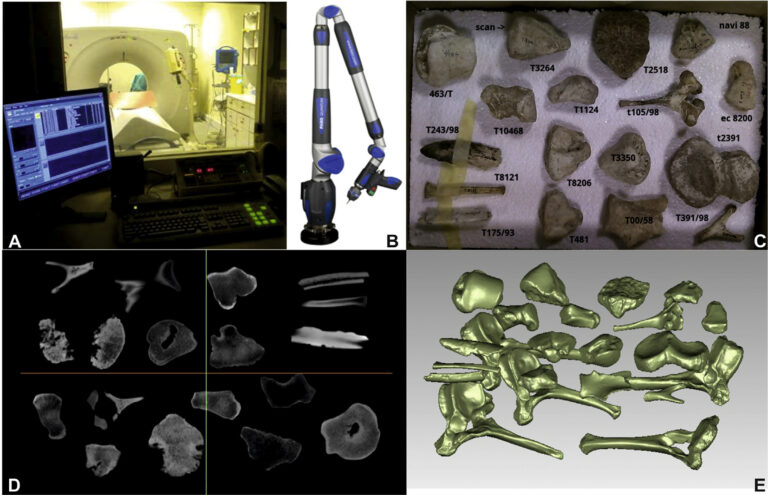
    This project brings engineering tools into palaeontology by digitizing, modelling and 3D printing skeletal remains of Palaeoloxodon tiliensis, the dwarf elephant from Tilos considered the last European elephant. By combining CT scanning, laser scanning, CAD modelling, allometric analysis and additive manufacturing, the work creates accurate digital and physical replicas for research, comparison, exhibition and education.

  • Rail Grease Characterization

    For STASY S.A., MD-Lab developed a repeatable laboratory procedure for assessing the thermal behavior of old rail lubricating grease under controlled heating conditions. MD-Lab designed the thermal-test workflow, configured the heating and temperature-monitoring setup, recorded temperature history and timed observations, and prepared the technical documentation. Supporting chemical analysis was carried out separately by the Fuels and Lubricants Technology Laboratory of NTUA.

  • Restoration of the French Wharf of Lavrion

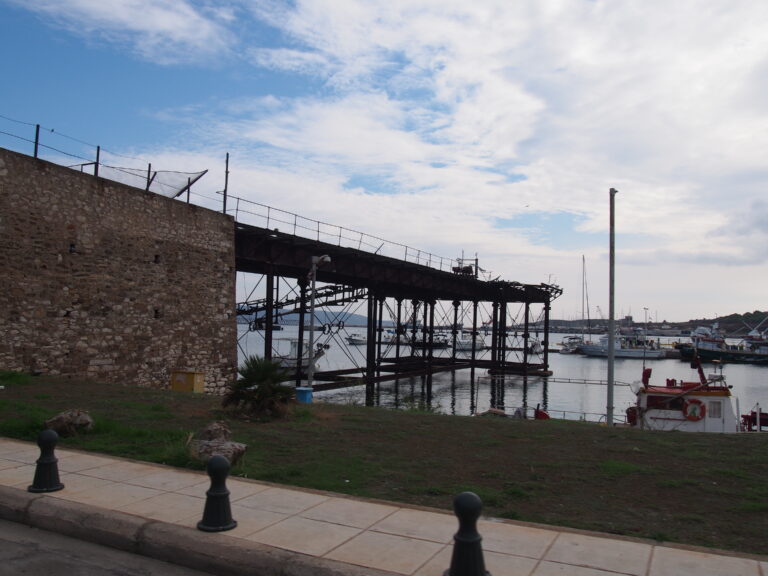
    MD-Lab documented and interpreted the loading mechanisms of the French Wharf of Lavrion, an 1888 industrial-heritage structure built for the movement of minerals, coal and commercial goods. The project turns a corroded and partly incomplete machine system into a clear engineering narrative for restoration, public interpretation and accessible reuse.

  • Gear Optimization

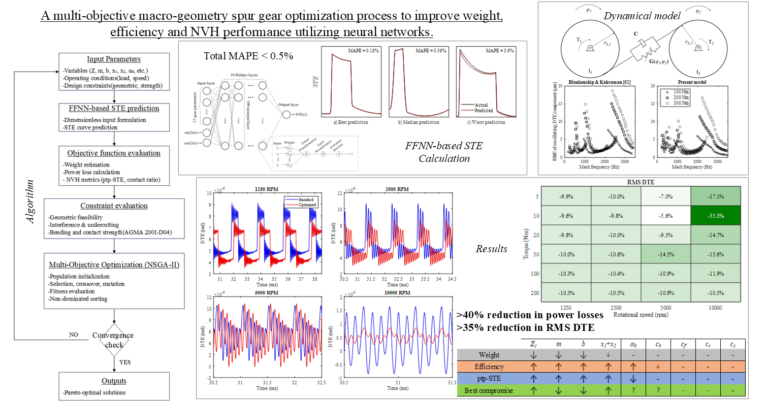
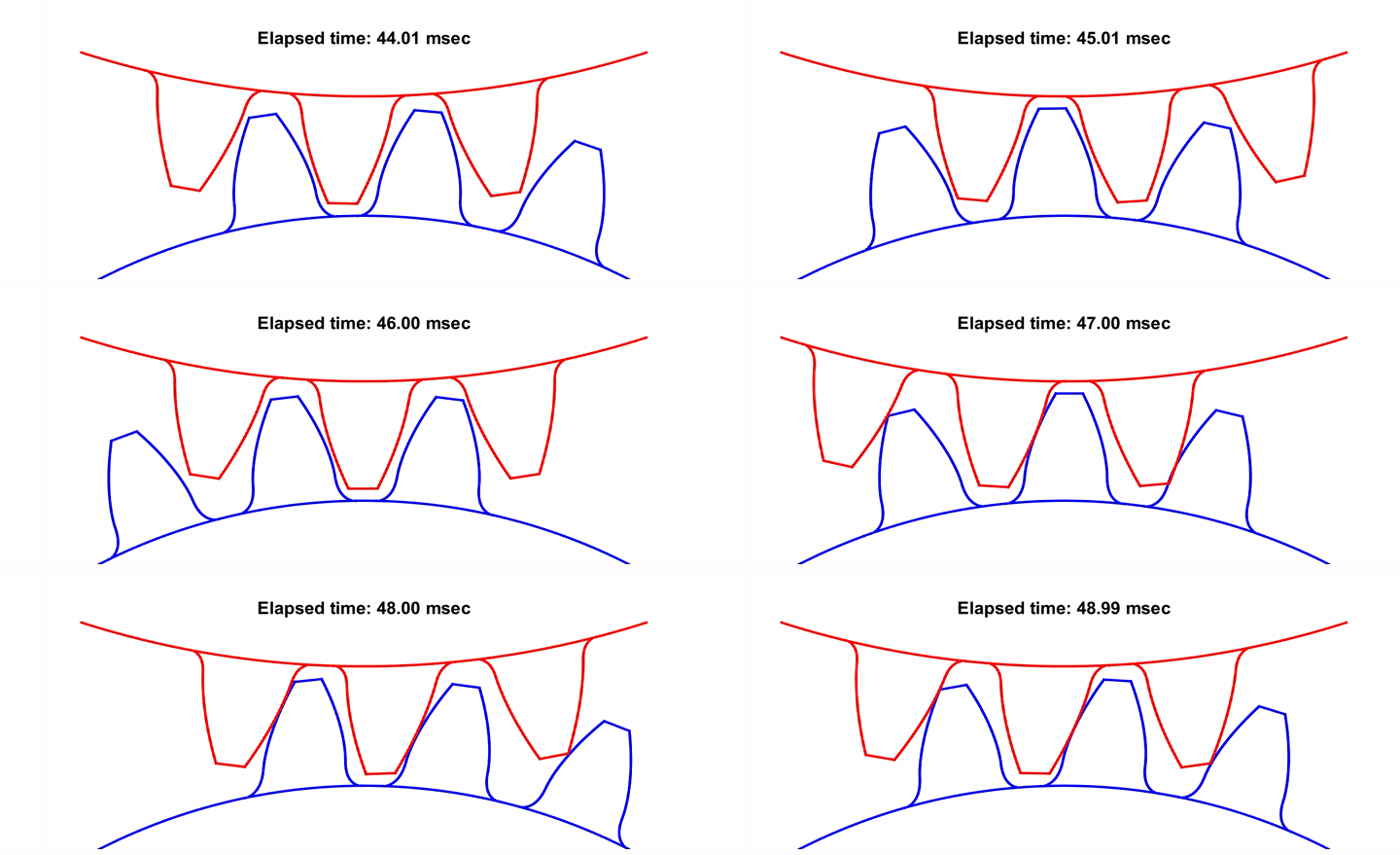
    Multi-objective optimization of gear tooth profiles to improve weight, efficiency, dynamic behavior, and wear performance, focusing on both involute macro-geometry and free-form non-involute profiles. Key results include more than 40% reduction in power losses and 35% reduction in vibration RMS for optimized involute gears. For free-form gears, reductions of up to 55% in average wear depth and 70% in maximum wear depth have been achieved.

  • Gear Dynamics

    MD-Lab research on gear dynamics develops reduced-order, nonlinear and optimization-ready simulation models for spur gear transmissions. The work connects static and dynamic transmission error, load-dependent mesh stiffness, intermittent contact, tooth eigenvibrations, macro-geometry optimization and high-pressure-angle gear design.

  • Plastic Gears

    Research on plastic gear transmissions at MD-Lab combines material-model development, finite-element and neural-network surrogate modelling, dynamic/NVH simulation, and additive manufacturing technologies. Key results include neural-network surrogates that reproduce finite-element static transmission error curves for polymer gears with 0.49% MAPE, dynamic simulations showing reduced vibration levels compared with metallic gearsets, and additive-manufacturing studies that quantify FDM and other 3D-printing accuracy limits while investigating wear resistance and wear patterns in printed gears.

  • Magnetic Gears

    MD-Lab research on coaxial magnetic gears develops fast analytical and hybrid electromagnetic models for torque prediction, topology evaluation, nonlinear dynamic response and eddy-current loss estimation. The work supports the design of contactless transmissions with reduced wear, low noise, inherent overload protection and computationally efficient early-stage optimization.