Lüders Lines in Copper Tube Bending
Predictive Model for Lüders Lines in Copper Tube Bending
This project, developed with Halcor, investigates why visible Lüders lines form on hard copper tubes during bending and how their appearance can be predicted before production. Using industrial bending-test data, material characterization, geometrical measurements, semi-empirical formulas and microscopy, the work turns a surface-quality defect into practical process guidance for copper tube manufacturing.
Project Scope and Industrial Problem
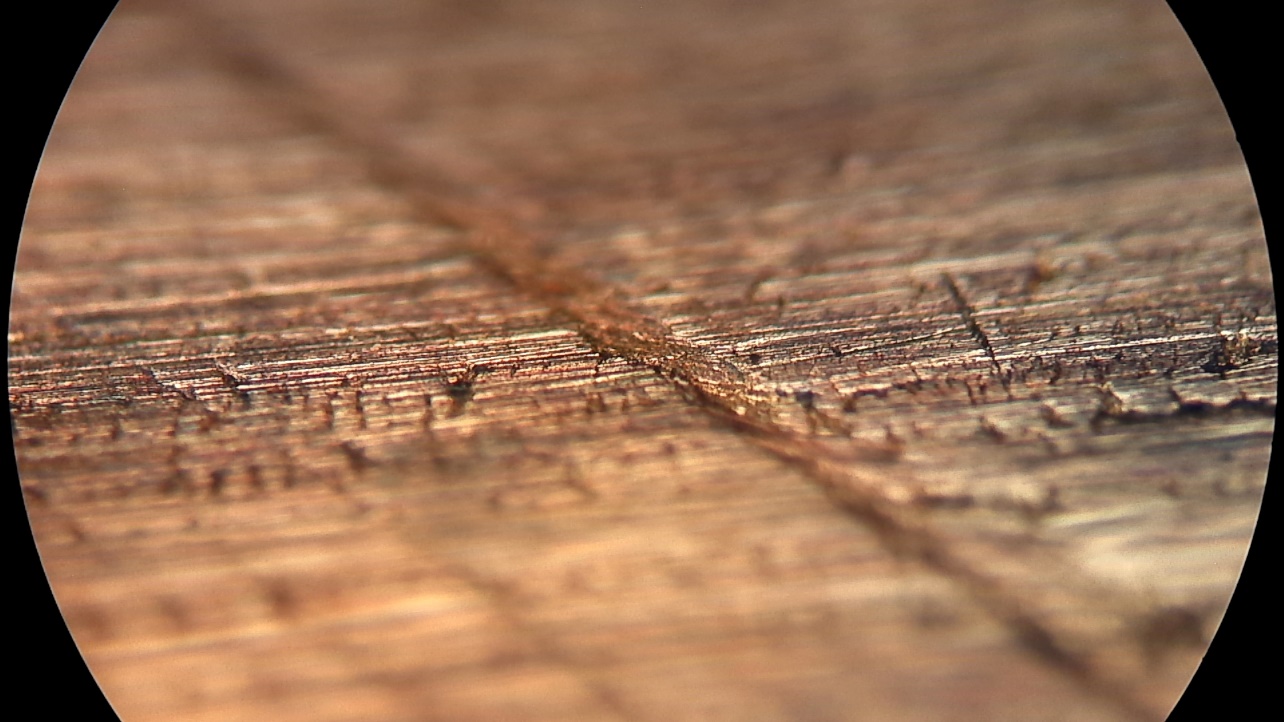
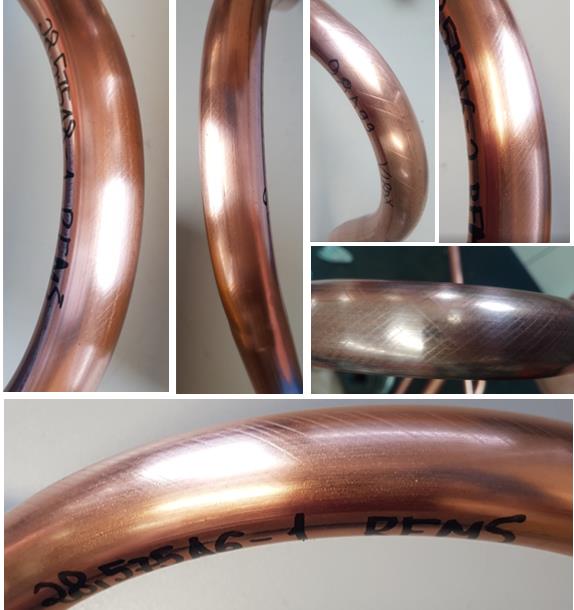
Hard copper tubes are frequently bent during installation and product preparation, but bending can reveal visible Lüders lines on the tube surface. These localized deformation marks create a surface-quality issue even when the tube remains mechanically usable, making the defect important for manufacturing, quality control and customer guidance.
The engineering challenge is that the phenomenon is not governed by a single parameter. Tube geometry, bending radius, bender type, yield behavior, maximum-load stress, hardness and strain-related material indices all interact, so the work approaches the defect as a coupled material-processing problem rather than a simple visual irregularity.
MD-Lab’s Contribution
MD-Lab’s contribution focuses on organizing the experimental bending data into a predictive engineering framework. The work combines geometrical measurements, tensile-test information, hardness data and bending-process parameters to identify the factors that most strongly influence Lüders line appearance.
The development includes qualitative trend analysis, semi-empirical predictive formulas, critical-strain metrics and microstructural observation of the defect. Together, these elements provide a practical route from raw test results to process rules that can be used before bending operations are selected.
Bending Geometry and Recorded Parameters
The experimental dataset links each bending result to both geometric and mechanical inputs. The recorded parameters include average outer diameter, average wall thickness, conventional yield point stress, stress at maximum load, hardness, elongation at break, bending radius and bender type.
This structure allows the analysis to compare clean bends against specimens with Lüders lines and to separate the effect of the tube itself from the effect of the bending process. It also makes the problem suitable for compact predictive rules that can be evaluated with measurements already available in an industrial workflow.
From Surface Defect to Predictive Criteria
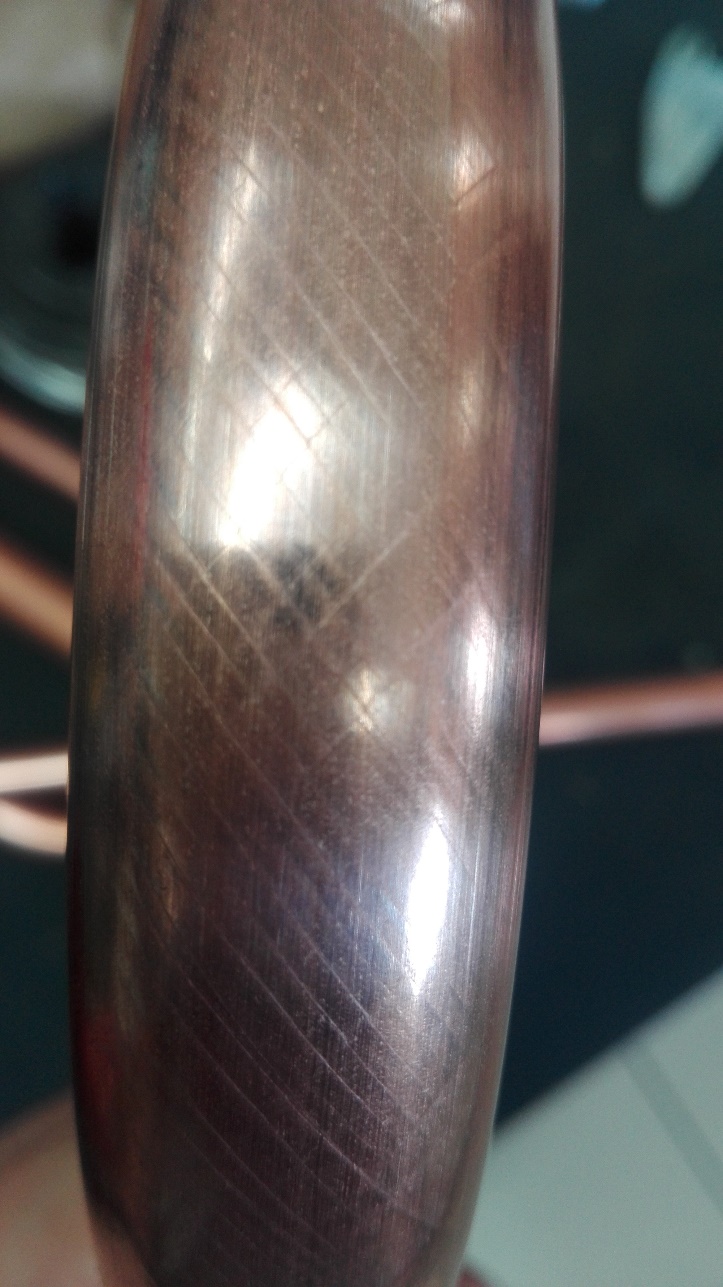
The study treats the visible defect as the observable result of localized plastic deformation. Instead of relying only on after-the-fact inspection, the analysis builds criteria that estimate whether a given tube and bending condition is likely to produce Lüders lines.
Several predictive tools were developed with different levels of required input. Some use only three geometric parameters, others use material indices from the true stress-strain curve, and the combined model incorporates nine geometry and material parameters with optimized exponents from a genetic-algorithm workflow.
Critical Characteristics and Model Inputs
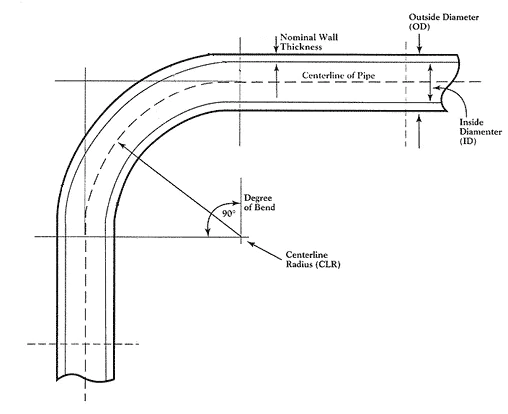
The most influential characteristics are split between material behavior and tube geometry. Material inputs include strain and stress values extracted from tensile response, hardness and stress at maximum load; geometry inputs include average outer diameter, average wall thickness and centerline radius.
This organization is important because it supports multiple decision levels. A quick screening model can use only dimensions and bending radius, while a more complete assessment can add tensile-test and hardness information when higher confidence is needed.
Critical Strain and Bending-Radius Risk
The analytical part estimates critical strain levels by combining stress-strain behavior with bending-related deformation calculations. This gives the project a physics-informed layer beyond purely statistical separation of samples.
Bending radius is especially useful from a manufacturing perspective because it is directly tied to process planning. The analysis identifies risky centerline-radius values and compares them with material-response metrics, helping translate test observations into actionable bending guidance.
Metric-Based Separation of Defective and Clean Bends
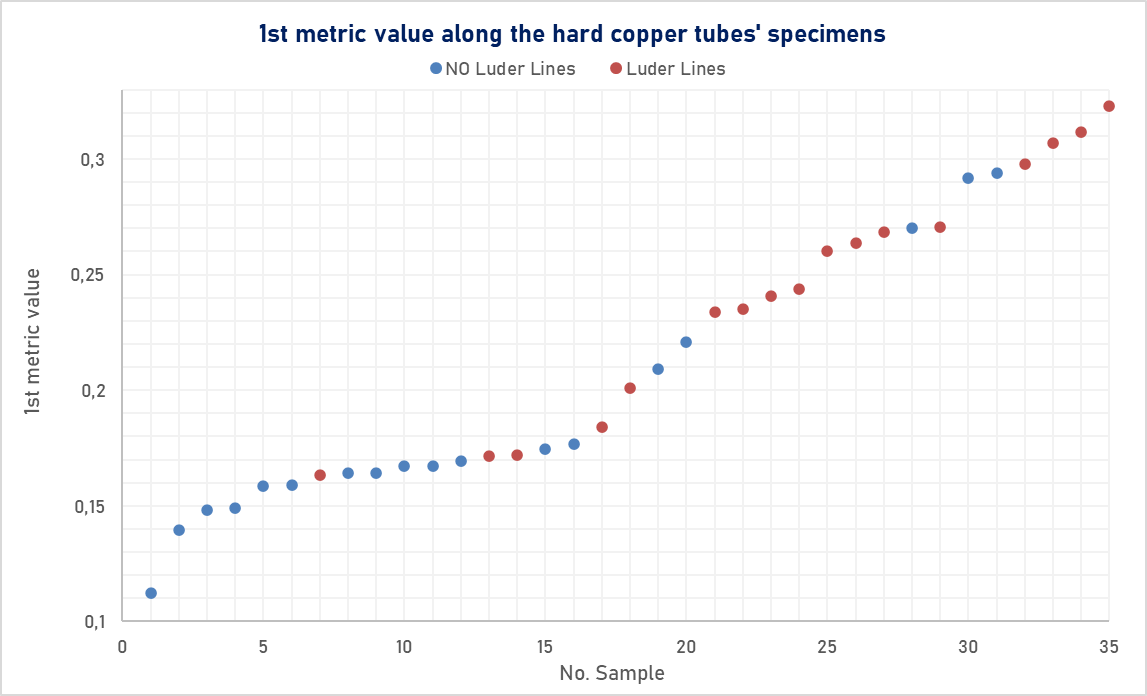
Metric plots were used to separate samples with and without Lüders lines. These plots show how calculated values cluster across specimens and where threshold regions can be introduced for practical classification.
The strongest combined formula achieved high separation within the available data, while simpler models remained valuable because they require fewer measurements. This tradeoff between accuracy and ease of use is central to turning the analysis into an industrial decision tool.
Main Findings
The study identifies both geometry and material behavior as important contributors to Lüders line formation. Wall thickness, centerline radius, stress-strain characteristics, hardness and stress at maximum load all contribute to the prediction problem, while bender type affects how the same tube can behave under different bending conditions.
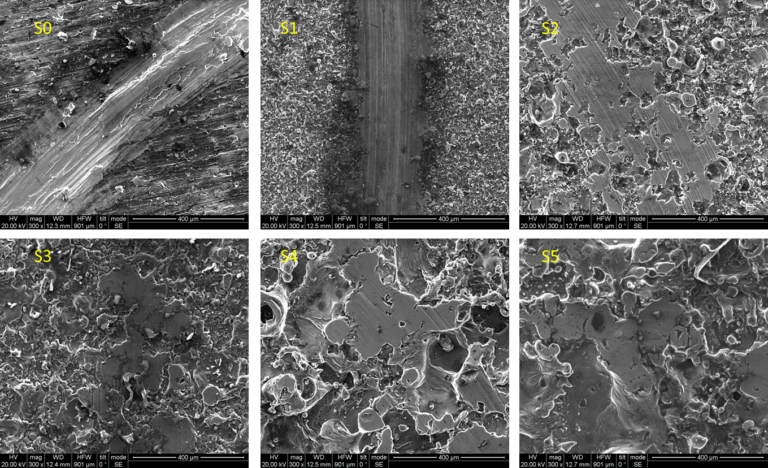
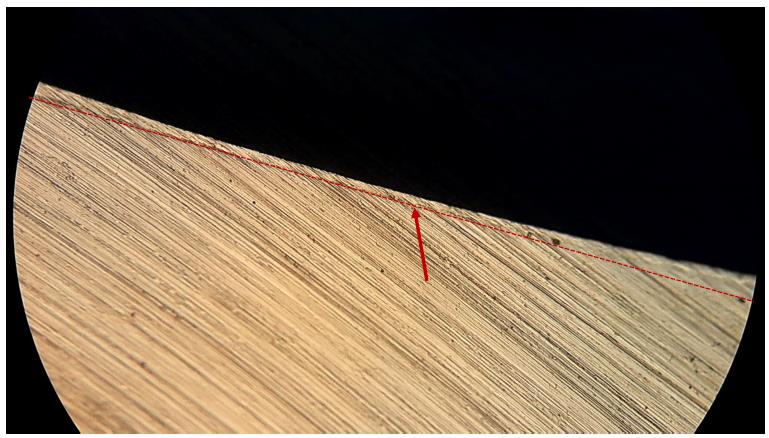
The resulting predictive tools provide several levels of use: compact formulas for quick screening, material-only criteria when tensile data are available, and a combined multi-parameter model for higher precision. Critical-strain estimates and microscopy support the predictive work by connecting the surface pattern to localized deformation and material failure.
Engineering Significance
The project is significant because it converts a difficult surface-quality issue into a measurable, model-based engineering problem. By connecting bending geometry, material characterization and microstructural observation, the work supports clearer decisions about tube selection, bending setup and risk communication.
For manufacturing teams, the value is practical: the predictive framework can help reduce trial-and-error testing, focus future experiments, guide process limits and support customer recommendations for avoiding visible Lüders lines in bent hard-copper tubes.