Restoration of the French Wharf of Lavrion
Industrial French Wharf of Lavrion
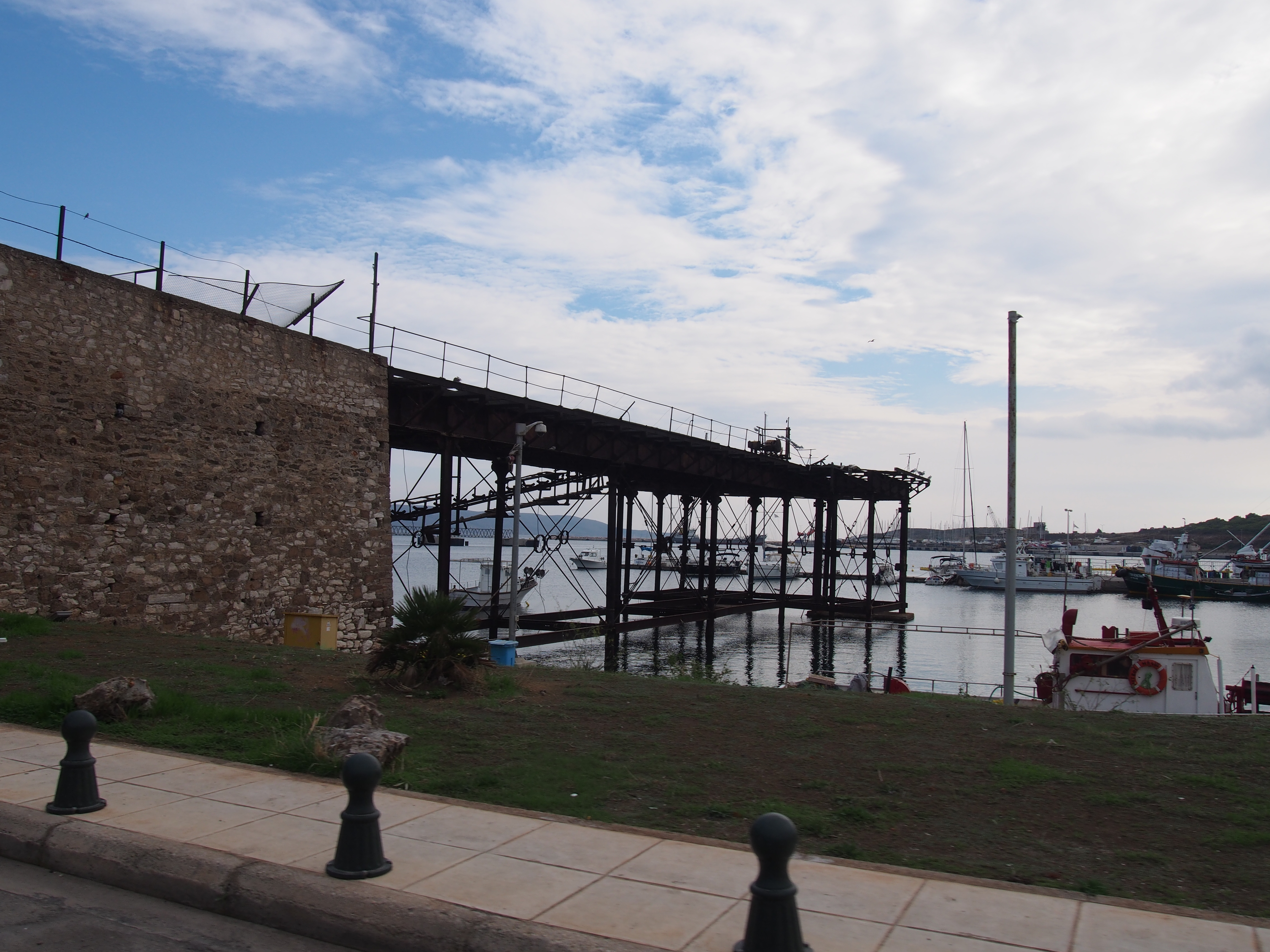
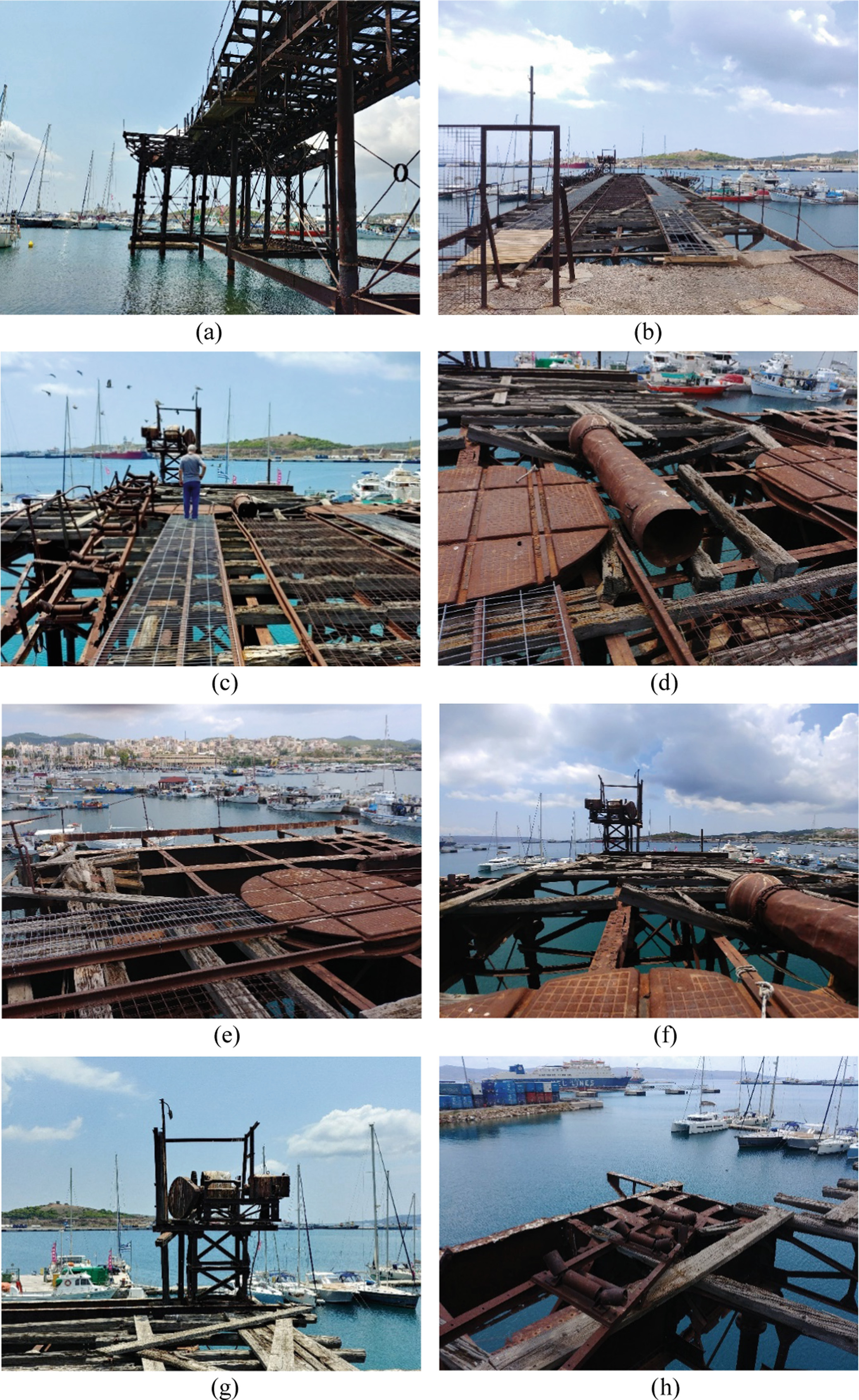
MD-Lab documented and interpreted the loading mechanisms of the French Wharf of Lavrion, an 1888 industrial-heritage structure built for the movement of minerals, coal and commercial goods. The project turns a corroded and partly incomplete machine system into a clear engineering narrative for restoration, public interpretation and accessible reuse.
Impact
The wharf preserves an important mechanical layer of Lavrion’s industrial identity. Its rails, rotating discs, hopper, conveyor remains and crane-related positions show how cargo was routed between land transport and ships before modern port handling systems became common.
MD-Lab’s work makes that technical heritage legible. By clarifying how the equipment operated and how the cargo routes differed for minerals and commercial goods, the project supports restoration decisions, museum interpretation and a more complete public understanding of the wharf as an operating industrial machine rather than only a waterfront structure.
MD-Lab’s Contribution
MD-Lab translated the remaining structure into an engineering model of operation. The team mapped the deck infrastructure, compared the visible equipment with historical arrangements, and separated the wharf into functional subsystems: wagon guidance, wagon turning, mineral discharge, continuous belt transport and crane-side unloading.
The resulting interpretation helps answer practical restoration questions: which surviving parts are mechanically significant, how incomplete rail segments relate to the original cargo routes, why rotating discs were necessary, and how later powered equipment changed the movement of material along the wharf.
From Monument to Mechanism
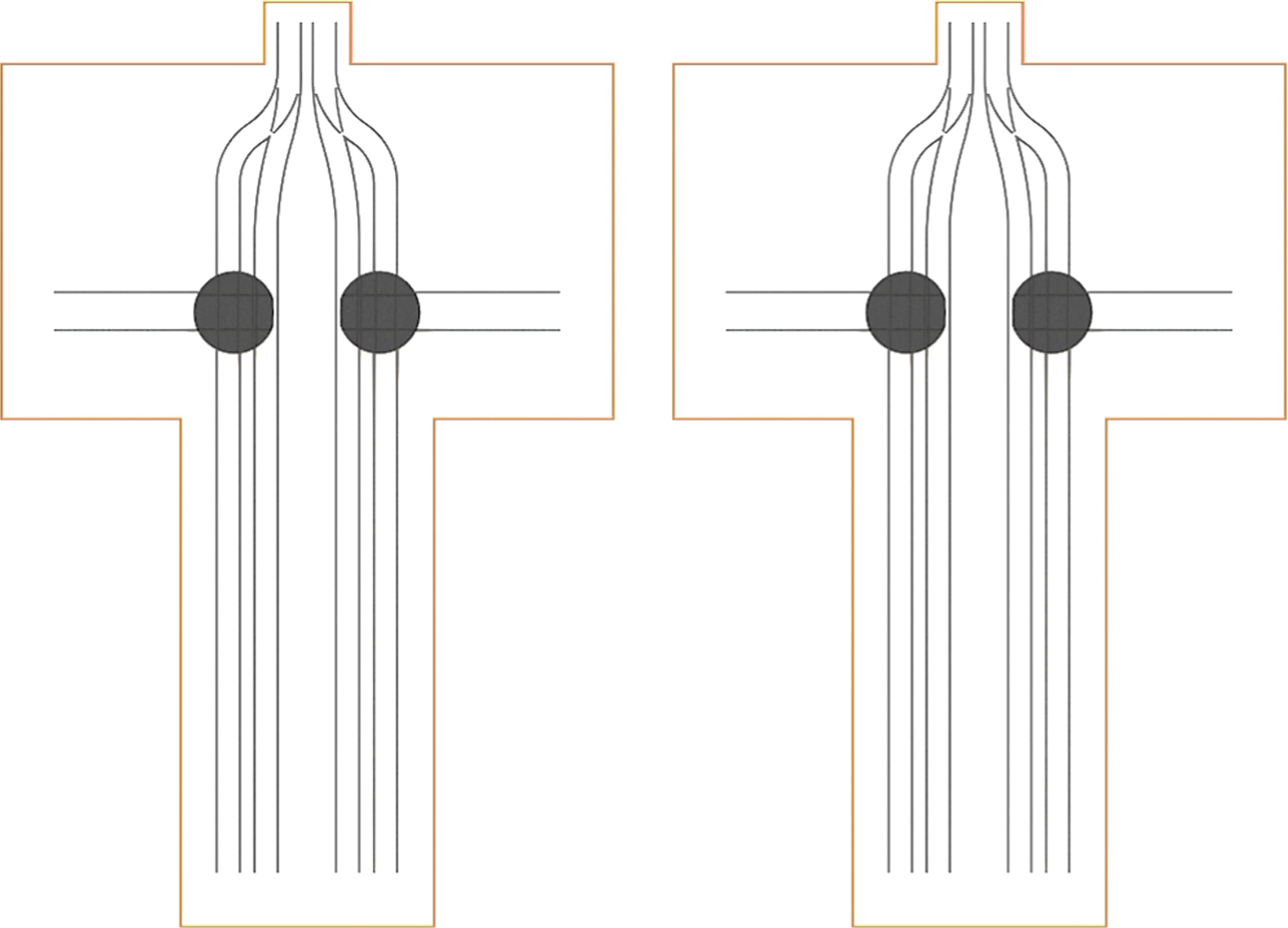
The wharf’s historic value is inseparable from its motion logic. Mineral wagons were pushed along rails toward the hopper, emptied into the ship-loading path and returned for refilling. Commercial goods followed a different route, using the rotating discs to turn wagons into the working range of the cranes.
This operational reading gives conservation work a stronger basis. Instead of treating rails, discs and conveyor remains as isolated fragments, the project reconnects them into a coordinated handling system shaped by cargo type, wagon geometry, deck constraints and loading direction.
Mechanical Interpretation
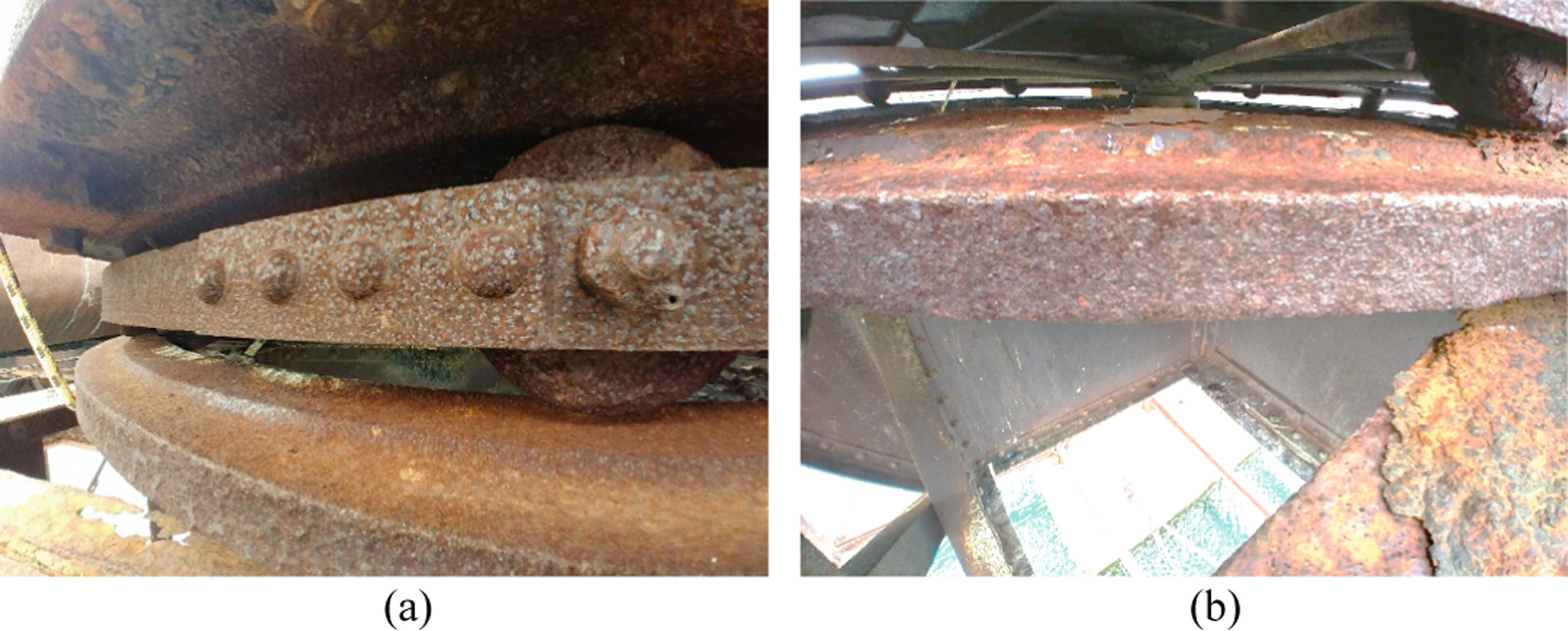
The rotating discs are the clearest example of the wharf’s compact mechanical intelligence. Each disc allowed a wagon to move from longitudinal travel into a transverse crane-working position, while recesses on the top surface guided the wheel flanges and reduced the risk of derailment.
MD-Lab interpreted the disc support as a manually driven shaft-and-roller mechanism with radial tapered rollers, an outer retaining hoop and a circular raceway. This explains how a heavily loaded wagon could be turned on a constrained deck without requiring a large switching area.
- Rail pairs supported different wagon paths for loading and unloading.
- Rotating discs converted straight deck movement into crane-side access.
- The hopper and later conveyor system organized mineral flow toward the ship-loading end.
Accessible Reuse
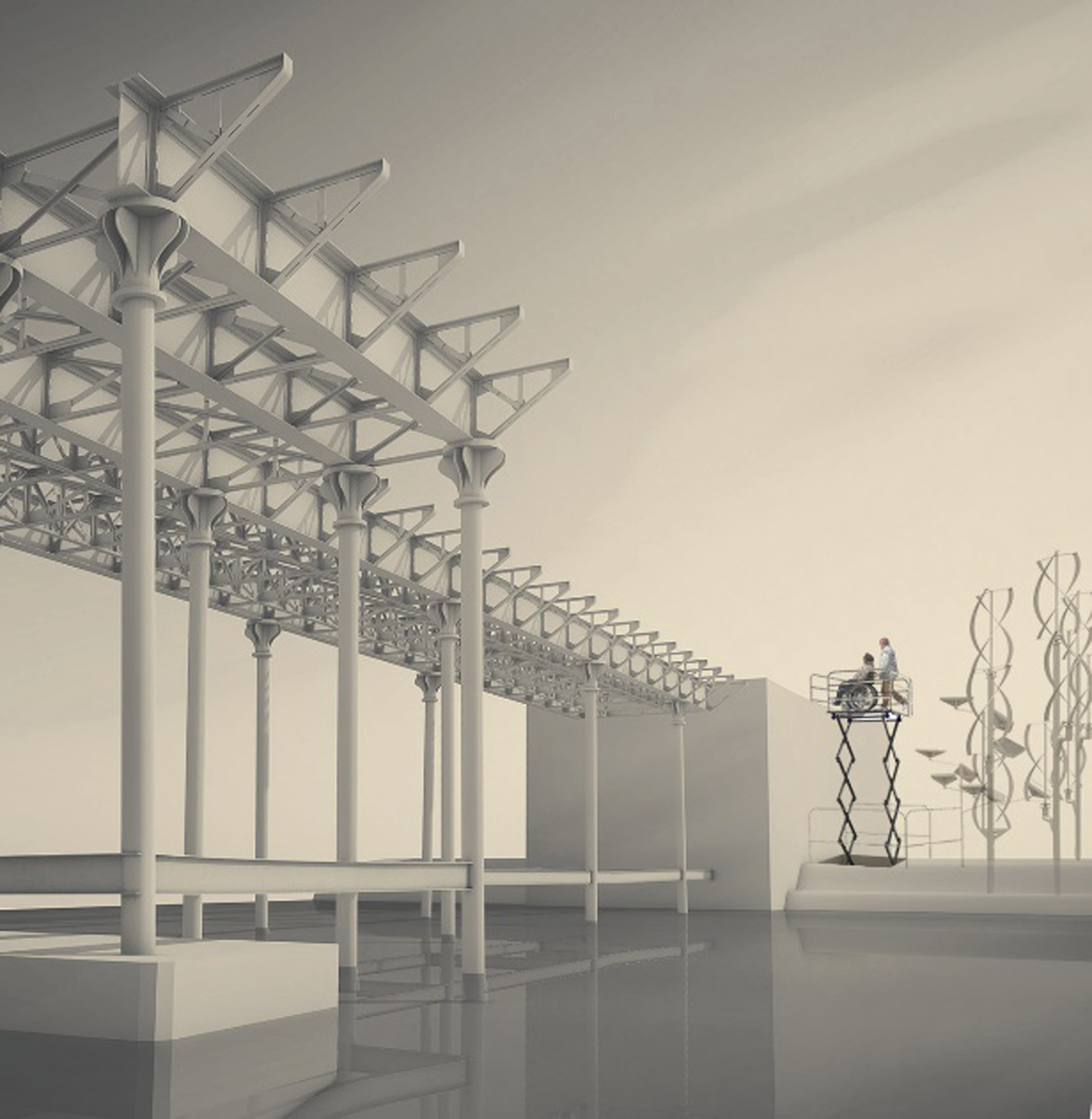
The project also connects preservation with public access. A scissor-type lifting platform was proposed so the wharf deck could function as part of an outdoor museum without adding permanent ramps that would dominate the industrial structure.
The platform remains hidden in a below-deck cavity when not in use, then rises to deck level and provides controlled access for visitors. The concept keeps the mechanical language of the site visible while making the restored wharf easier to experience safely and inclusively.