Surface Texturing
Surface Texturing
MD-Lab investigates engineered surface textures for tribological performance, combining bio-inspired hydrodynamic design, CFD-based flow analysis, EDM-induced roughness control, nanostructuring, wettability modification and dry/wet friction testing.
- 7bio-inspired texture families parametrized for rotating hydrodynamic films
- 34%lower drag torque for selected pillar textures than a representative grooved design
- 39%lower lubricated friction after EDM roughness passes the lubricant-retention threshold
Impact
Surface texture strongly affects friction, lubricant retention, drag torque, wear and contact stability in engineered mechanical interfaces. In rotating thin-film systems such as wet clutches, thrust bearings, limited-slip differentials and disc pumps, a small change in surface geometry can alter the flow field, pressure distribution and viscous power loss.
Texture design is therefore a multi-scale problem. Mesoscale patterns can steer lubricant and reduce hydrodynamic losses, while micro- and nano-scale roughness can change wettability, lubricant retention and wear behavior. MD-Lab’s research connects both sides of the problem: nature-inspired hydrodynamic surface design and manufacturing-driven texture control on metallic surfaces.
MD-Lab’s Research
The surface-texturing work combines bio-inspired design, numerical modelling, manufacturing and tribological testing.
- Bio-inspired design: translate natural structures into parametrized texture families for rotating lubricated interfaces.
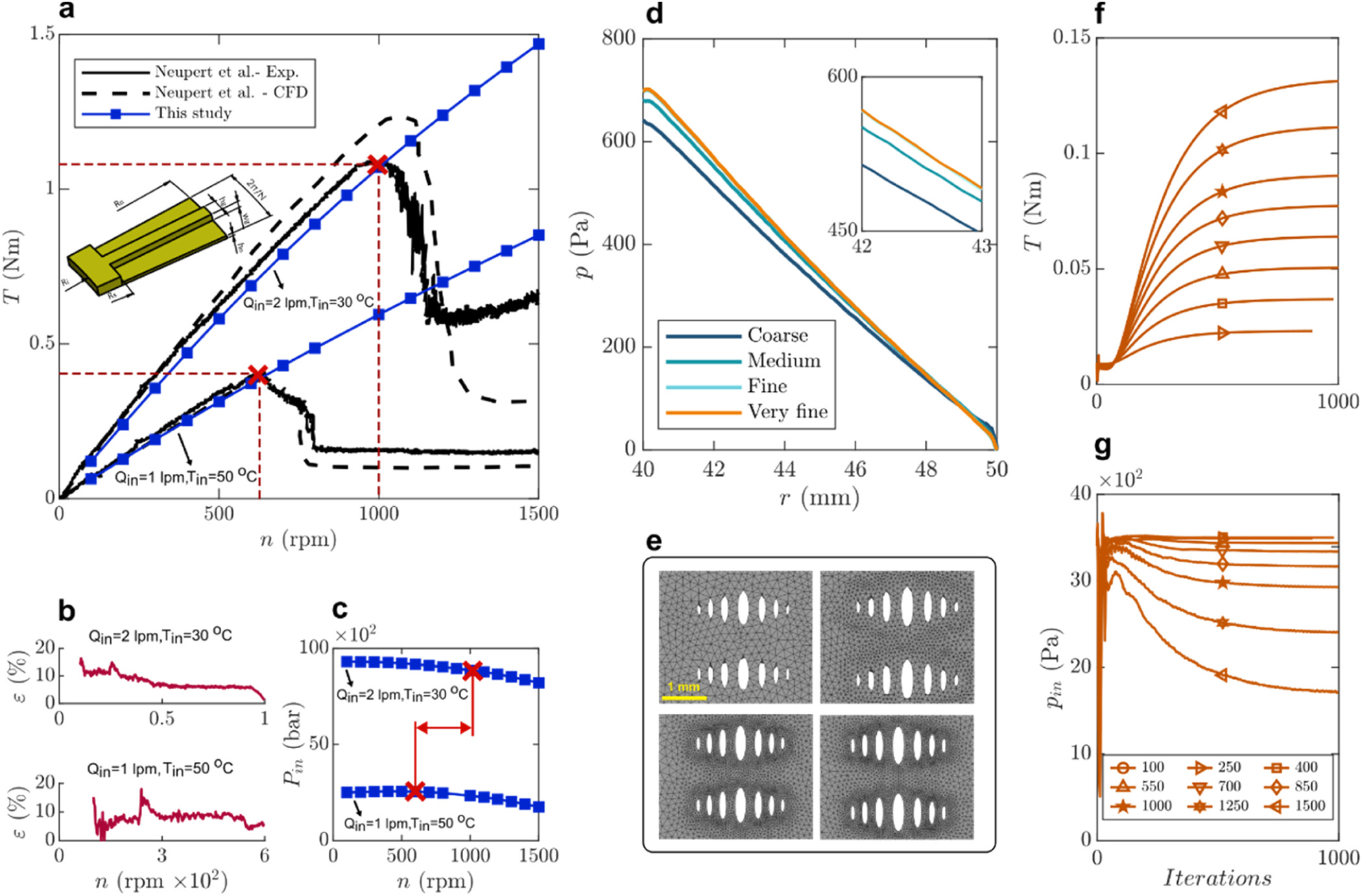
- Hydrodynamic simulation: evaluate pressure fields, flow directionality, drag torque and inlet pressure using validated CFD models.
- EDM surface manufacturing: use electrical discharge machining parameters to produce controlled crater-like textures on AA6082.
- Dual-scale functionality: combine EDM micro-textures with nanostructuring to tune wettability, friction and wear under dry and lubricated contact.
Bio-Inspired Hydrodynamic Surface Texturing
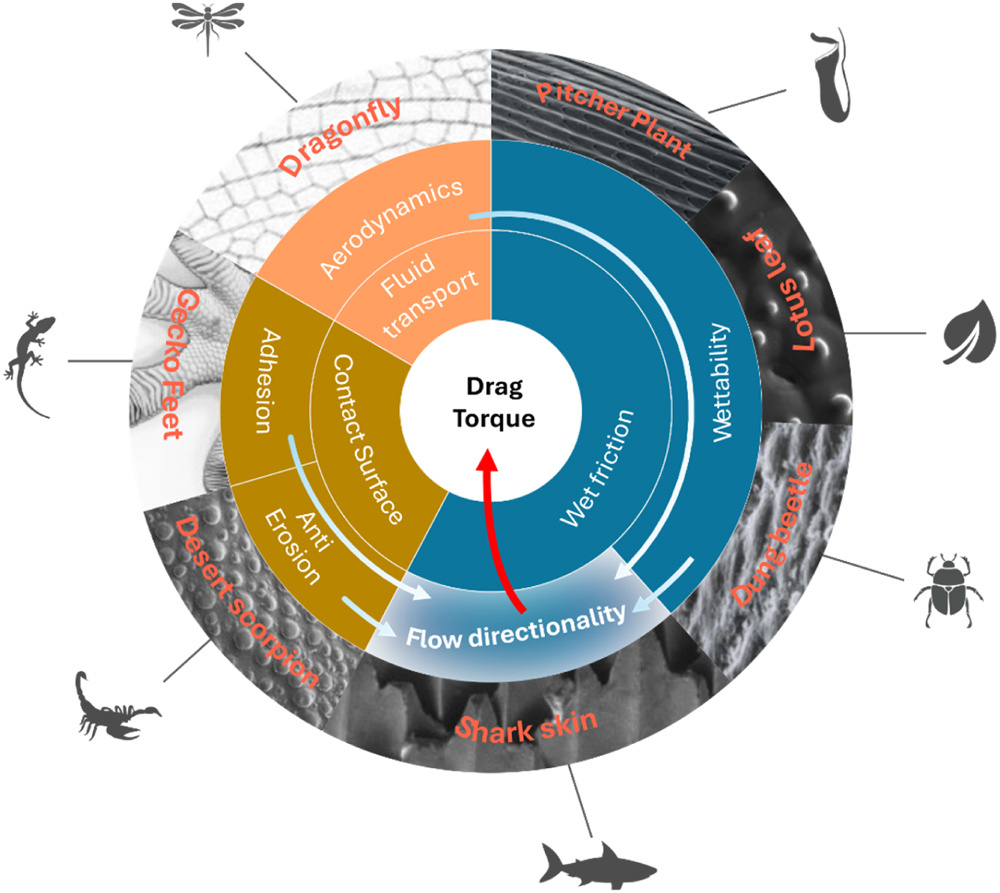
MD-Lab investigates how surface patterns found in nature can be translated into engineered textures for hydrodynamic lubrication. The study considers seven biological examples and converts them into parametrized geometries such as pillars, grooves and ridges, with the open wet clutch used as an indicative rotating-disc application.
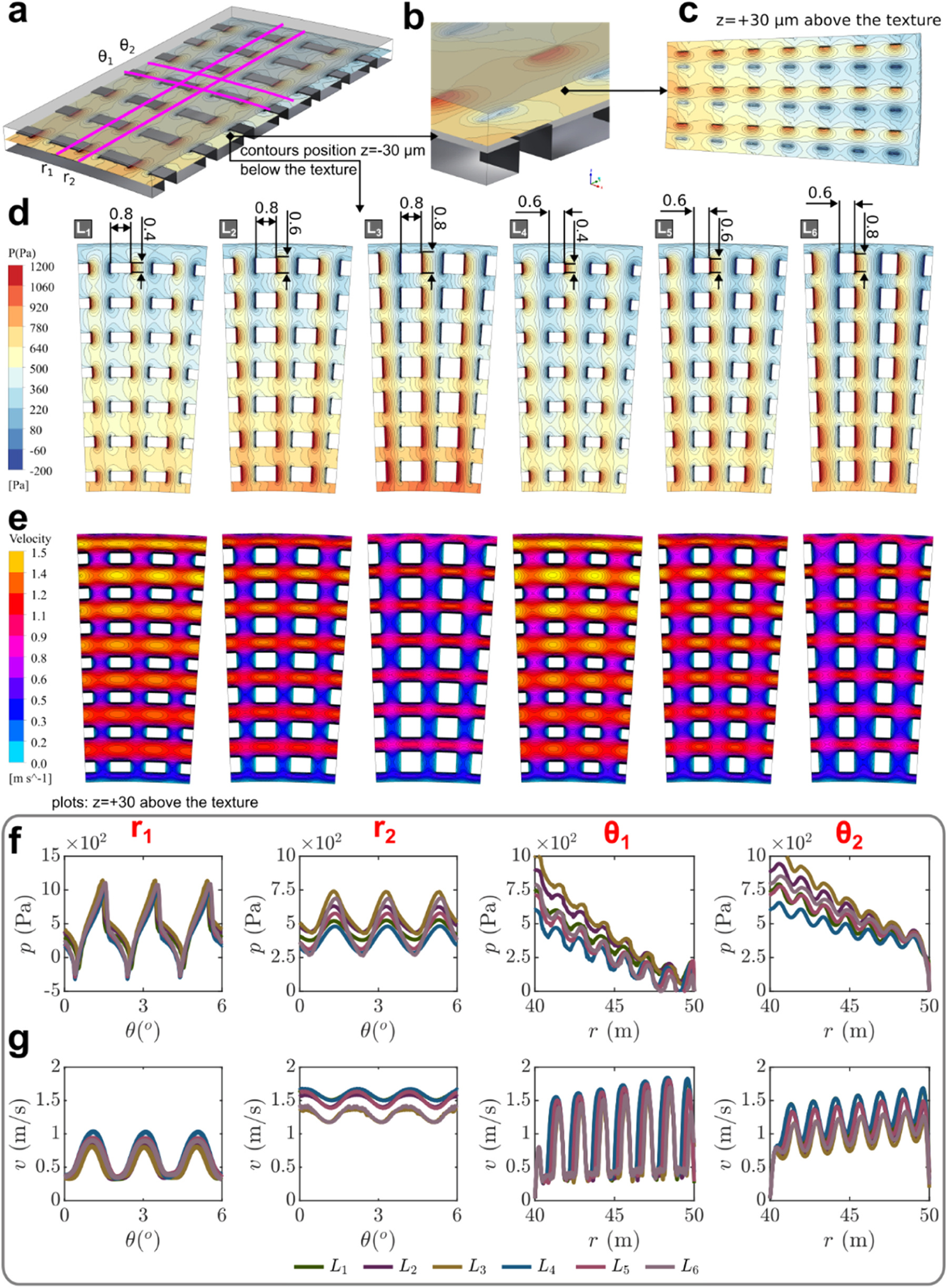
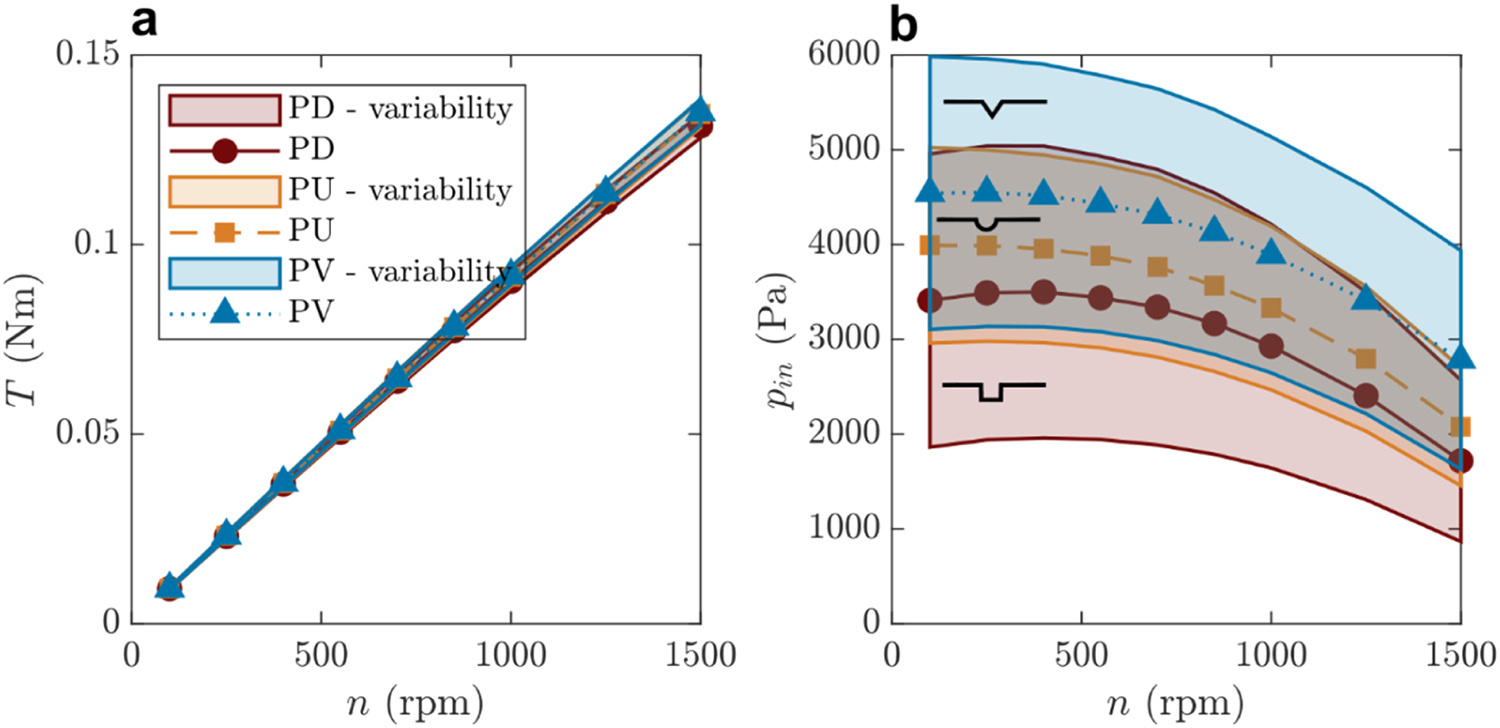
A validated ANSYS Fluent model simulates lubricant flow between rotating discs in the low-speed regime below 1500 rpm. The workflow compares drag torque, inlet pressure, pressure contours and velocity fields, allowing the effect of texture orientation, feature size and feature family to be evaluated beyond conventional groove-only designs.
- Seven bio-inspired texture families designed and parametrized
- Pillar geometries from shark skin, dung beetle and lotus leaf patterns produced the lowest drag torque values
- Selected pillar textures reached 0.086 Nm peak drag torque, 34% lower than the representative grooved design
The results indicate that raised pillar-like patterns may offer stronger drag-reduction potential than conventional grooved textures for some rotating-film conditions. This gives a design route for future bio-intelligent surfaces in wet clutches, thrust bearings and other systems where thin-film shear losses matter.
Related Publications
- Rogkas, N., Adamopoulos, G., Skondras-Giousios, D., & Spitas, V. (2025). Design, analysis and comparative study of bio-inspired surface texturing for enhanced drag reduction in rotating hydrodynamic lubrication regimes. Tribology International, 210, 110750. DOI
EDM-Induced Dual-Scale Texture and Wettability Control
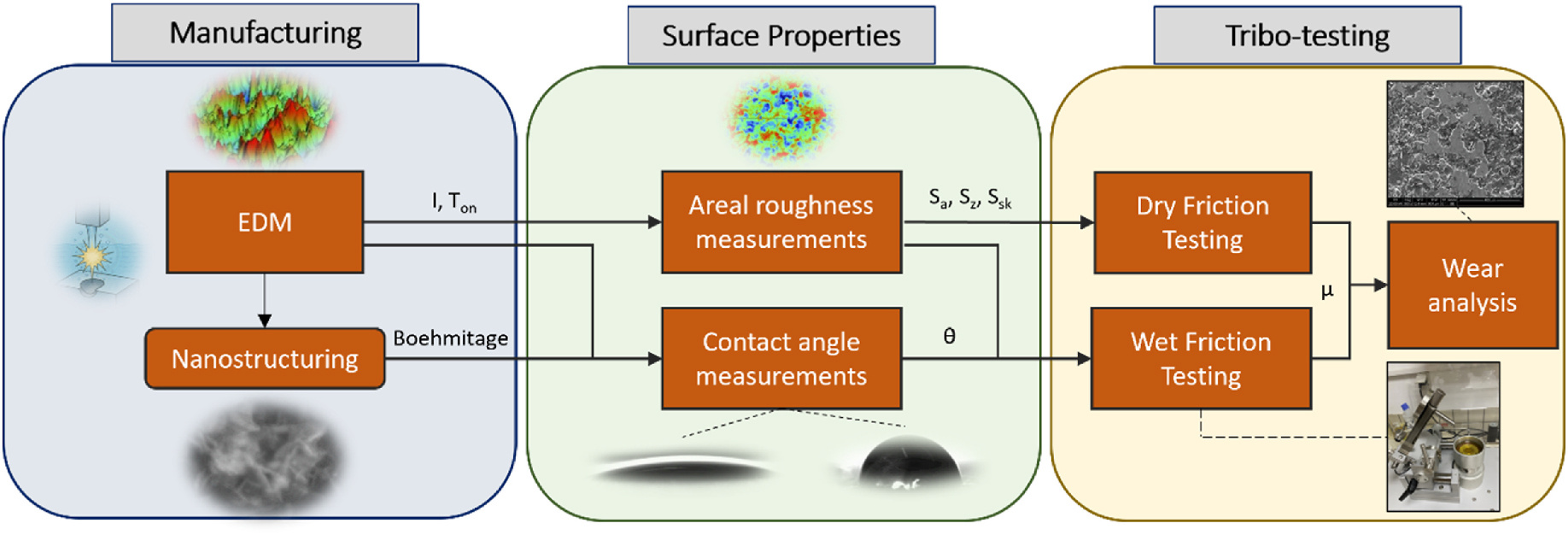
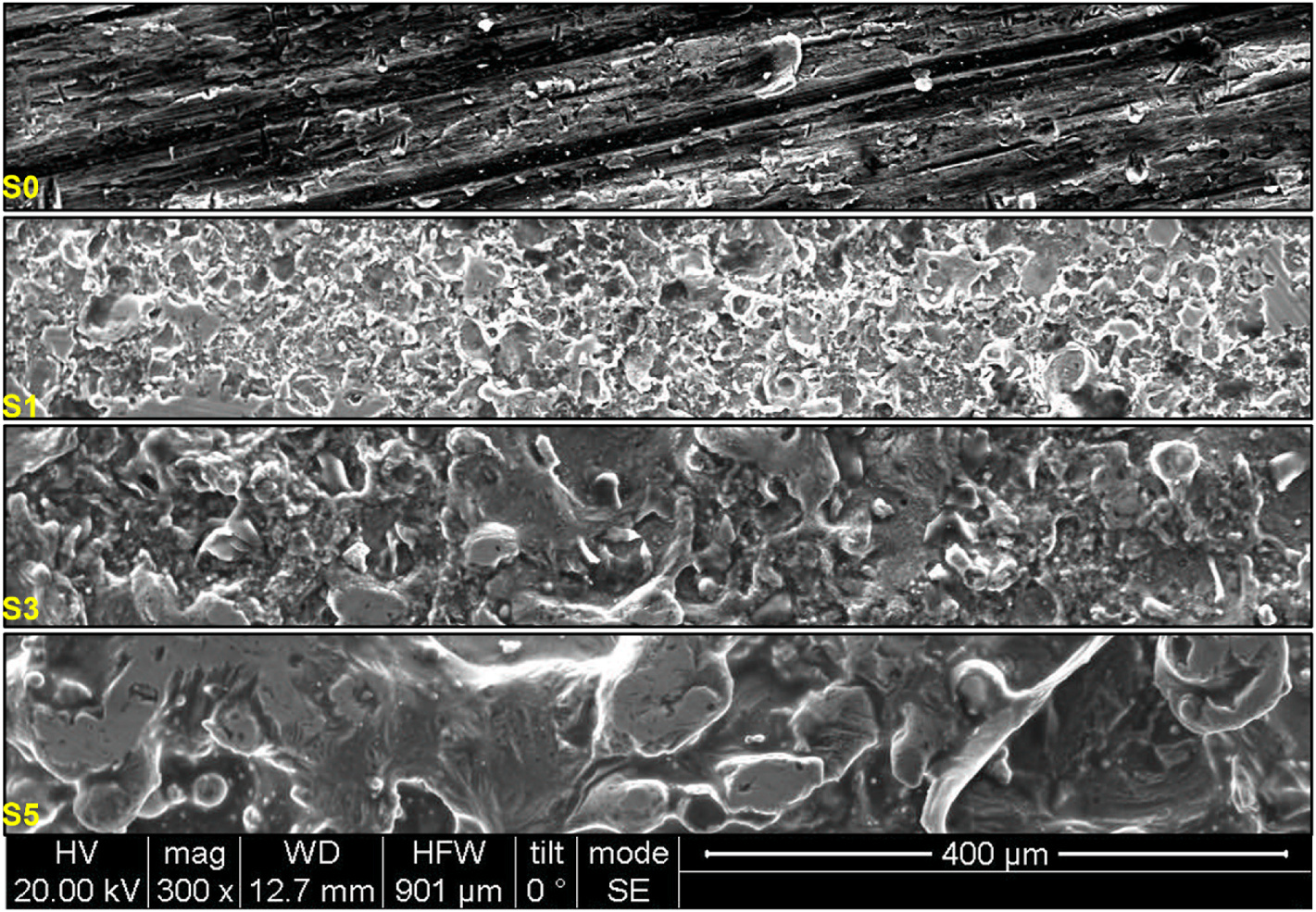
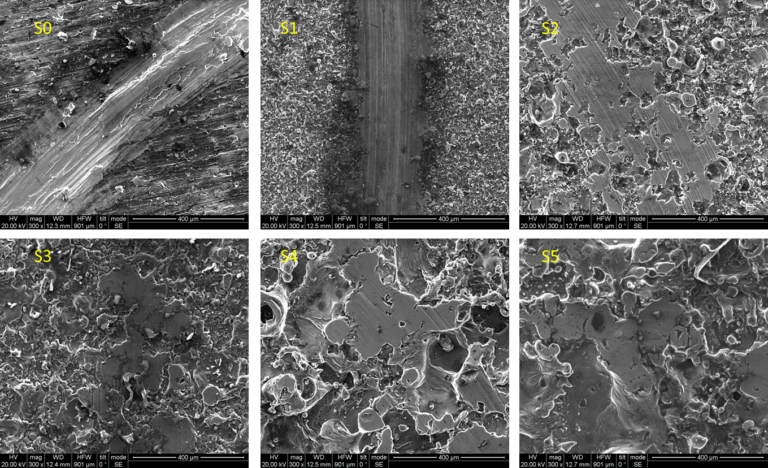
The second research direction focuses on manufacturing practical metallic textures and linking their surface properties to tribological response. AA6082 aluminum surfaces are processed using electrical discharge machining, producing crater-like morphologies by varying current and pulse duration. These EDM micro-textures are then combined with nanostructuring to alter surface energy and wettability.
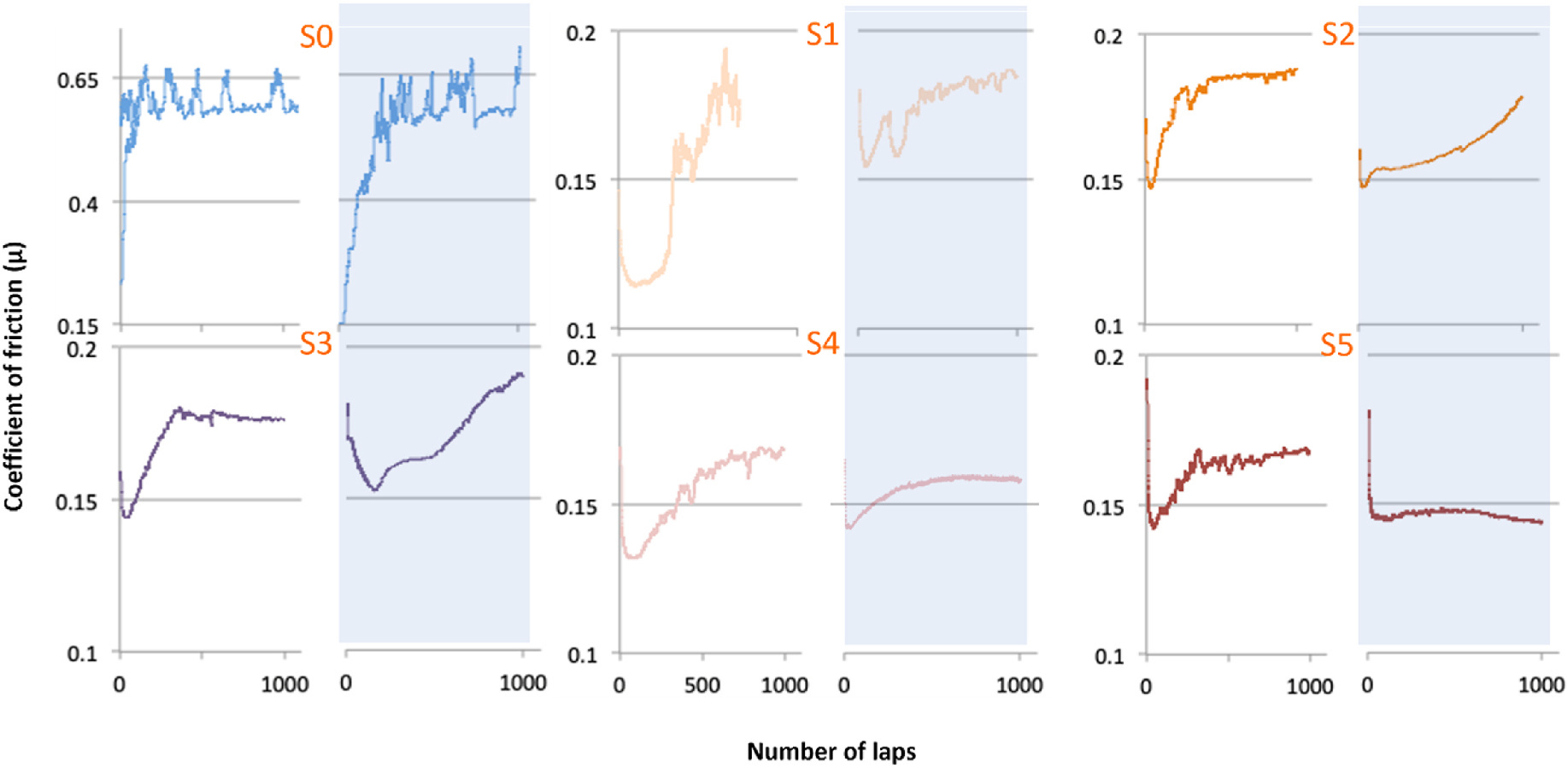
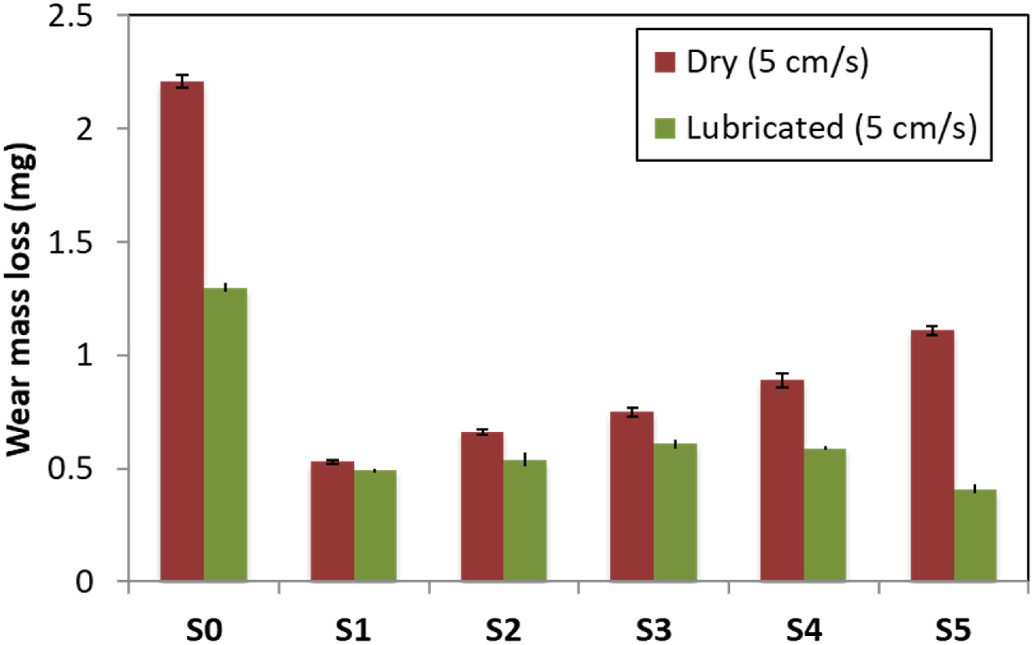
Tribological behavior is measured with pin-on-disc testing under dry and lubricated conditions. The results show that roughness does not have a single universal effect: in dry contact, increased roughness raises friction, while in lubricated regimes sufficiently rough surfaces can retain more lubricant and reduce friction and wear.
- Nearly 15-fold increase in roughness amplitude across EDM-machined textures
- Dry friction coefficient increased by up to 52% as roughness increased
- Lubricated friction reduced by up to 39% and wear mass loss by more than 50%
- Nanostructuring added roughly 10% extra friction reduction for the roughest specimen
The combined EDM and nanostructuring route provides a controllable way to produce dual-scale surfaces where micro-texture, wettability and wear behavior can be tuned together. This is especially relevant for metallic components where surface functionality must survive real sliding contact.
Related Publications
- Skondras-Giousios, D., Rogkas, N., Karmiris-Obratanski, P., Sarkiris, P., Markopoulos, A. P., & Spitas, V. (2026). Enhancing tribological properties of AA6082 through EDM-induced roughness and wettability control via nanostructuring. Precision Engineering. DOI