Magnetic Gears
Magnetic Gears
MD-Lab research on coaxial magnetic gears develops fast analytical and hybrid electromagnetic models for torque prediction, topology evaluation, nonlinear dynamic response and eddy-current loss estimation. The work supports the design of contactless transmissions with reduced wear, low noise, inherent overload protection and computationally efficient early-stage optimization.
Impact
Magnetic gears transmit torque through magnetic-field interaction rather than tooth contact. This makes them attractive for applications where lubrication, acoustic noise, wear, maintenance and overload failure are limiting factors. Their main engineering challenges are equally clear: torque density, transient slippage, torque ripple and high-speed electromagnetic losses must be quantified early enough to influence design decisions.
MD-Lab addresses this gap with analytical models that retain the essential physics of coaxial magnetic gears while avoiding the computational cost of repeated transient finite-element analyses. The resulting workflows allow torque, ripple, dynamic stability, loss generation and thermal limits to be explored across geometry, loading, magnet segmentation and operating speed.
MD-Lab’s Contribution
The research program connects electromagnetic field modelling with machine-dynamics and design optimization:
- Direct analytical torque calculation using magnetic-potential solutions and the Maxwell Stress Tensor.
- Topology studies for standard and Halbach-array coaxial magnetic gears.
- Transient and nonlinear dynamic models for slippage, transmission error and acceleration stability.
- Non-dimensional control strategies for vibration attenuation during acceleration and deceleration.
- Hybrid analytical-FEA loss models and thermal estimation for high-speed operation.
Direct Analytical Torque Modelling
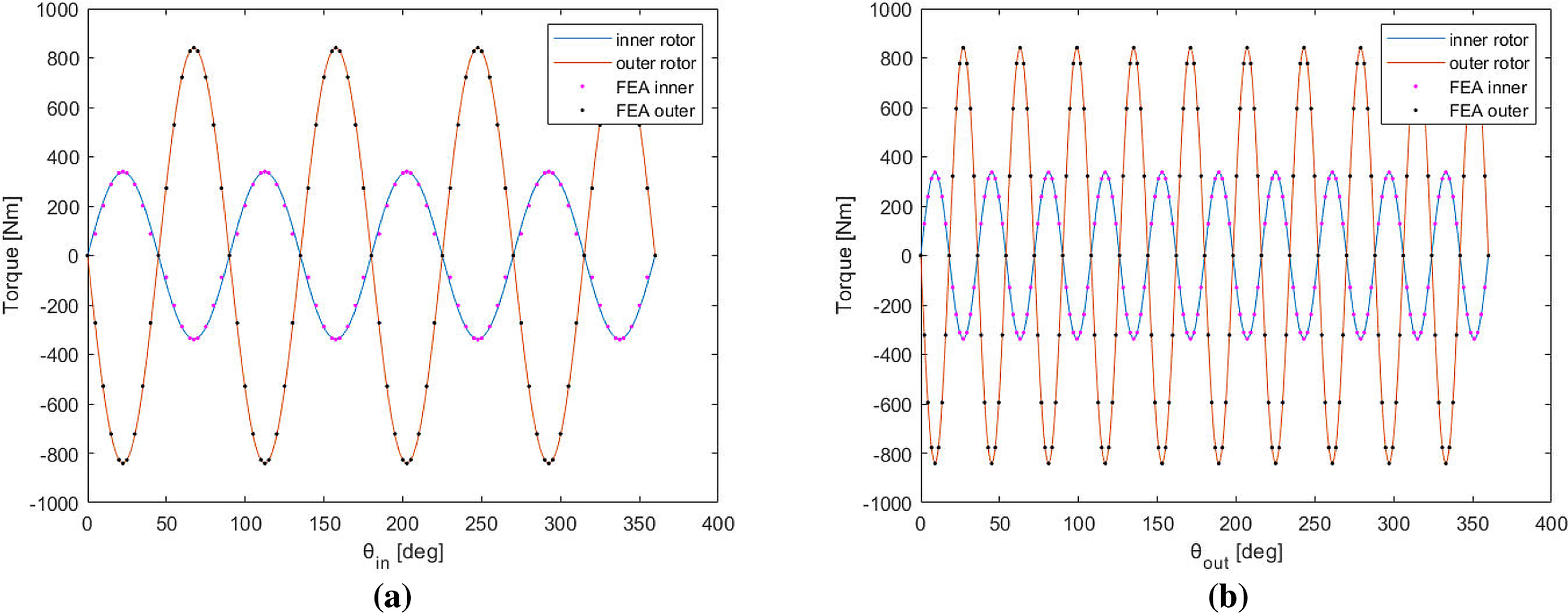
A central part of the work is the development of direct analytical models for computing the torque acting on the inner and outer rotors of coaxial magnetic gears. Instead of recalculating the electromagnetic field at every transient time step, the approach solves the two-dimensional magnetic-potential problem, represents the field harmonics analytically and evaluates torque through the Maxwell Stress Tensor.
This reduces the cost of dynamic simulation because the torque waveform can be reconstructed for arbitrary rotor positions after a compact analytical calculation. The model was validated against finite-element simulations, with torque predictions matching the FEA results while requiring more than two orders of magnitude less computational time.
The same framework makes torque ripple visible as a harmonic property of the drive. That is important because ripple in contactless transmissions can originate not only from rotor magnetics but also from modulator-ring deformation and radial force variation. By combining analytical force calculation with structural simulation, the research links electromagnetic design choices to the mechanical smoothness of torque delivery.
Related Publications
- Tzouganakis et al. (2023). Fast and efficient simulation of the dynamical response of coaxial magnetic gears through direct analytical torque modelling. Simulation Modelling Practice and Theory. https://doi.org/10.1016/j.simpat.2022.102699
- Tzouganakis et al. (2022). Torque ripple investigation in coaxial magnetic gears. MATEC Web of Conferences. https://doi.org/10.1051/matecconf/202236601004
Magnetic Gear Architecture and Design Optimization
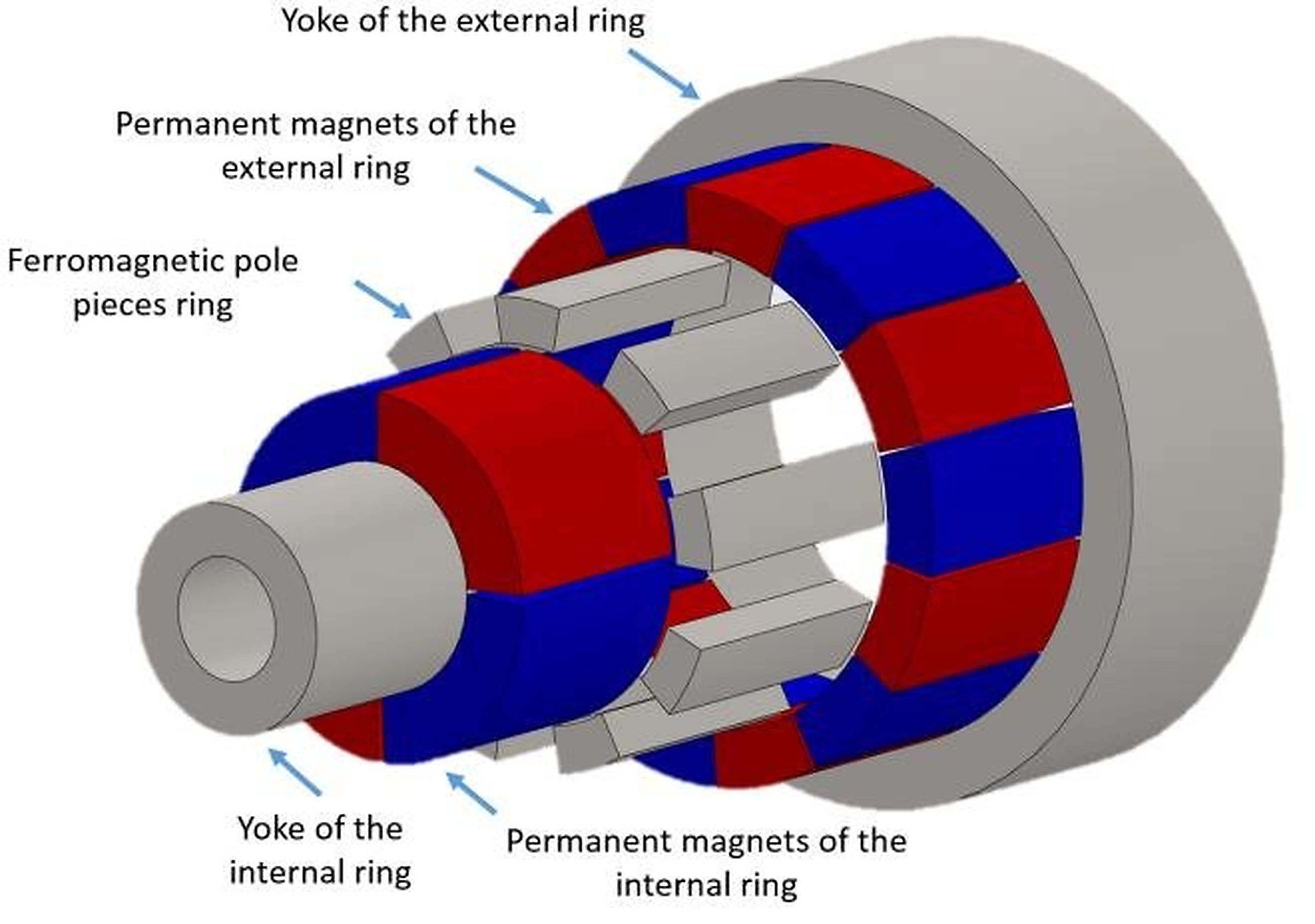
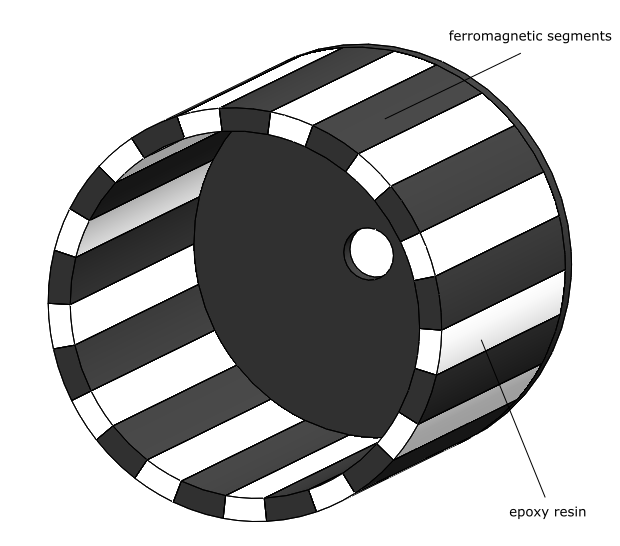
The research also examines how topology and magnetization architecture affect torque density and transient performance. In the standard coaxial magnetic gear, inner and outer permanent-magnet arrays interact through a ferromagnetic flux-modulator ring. The number of modulator segments is selected to couple the rotor pole-pair harmonics, making the modulator geometry a primary design variable rather than a passive support component.
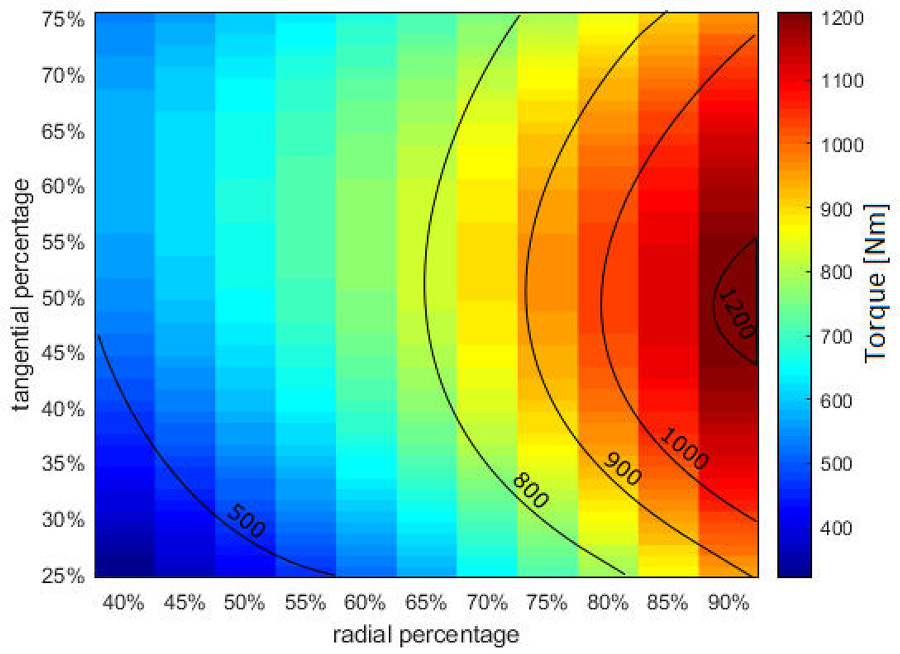
Design studies using the analytical model showed that the modulator-ring segment length has an optimum region for maximizing stall torque. This is valuable in early design because it allows torque-density maps to be explored rapidly before committing to detailed finite-element sweeps.
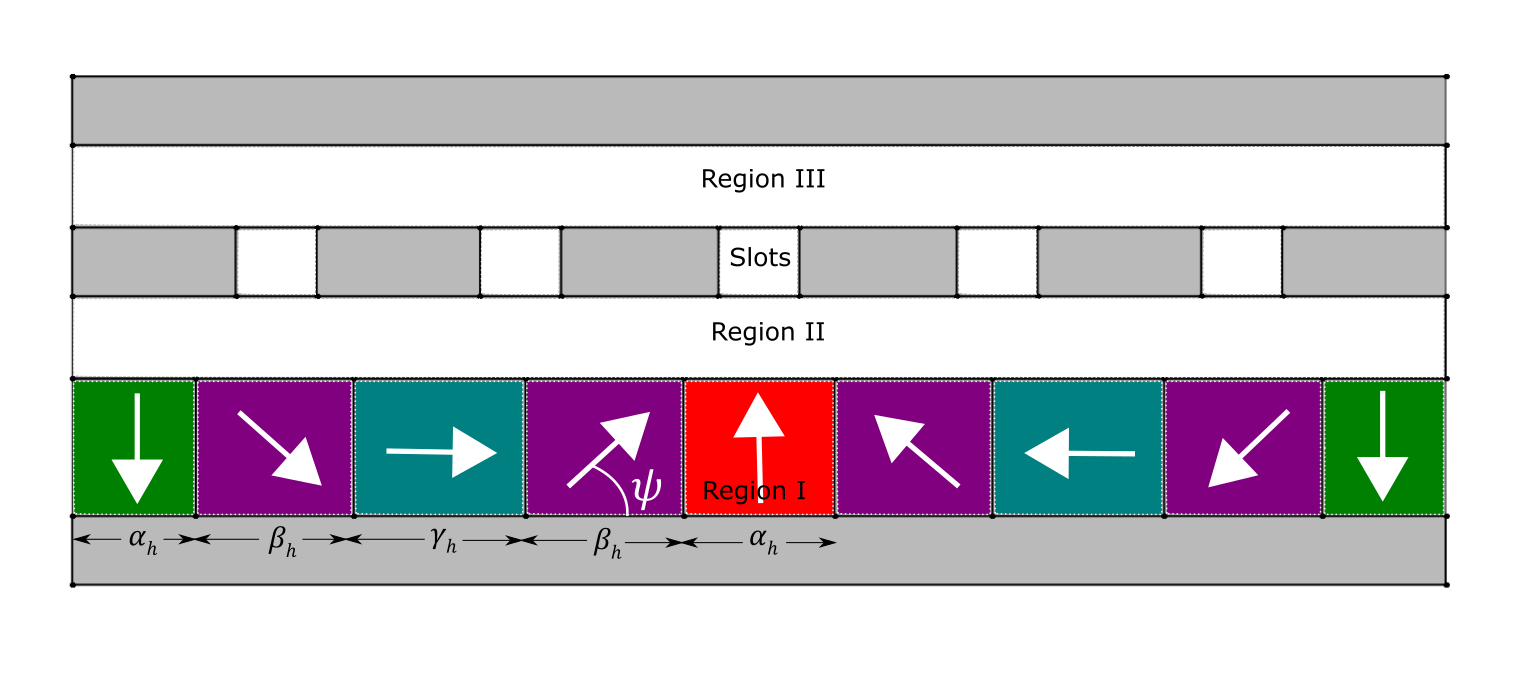
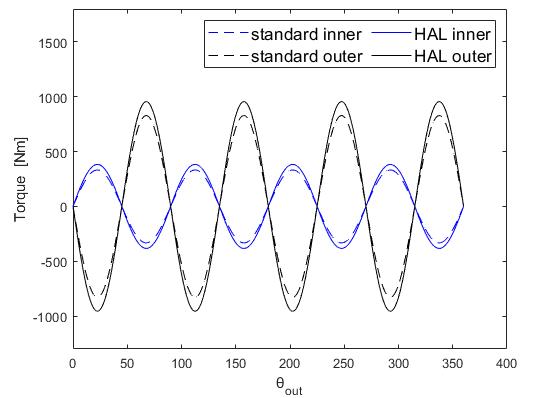
Halbach-array coaxial magnetic gears extend the architecture by using both radial and tangential magnetization directions to concentrate useful flux in the air gaps. The developed Halbach model predicted a 14.3% stall-torque increase compared with an equivalent standard CMG and a small reduction in torque-ripple harmonics. In transient simulation, the Halbach layout also reduced transmission error by 13.5%, indicating that electromagnetic architecture can improve both static torque capacity and dynamic quality.
Related Publications
- Tzouganakis et al. (2024). Torque calculation and dynamical response in Halbach array coaxial magnetic gears through a novel analytical 2D model. Computation. https://doi.org/10.3390/computation12050088
- Tzouganakis et al. (2023). Fast and efficient simulation of the dynamical response of coaxial magnetic gears through direct analytical torque modelling. Simulation Modelling Practice and Theory. https://doi.org/10.1016/j.simpat.2022.102699
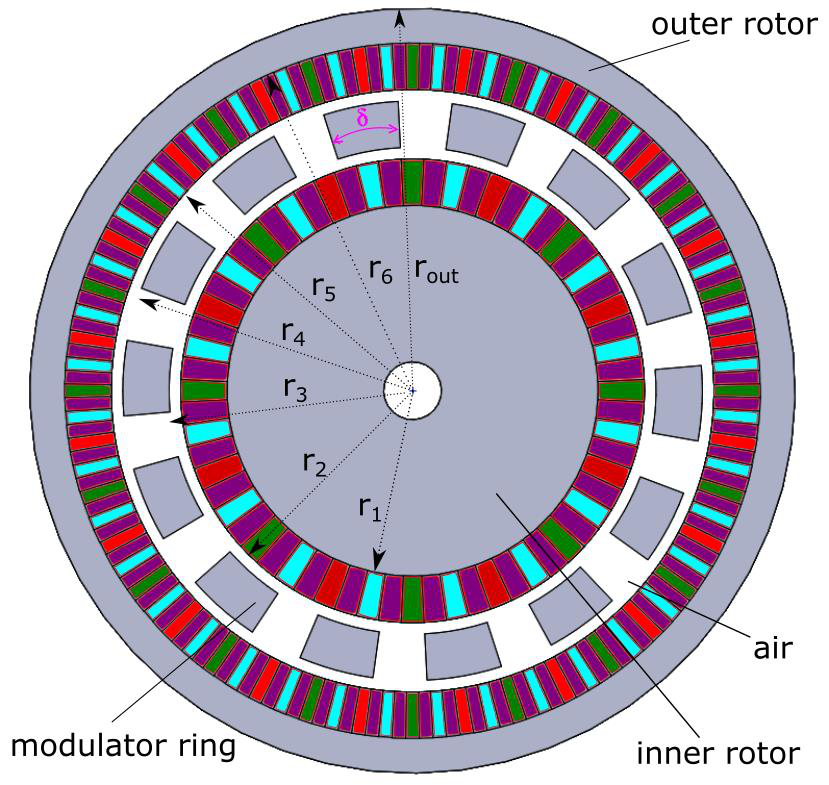
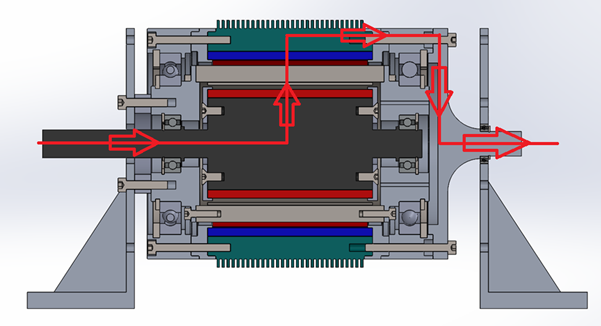
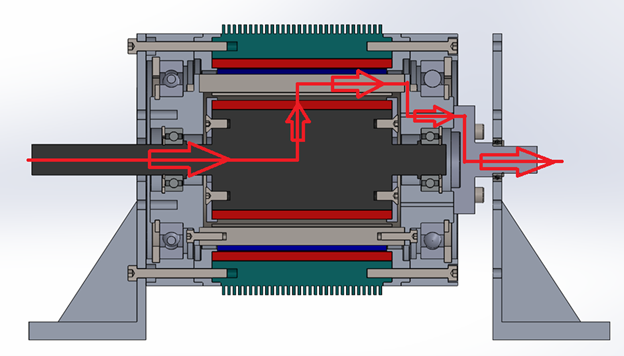
MD-Lab has also developed a coaxial magnetic gear concept that can operate either with a fixed modulator ring and output from the outer rotor, or with a fixed outer rotor and output from the modulator ring. This dual operating mode expands the architectural options available during early gearbox integration.
Dynamic Behavior
Because magnetic gears do not have rigid tooth contact, overload and acceleration can produce slippage rather than mechanical fracture. This makes transient response a design question: a CMG must transmit torque while keeping transmission error, oscillation amplitude and pole-slip risk within acceptable limits.
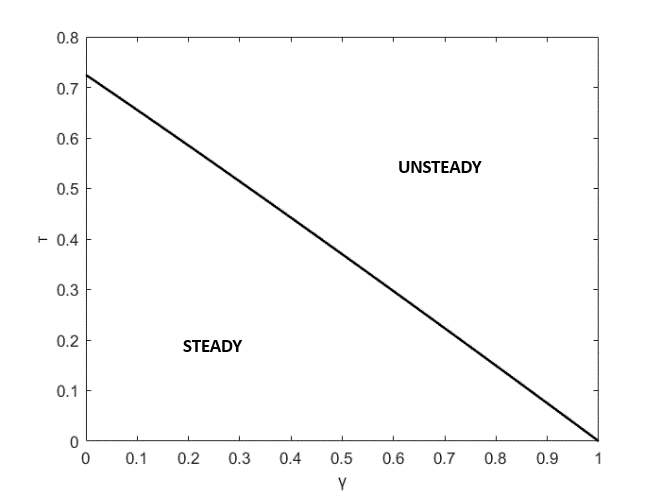
MD-Lab models the drive as a nonlinear dynamical system in which the electromagnetic torque couples rotor motion. The direct torque formulation allows the transient equations to be simulated efficiently, while non-dimensional stability criteria provide faster screening of whether a given acceleration and load combination will converge or diverge. This is especially useful for sizing drives where repeated time integration would make optimization slow.
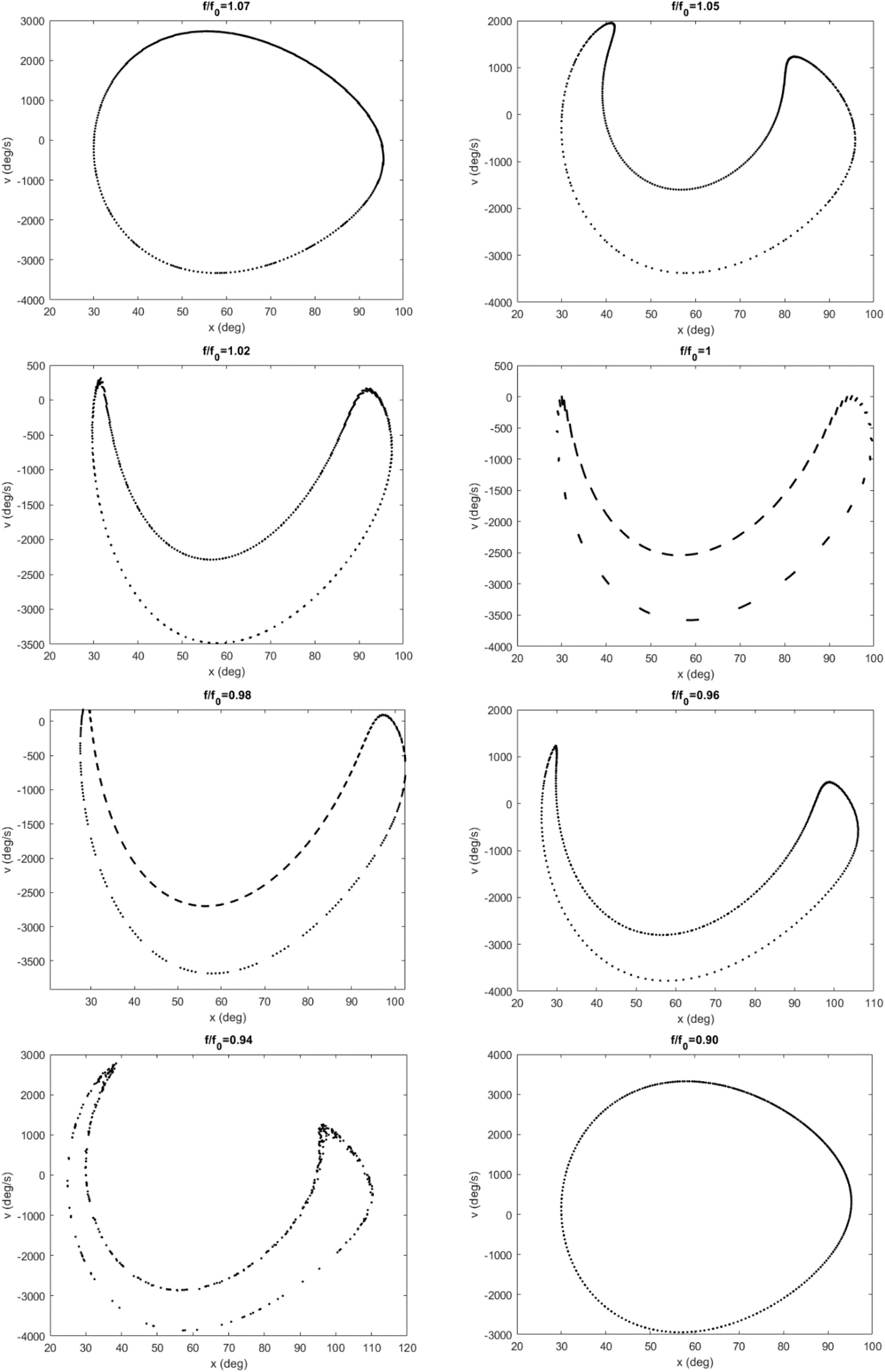
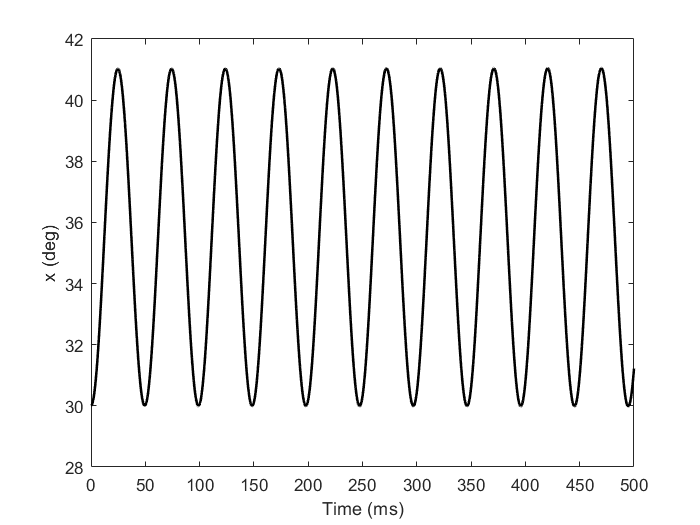
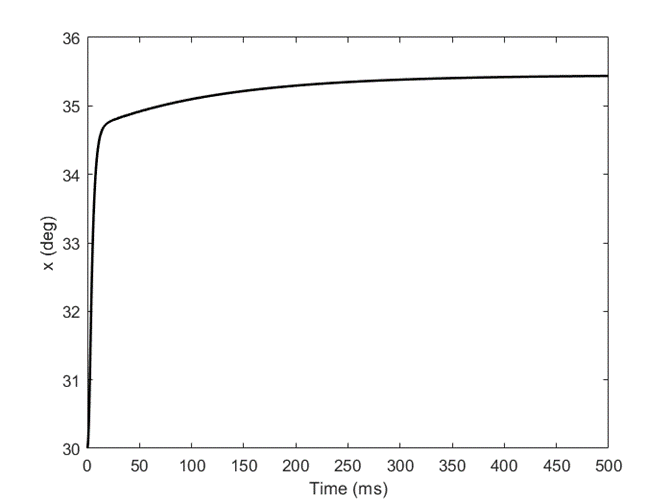
The dynamic studies show that steady acceleration can be assessed through analytical stability limits, while acceleration ripple can introduce richer nonlinear behavior. When the ripple frequency approaches the natural oscillation response of the system, the drive can exhibit chaotic motion and may diverge even below the steady-acceleration critical value. These results turn slippage from a qualitative risk into a quantifiable operating envelope.
Related Publications
- Tzouganakis et al. (2023). Fast and efficient simulation of the dynamical response of coaxial magnetic gears through direct analytical torque modelling. Simulation Modelling Practice and Theory. https://doi.org/10.1016/j.simpat.2022.102699
- Tzouganakis et al. (2024). Formulation of a non-dimensional criterion for stable dynamical response in coaxial magnetic gears. Journal of Engineering Mathematics. https://doi.org/10.1007/s10665-023-10325-z
- Tzouganakis et al. (2024). Chaotic behaviour in the dynamical response of coaxial magnetic gears during acceleration. Chaos, Solitons & Fractals. https://doi.org/10.1016/j.chaos.2024.115441
- Tzouganakis et al. (2024). Torque calculation and dynamical response in Halbach array coaxial magnetic gears through a novel analytical 2D model. Computation. https://doi.org/10.3390/computation12050088
Non-Dimensional Control for Vibration Attenuation During Acceleration
A significant challenge in coaxial magnetic gears is slippage during acceleration and deceleration. Slippage can excite oscillatory dynamics, increase transmission error and threaten reliable operation, so vibration attenuation must be treated as part of the control problem rather than only as a geometry-design issue.
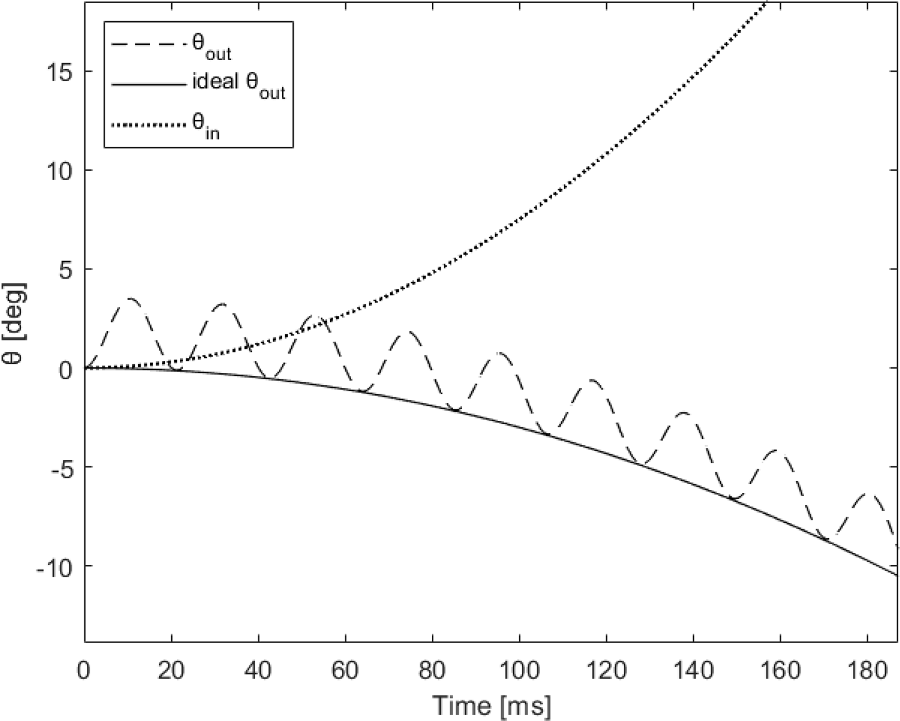
MD-Lab proposes a control method that combines PID control with a Lyapunov control function to provide robust response during acceleration and deceleration. The governing equations are non-dimensionalized, allowing the same control strategy to adapt across different CMG configurations, loads and acceleration profiles. Realistic effects such as discrete control, external load fluctuations and measurement errors are included in the simulations.
The resulting non-dimensional strategy enables the CMG to reach desired operating states quickly while reducing oscillatory behavior. Across the evaluated case studies, the target acceleration is achieved in roughly 100-150 ms, supporting stable operation under different load and acceleration/deceleration scenarios.
Related Publications
- Tzouganakis et al. (2026). Non-dimensional control for robust vibration attenuation during acceleration in coaxial magnetic gears. Meccanica. https://doi.org/10.1007/s11012-026-02091-w
Eddy Current Losses
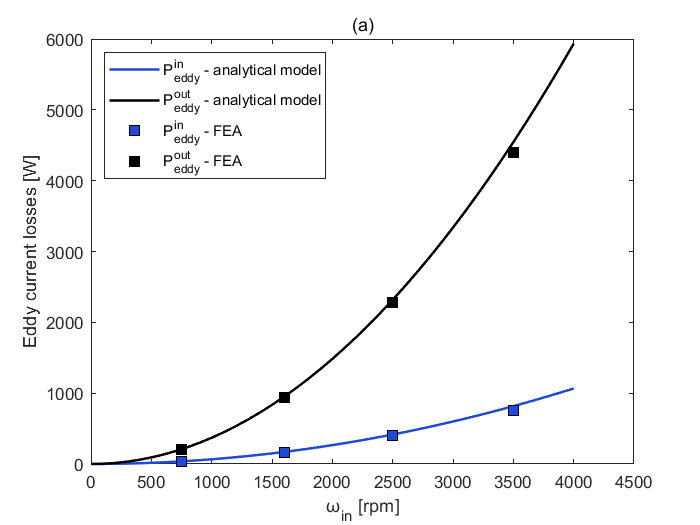
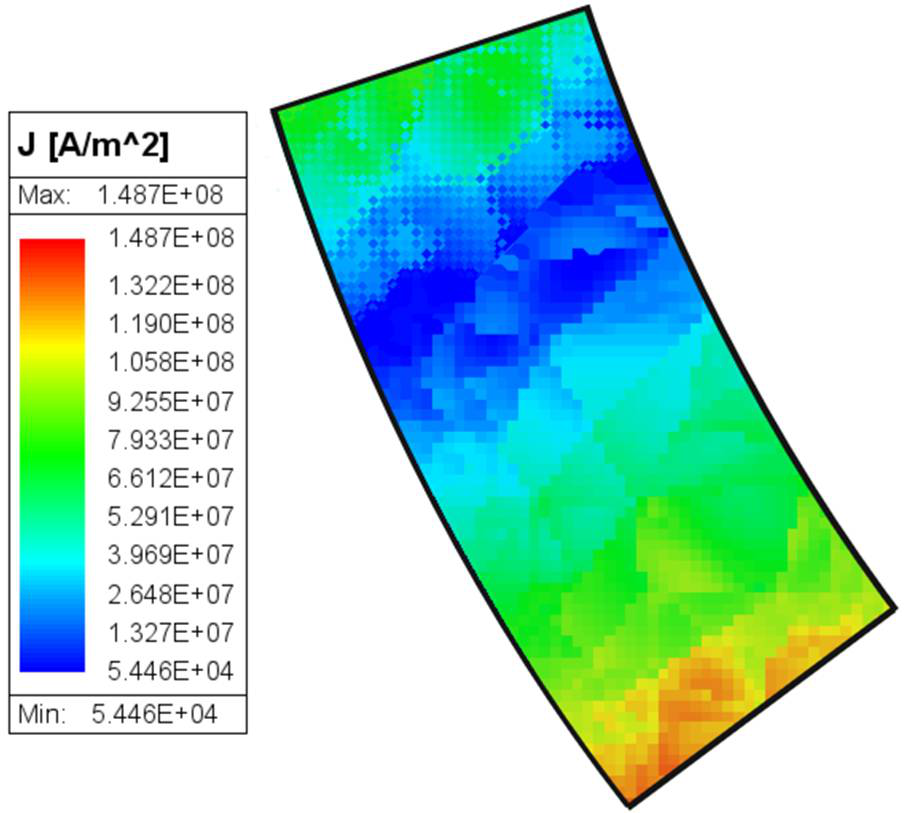
At high rotational speeds, the same magnetic-field variation that enables contactless torque transmission can generate eddy-current losses in conductive permanent magnets and core losses in ferromagnetic segments. These losses reduce efficiency and may increase magnet temperature enough to affect durability, demagnetization margin and practical operating limits.
MD-Lab’s loss-modelling work combines analytical field solutions with targeted finite-element calculations. Permanent-magnet eddy-current losses are computed from the time-varying vector magnetic potential, while core losses in the flux modulator are obtained through a hybrid analytical-FEA treatment of the magnetic-flux-density locus. The approach was validated against transient FEA, with reported deviations of 1.51% for eddy-current losses and 3.18% for core losses at the representative 2500 rpm case.
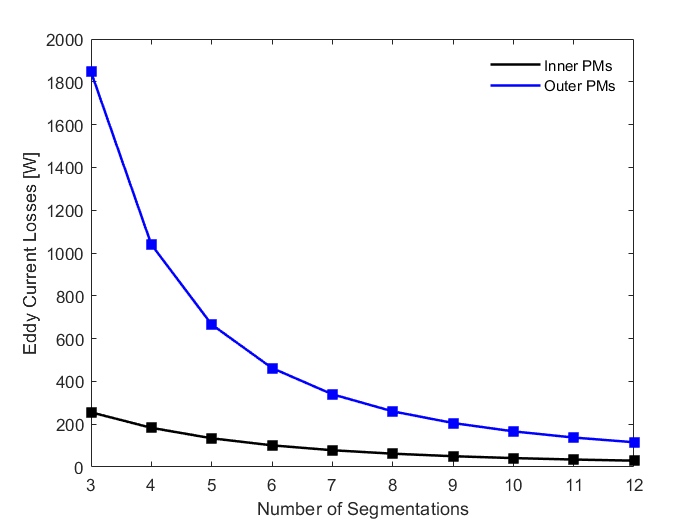
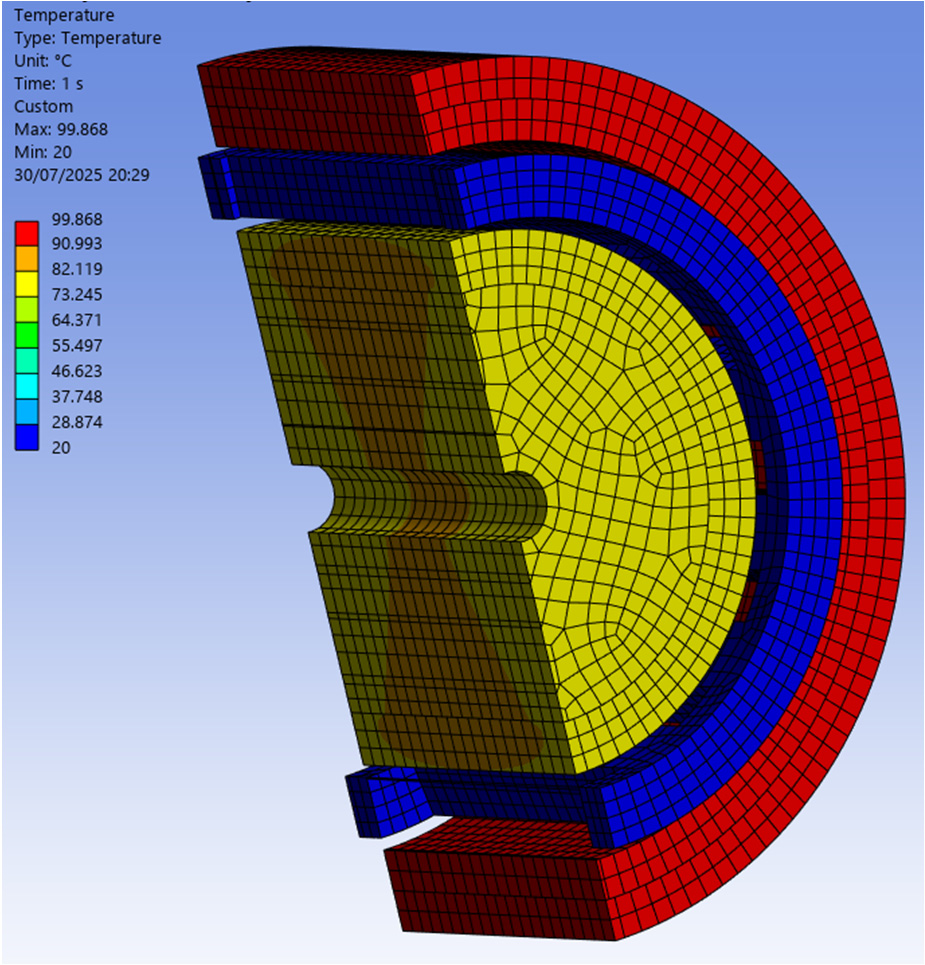
The research also quantifies mitigation strategies. Circumferential segmentation of the magnets strongly reduces PM eddy-current losses, particularly in the outer rotor, where a small number of segments can produce order-of-magnitude improvements. A follow-on thermal model uses the loss estimates with lumped thermal resistance and convection correlations to predict steady-state magnet temperature. This connects electromagnetic optimization with manufacturability, because aggressive segmentation reduces heat but increases assembly complexity.
Related Publications
- Nikolarea et al. (2024). Detailed investigation of the eddy current and core losses in coaxial magnetic gears through a two-dimensional analytical model. Mathematical and Computational Applications. https://doi.org/10.3390/mca29030038
- Tzouganakis et al. (2025). An analytical thermal model for coaxial magnetic gears considering eddy current losses. Modelling. https://doi.org/10.3390/modelling6040114