3D-printed Gears
3D-Printed Gears
MD-Lab research on 3D-printed gears studies how additive manufacturing changes both gear design and gear metrology. The work combines free-form tooth-flank optimization for improved wear resistance with CMM-based dimensional accuracy assessment of polymer spur gears produced by FDM, material extrusion and powder bed fusion.
- 44.1%experimental wear-depth reduction reported for optimized free-form PLA spur gears
- >69%maximum wear-depth reduction predicted in free-form tooth-flank optimization case studies
- ISO Q11-12accuracy grades reported for additively manufactured polymer spur gear specimens
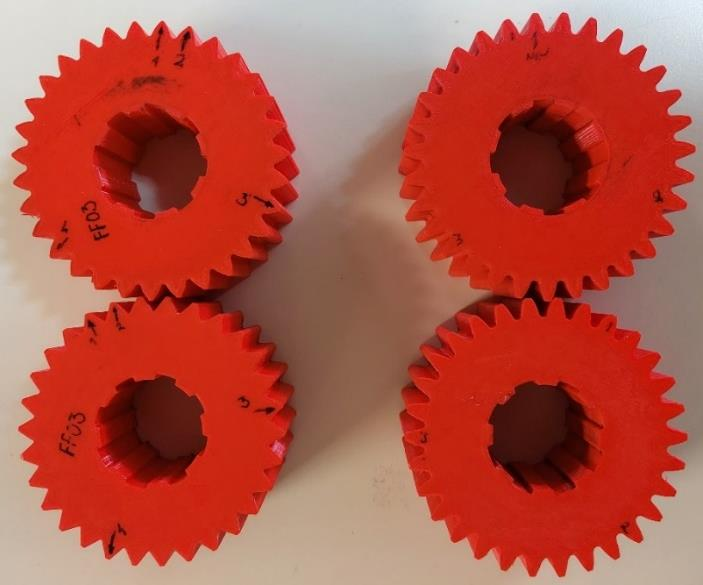
Gear Tooth Flank Optimization
Additive manufacturing makes it practical to fabricate gear tooth profiles that are difficult or uneconomical with conventional tooling. MD-Lab uses this design freedom to move beyond standard involute flanks and generate optimized free-form spur gear profiles for polymer gears.
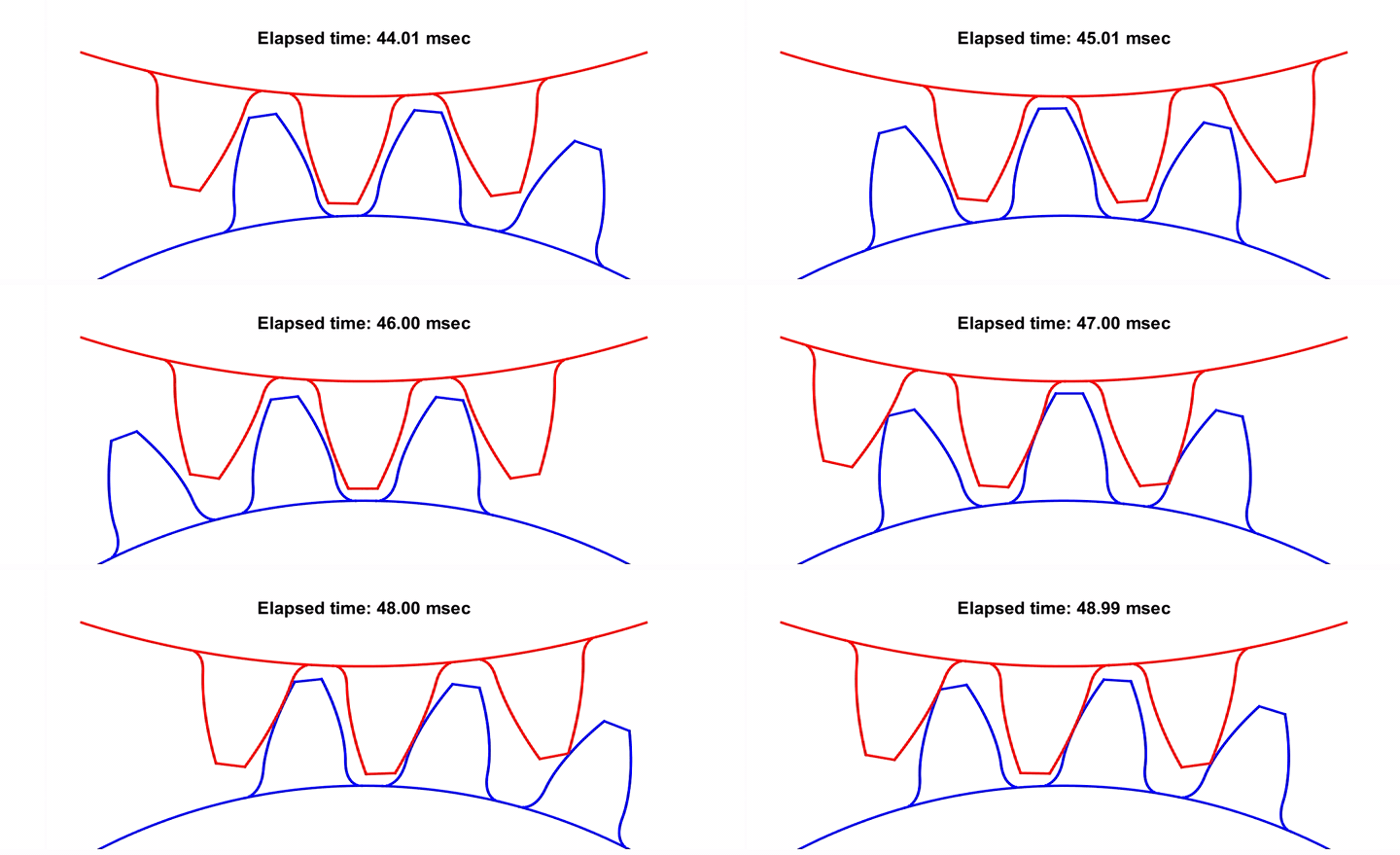
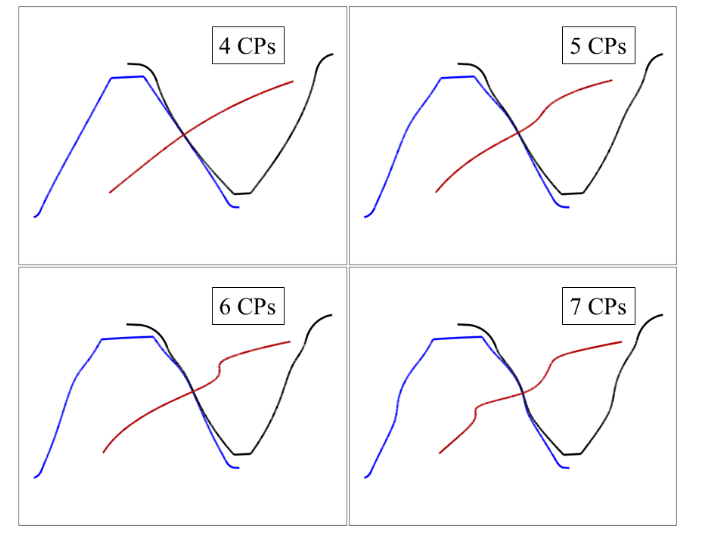
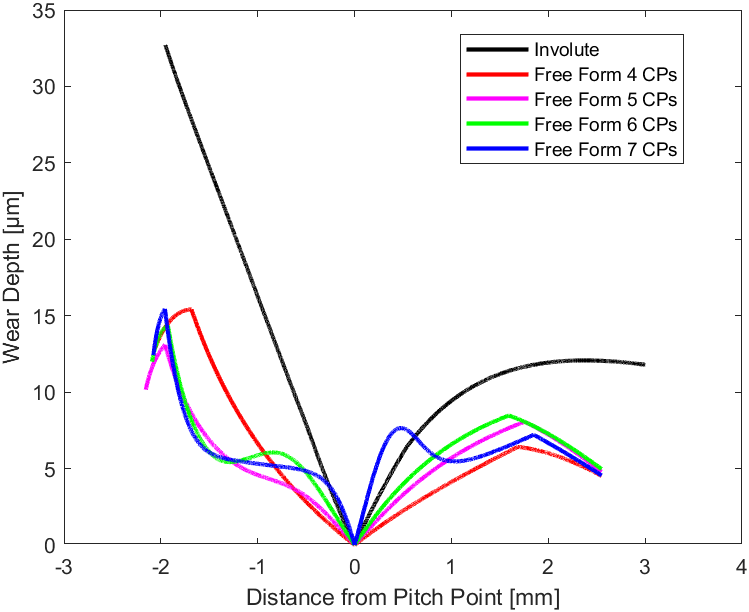
The optimization workflow represents the tooth flank with a B-spline curve. A genetic algorithm varies the positions of the control points while geometric constraints preserve valid conjugate meshing. The objective is to reduce wear depth across the tooth flank, a critical limitation for 3D-printed plastic gears operating under contact and sliding.
- Fourth-order B-spline tooth flank representation used for free-form profile control
- Genetic algorithm optimization of control-point positions under gear-geometry constraints
- Average wear-depth reductions of 53.6% and 56.6% in numerical case studies
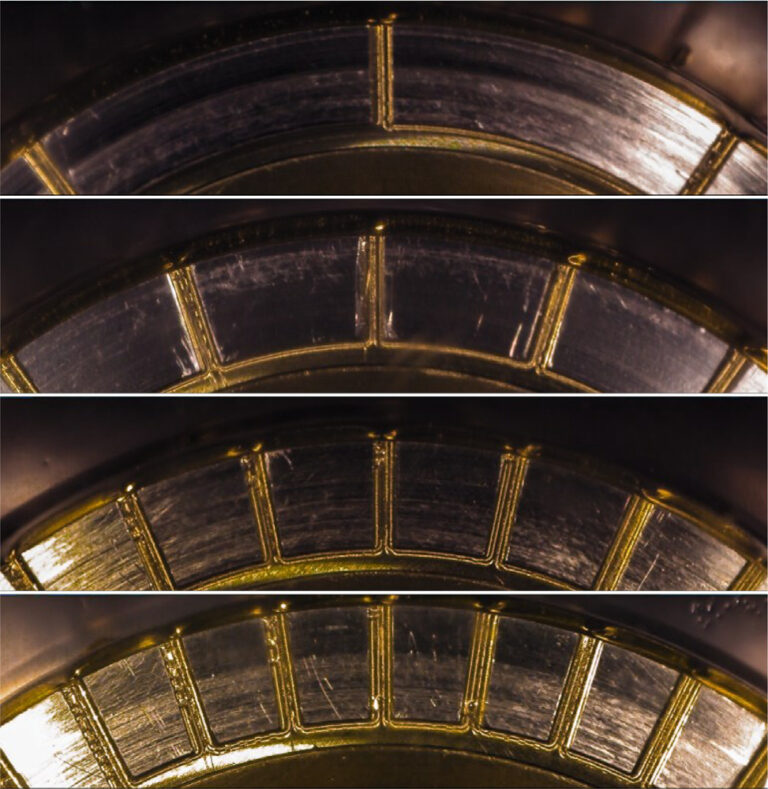
- 44.1% lower experimental wear depth for optimized free-form gears versus standard involute gears
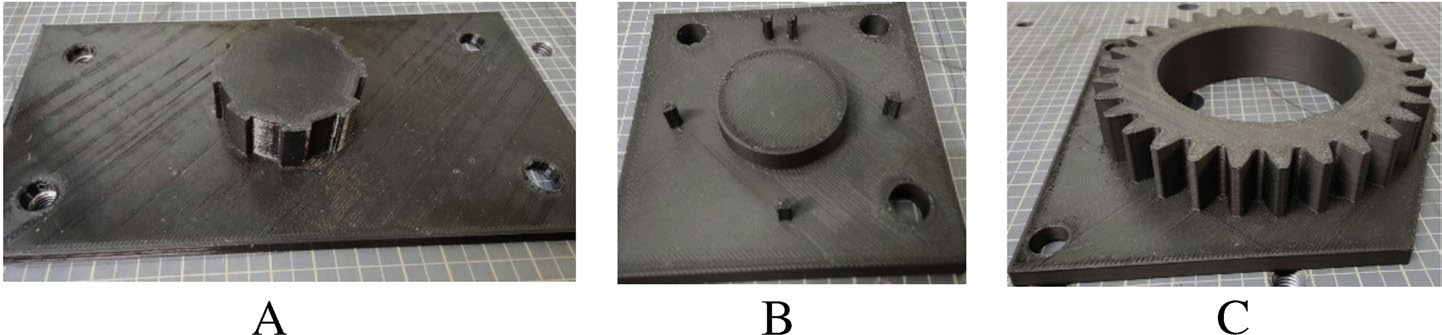
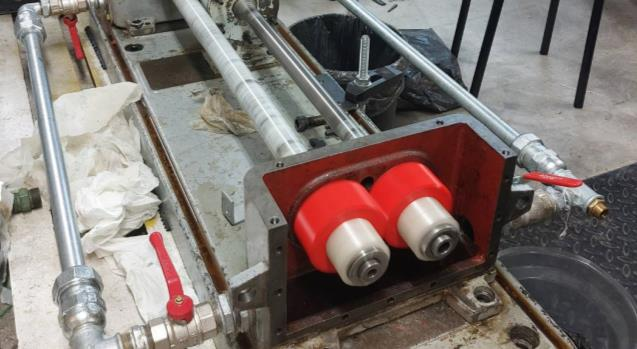
The optimized gears were manufactured by FDM in PLA after tuning the additive-manufacturing parameters for gear accuracy. Experimental validation was performed on an FZG test rig, with tooth profiles measured on a CMM before and after testing. The results show that free-form tooth design can directly improve the functional durability of 3D-printed polymer gears.
Related Publication
- Kalligeros, C., Papalexis, C., Georgiou, D., Krifos, D., Vakouftsis, C., Terpos, K., Goudas, K., Balis, P., Kontaris, T., Kaisarlis, G., Tsolakis, A., Zalimidis, P., Sapidis, N., Provatidis, C. G., & Spitas, V. (2023). Improving the wear resistance of 3D printed spur gears through a free-form tooth flank optimization process. MATEC Web of Conferences, 387, 01002. https://doi.org/10.1051/matecconf/202338701002
Dimensional Accuracy
The second research direction asks how accurately polymer spur gears can be produced by common additive-manufacturing processes. This is crucial because tooth profile, pitch, radial runout and tooth-thickness errors affect mesh quality, vibration, load distribution and interchangeability.
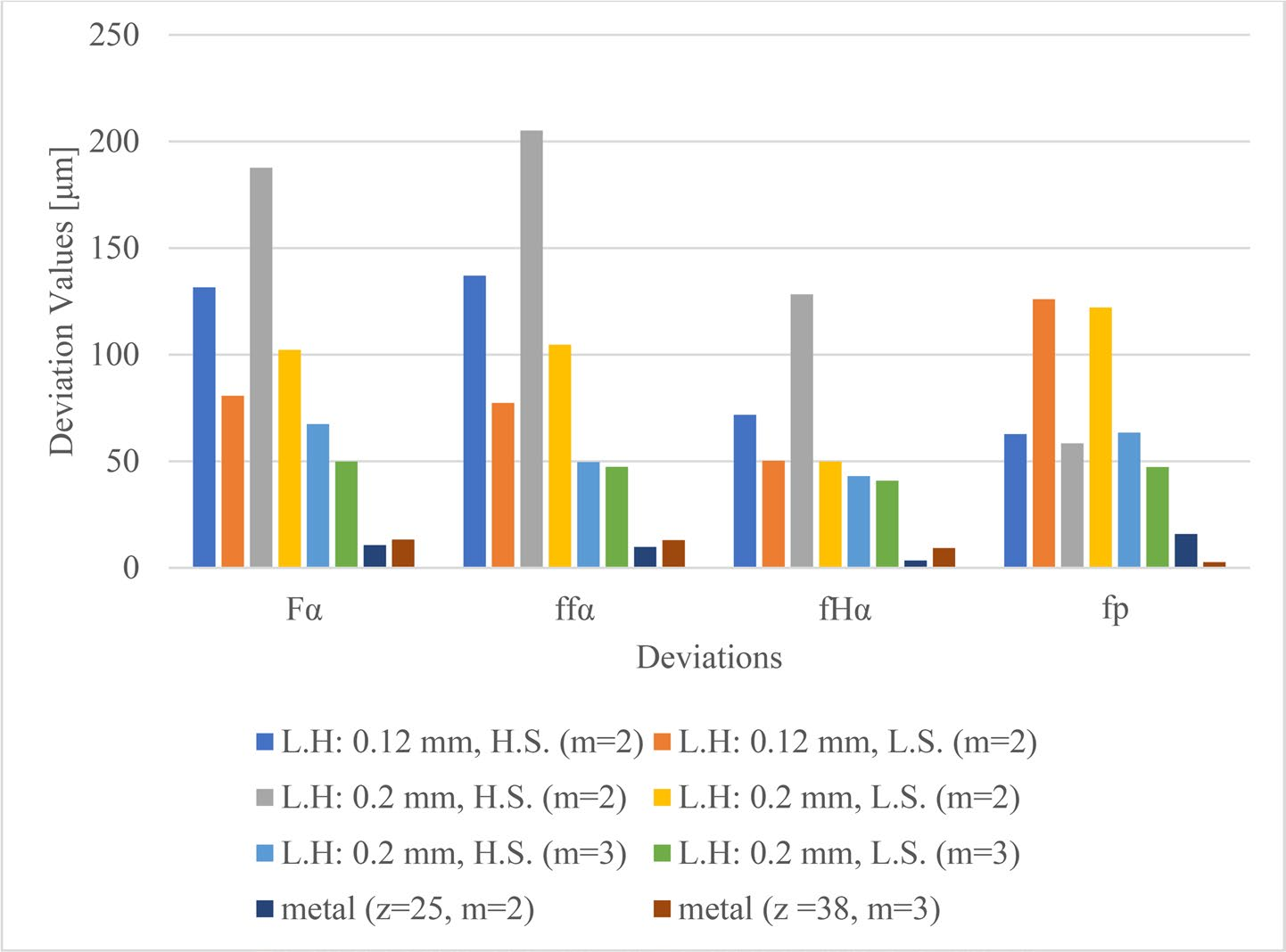
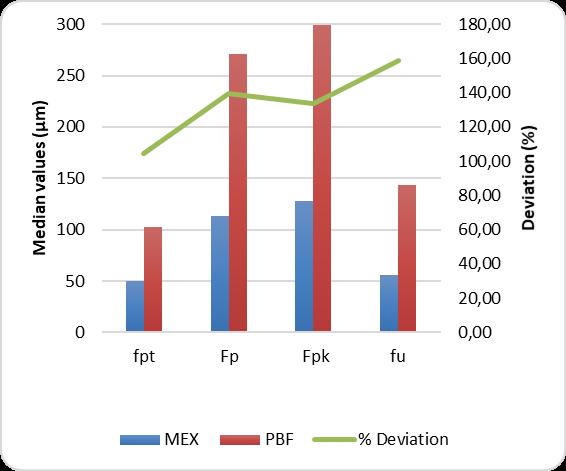
MD-Lab evaluates printed gears with CMM-based gear metrology and ISO 1328-1 quality classification. One study focuses on PLA spur gears fabricated by FDM under different layer heights and printing speeds. Another compares material extrusion MEX-TRB/P/ABS gears with powder bed fusion PBF-LB/P/PA22 gears, using standard gear geometry deviations to assign ISO tolerance classes.
- FDM gear accuracy assessed through profile and pitch deviations against metallic gear references
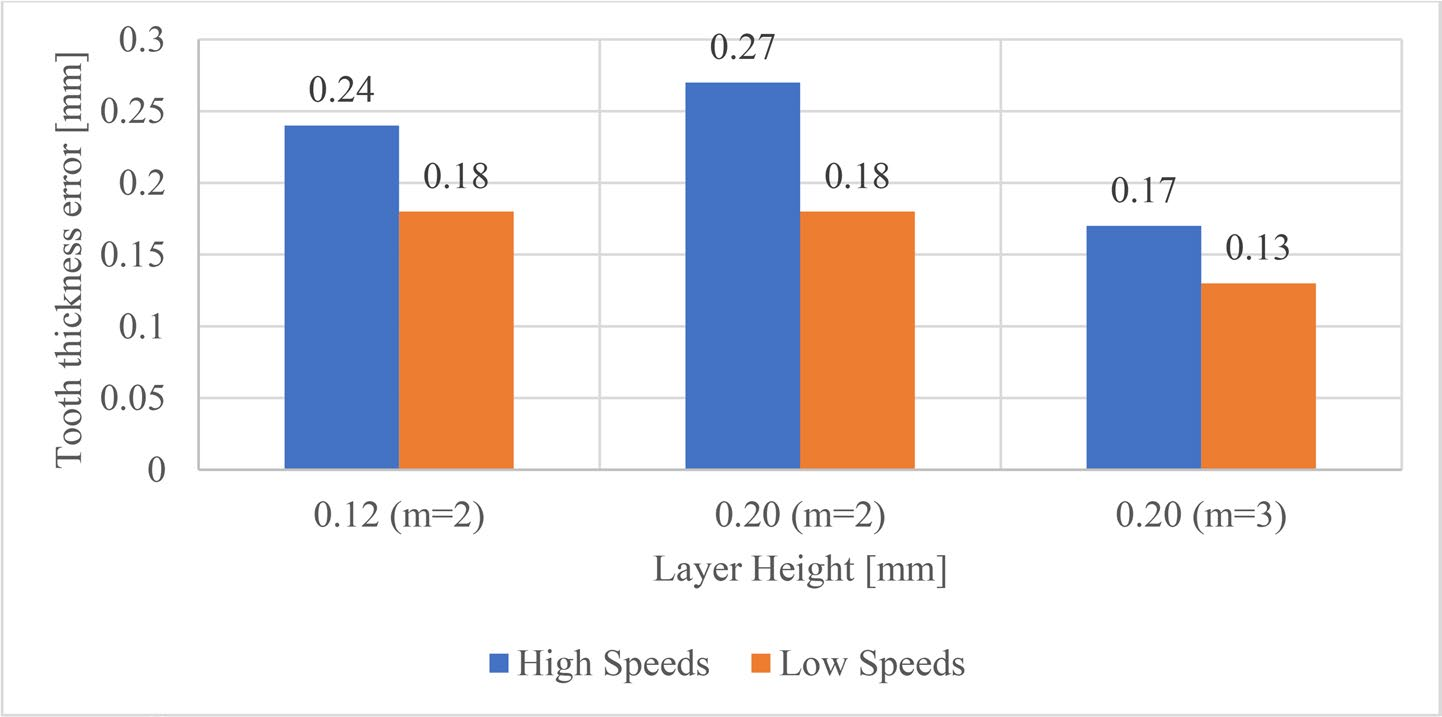
- Smaller layer heights and lower print speeds shown to improve profile accuracy
- High-speed printing linked to overshoot effects associated with extruder inertia
- MEX-TRB/P/ABS specimens reported with higher accuracy than PBF-LB/P/PA22 specimens
The dimensional accuracy work shows both the promise and the limits of 3D-printed polymer gears. FDM gears can be useful for prototypes and low-demand functional applications, especially when larger modules and tuned process parameters are acceptable. However, the reported accuracy remains far from the quality grades expected for most precision metallic gears, so process compensation, slicing strategies, post-processing and machine-learning parameter tuning remain important research directions.
Related Publications
- Papalexis, C., Krifos, D., Kalligeros, C., Bris, N., Tzouganakis, P., Kaisarlis, G., Tsolakis, A., Sapidis, N., & Spitas, V. (2026). Dimensional accuracy assessment of polymeric spur gears fabricated by fused deposition modeling. Interactions, 247, 81. https://doi.org/10.1007/s10751-026-02394-0
- Vakouftsis, C., Vasileiou, G., Kaisarlis, G., Kalligeros, C., Papalexis, C., Zalimidis, P., Provatidis, C., & Spitas, V. (2024). Comparative analysis of the ISO tolerance class of 3D-printed spur cylindrical gears produced with material extrusion and powder bed fusion techniques. International Journal of Powertrains, 13(3), 225-247. https://doi.org/10.1504/IJPT.2024.142173