Heart Perfusion
Blood-Free Ex-Vivo Heart Perfusion System
The Heart Perfusion project develops a blood-free ex-vivo system for keeping donor hearts viable, assessable and recoverable between organ retrieval and transplantation. Enabled by a patented T3-hormone solution developed by the Department of Pharmacology of the National and Kapodistrian University of Athens and a redesigned perfusion circuit, the work targets longer preservation windows, simpler logistics and substantially lower operating cost.
Project Scope and Preservation Challenge
Heart transplantation remains a definitive treatment for end-stage heart failure, but the number of usable donor hearts is constrained by the short ex-vivo preservation window. Standard practice cools the heart to about 4°C and stores it on ice, which typically limits transport, evaluation and implantation to roughly four to six hours.
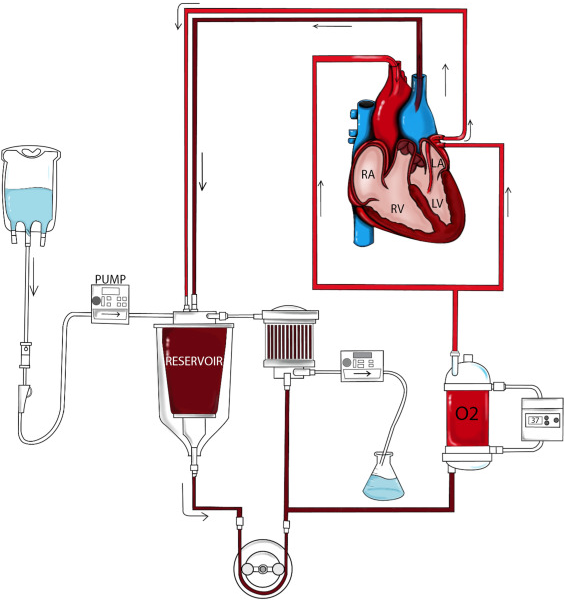
Machine perfusion offers a different preservation logic: instead of storing a static cold organ, the heart can be maintained in a functional, near-physiological state outside the body. This creates an opportunity for pre-transplant assessment and treatment of ischemia-reperfusion injury, but existing blood-based systems are costly and logistically demanding.
MD-Lab’s Contribution
MD-Lab’s engineering contribution is centered on the redesigned perfusion circuit, prototype integration and the experimental pathway for evaluating ex-vivo rat-heart perfusion in collaboration with clinical experts.
The work is framed as a biomedical machine-design problem: fluid circulation, temperature control, oxygenation, system reusability, experimental accessibility and organ-condition monitoring must be brought together in a compact apparatus suitable for validation studies.
Blood-Free Perfusion Circuit
The proposed system replaces blood with a proprietary T3-hormone solution intended to maintain cardiac metabolism while promoting favorable myocardial recovery and remodeling during ex-vivo preservation.
From an engineering standpoint, the circuit has to sustain controlled flow through the organ, support oxygenation, regulate temperature and provide a platform for functional assessment. Removing blood from the perfusate reduces the dependency on blood handling, compatibility management and complex logistics, while also supporting component reuse where clinically appropriate.
Ex-Vivo Rat-Heart Prototype System
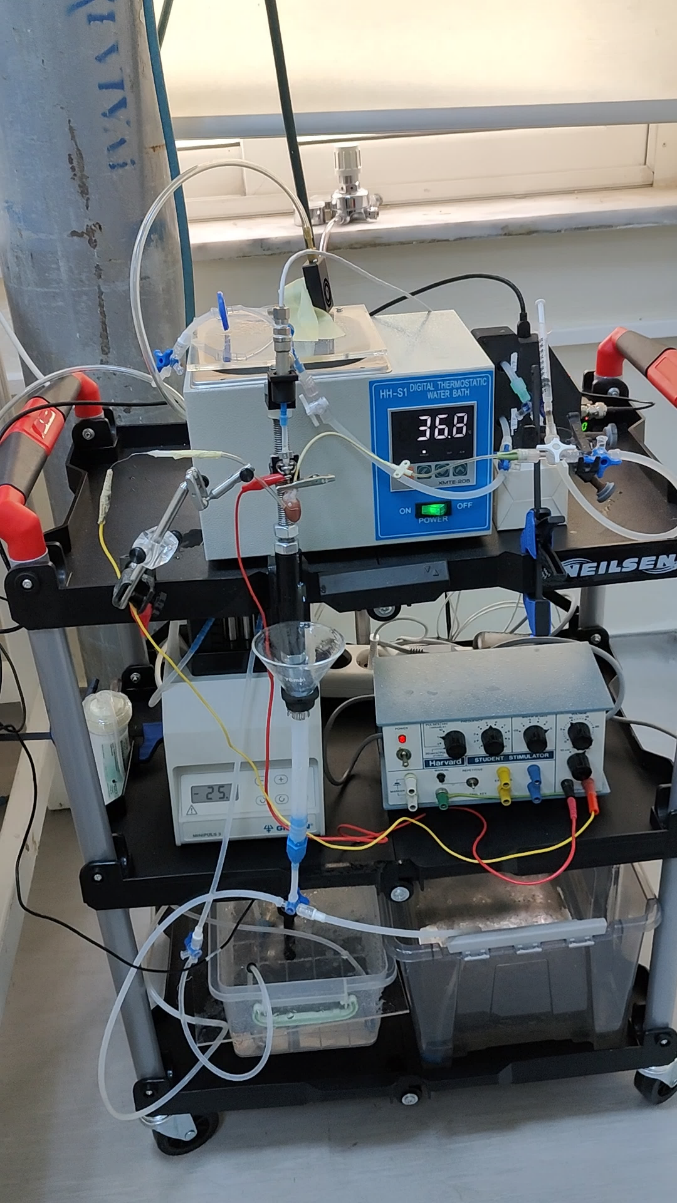
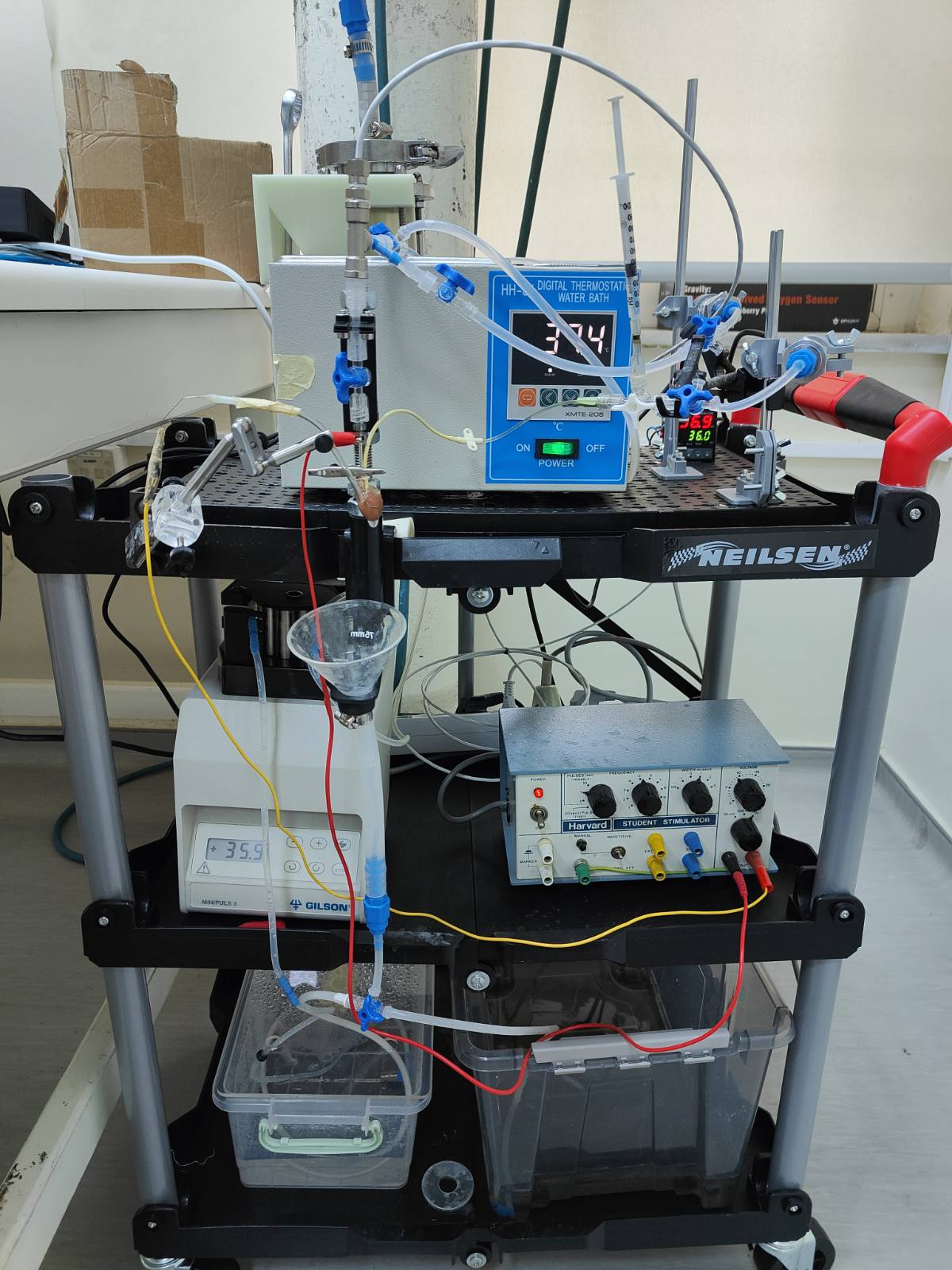
Prototype systems for ex-vivo rat-heart perfusion are under experimental evaluation. The prototype integrates the perfusion loop with laboratory pumping, thermal conditioning, tubing, instrumentation and a compact organ interface suitable for controlled benchtop studies.
This development stage moves the concept from a circuit proposal to a physical apparatus. It allows the research team to examine practical issues that are central to machine perfusion, including stable circulation, temperature management, repeatable setup, monitoring access and compatibility with small-animal validation protocols.
Main Findings and Technical Outcomes
The development targets three main outcomes: elimination of blood-based perfusate, a redesigned and simpler perfusion circuit, and a major operating-cost reduction compared with conventional machine-perfusion systems. It also supports extended ex-vivo preservation, improved post-perfusion myocardial condition and broader assessment of marginal donor hearts as intended clinical-engineering benefits.
At this stage, the project is an active development and validation effort rather than a completed clinical deployment. Its central engineering outcome is a reusable, lower-complexity blood-free prototype platform that supports ongoing experimental validation.
Engineering Significance
The work is significant because donor-heart preservation is not only a clinical problem; it is also a coupled mechanical, fluidic, thermal and systems-integration problem. A practical perfusion machine must preserve tissue condition while remaining affordable, repeatable, transportable and simple enough for realistic clinical workflows.
By replacing blood-based perfusion with a T3-hormone solution and simplifying the circuit architecture, the project targets two barriers that limit adoption of advanced preservation technology: high operating cost and operational complexity. If validated, this design direction could help increase the usable donor-heart pool, extend geographical reach and make ex-vivo perfusion more accessible to transplantation centers.