NOESIS: Seismic Protection Devices
NOESIS
Novel Seismic Protection Devices in All Spatial Directions
NOESIS developed and demonstrated a new generation of vibration and seismic protection devices for all spatial directions. The project was built around the KDamper concept, an innovative isolation and absorption architecture that uses negative-stiffness elements to protect structures, equipment and sensitive installations from seismic and other low-frequency excitations.
Scope
The primary scope of NOESIS was the design, construction and demonstration of innovative protection devices against earthquakes and low-frequency excitations in three spatial directions. The project was led by the Laboratory of Dynamics, NTUA, and its director Prof. Ioannis A. Antoniadis, with the wider effort focused on turning the KDamper principle from a scientific concept into experimentally validated device families with practical engineering value.
The central technical challenge was the realization of negative-stiffness elements with predictable, repeatable behavior and a realistic path toward low-cost implementation. This required both mechanical ingenuity and systematic modelling, because the negative-stiffness function is produced by combining conventional positive-stiffness elastic components inside carefully designed mechanisms.
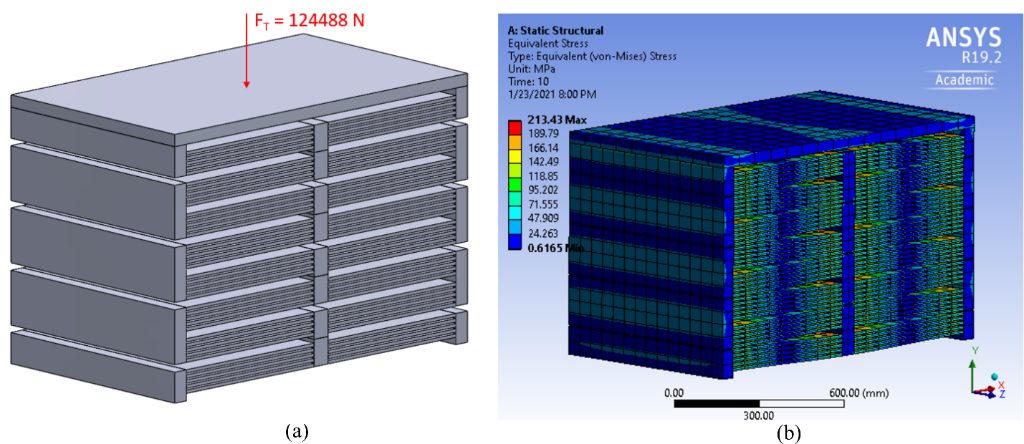
Within this framework, MD-Lab contributed the mechanical design and validation backbone of the project: the design of the Extended KDamper experimental arrangement, finite-element simulations and detailed design for the leaf-spring concept, and extensive dynamic testing of the developed prototypes.
By the end of the project, the KDamper principle had advanced from TRL 1 to TRL 4, with TRL 5 maturity approached through multiple experimental prototypes and application-oriented product concepts.
Impact
NOESIS addressed a persistent limitation of conventional vibration isolation: achieving low isolation frequencies normally requires very soft supports or large added masses, which can introduce excessive static deflections and impractical installation constraints. KDamper-based devices aim to combine high static stiffness with improved low-frequency isolation, opening a route toward compact absorbers for demanding seismic and vibration environments.
The project investigated applications ranging from vertical vibration and seismic supports to acoustic floor isolation, horizontal seismic base isolation, bridges and wind-energy structures. Its broader impact lies in the transition from theoretical negative-stiffness concepts to modular device layouts, prototype tests and product families that can be adapted to different load ranges and target markets.
MD-Lab’s Contribution
From KDamper theory to device architecture
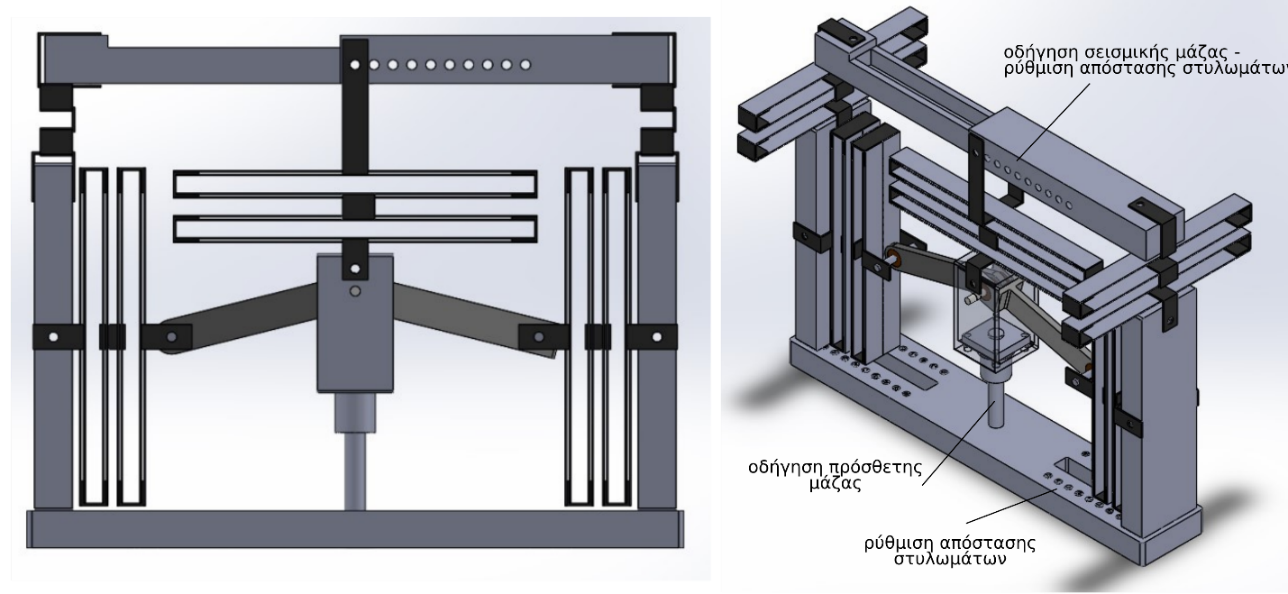
MD-Lab contributed to the transformation of the KDamper concept into concrete device architectures through the design of the Extended KDamper, finite-element simulations, detailed design of the leaf-spring concept and extensive dynamic testing. The lab reviewed candidate vibration and seismic protection technologies, investigated alternative negative-stiffness implementations and developed parametric layouts that could be installed modularly in existing elastic supports across a wide range of loads.
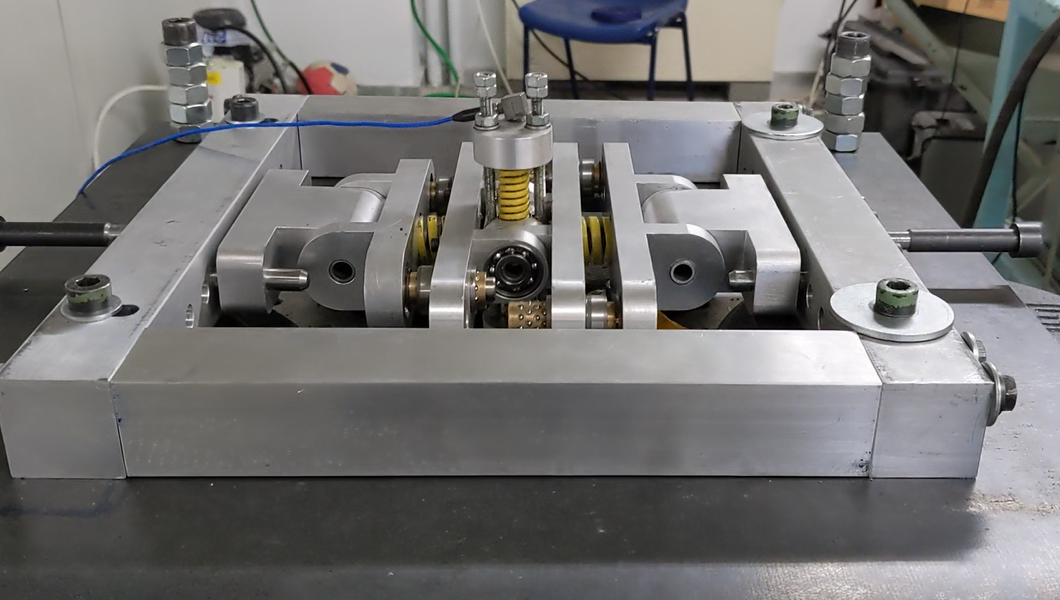
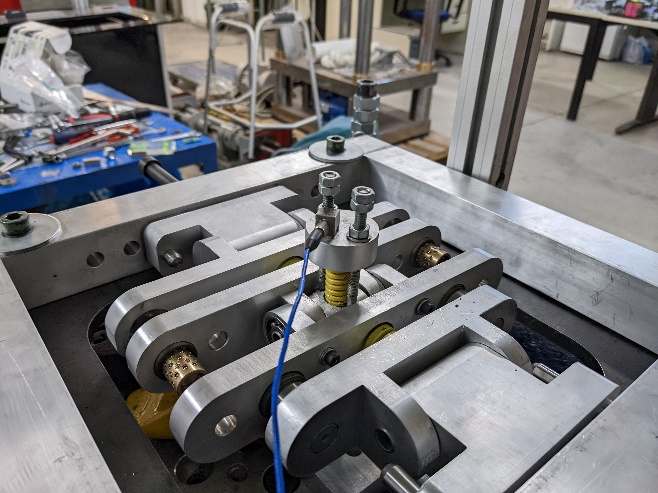
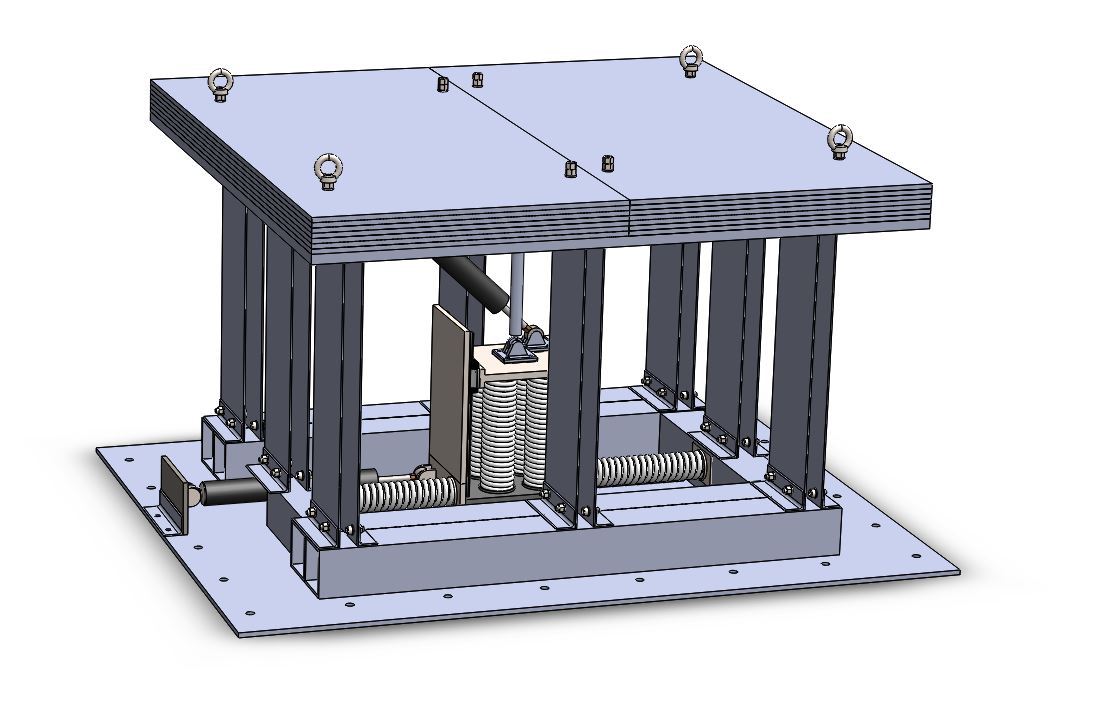
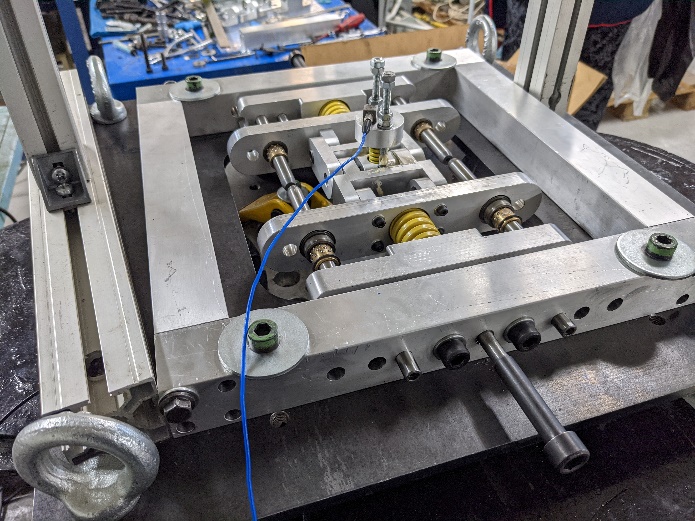
The work included detailed design of an Extended KDamper experimental arrangement for a 1000 kg superstructure with a target displacement range of +/- 50 mm. MD-Lab dimensioned the key mechanical subsystems, including leaf springs, positive-stiffness compression springs, the negative-stiffness mechanism, dampers, added mass, linear guides, support frames and interfaces required for testing on the DERRITRON VP 25M electromagnetic vibrator.
Elastic elements, negative stiffness and verification
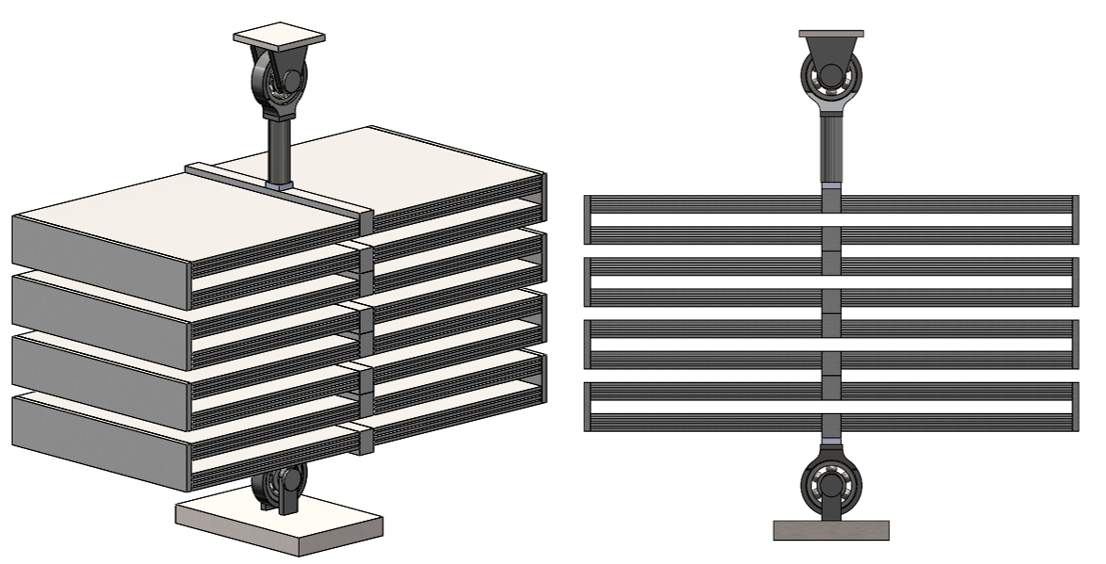
A major part of the work focused on the elements that make negative-stiffness behavior practical. The team studied mechanisms with inclined pre-compressed springs, horizontal pre-compressed springs with lever arms, vertical or horizontal pre-tensioned springs and new flat elastic metal strip spring concepts. These alternatives were analyzed so that the required negative stiffness could be maintained across the expected displacement range without destabilizing the protected structure.
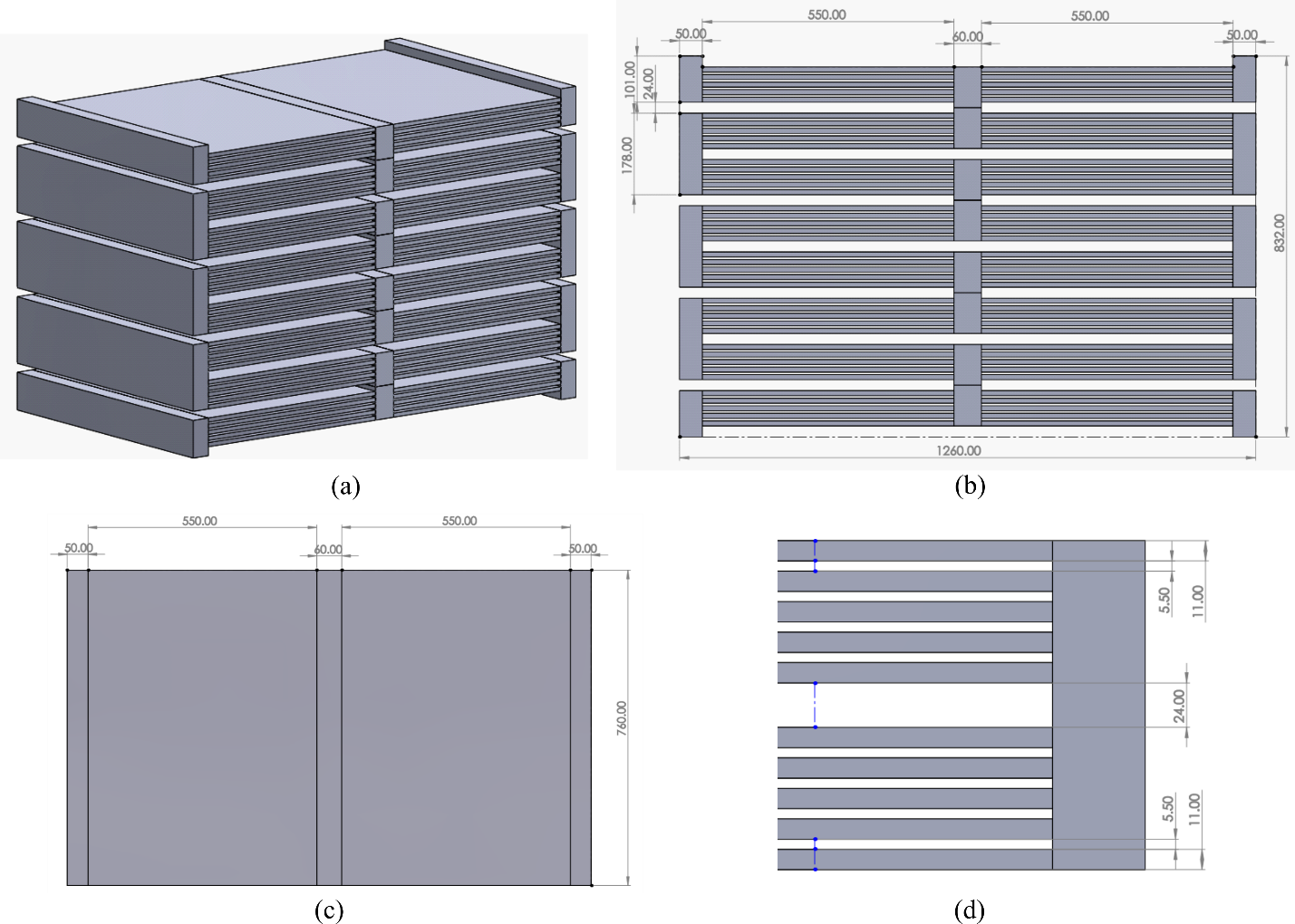
The flat-strip spring concept became especially important because it offered a manufacturable route for KDamper seismic protection. MD-Lab supported the design with analytical calculations, finite-element checks and detailed geometry definition, linking the mechanical design to load capacity, stress limits, travel requirements and repeatable experimental behavior.
Prototype pathway
The project combined modelling, mechanical design, construction and experimental feedback. Prototype work covered low and medium vertical load configurations, including designs based on prismatic helical springs and alternative negative-stiffness mechanisms. The experimental results helped refine the designs and shaped the final commercial product concepts pursued by the industrial partners.