Rail Grease Characterization
Thermal Testing of Old Rail Grease
For STASY S.A., MD-Lab developed a repeatable laboratory procedure for assessing the thermal behavior of old rail lubricating grease under controlled heating conditions. MD-Lab designed the thermal-test workflow, configured the heating and temperature-monitoring setup, recorded temperature history and timed observations, and prepared the technical documentation. Supporting chemical analysis was carried out separately by the Fuels and Lubricants Technology Laboratory of NTUA.
Scope
The project scope was to create a laboratory method that could reproduce controlled thermal loading on old rail lubricating grease and turn qualitative observations into a documented, time-based test record. The objective was to support internal technical decisions with repeatable measurements rather than isolated field impressions.
MD-Lab’s Contribution
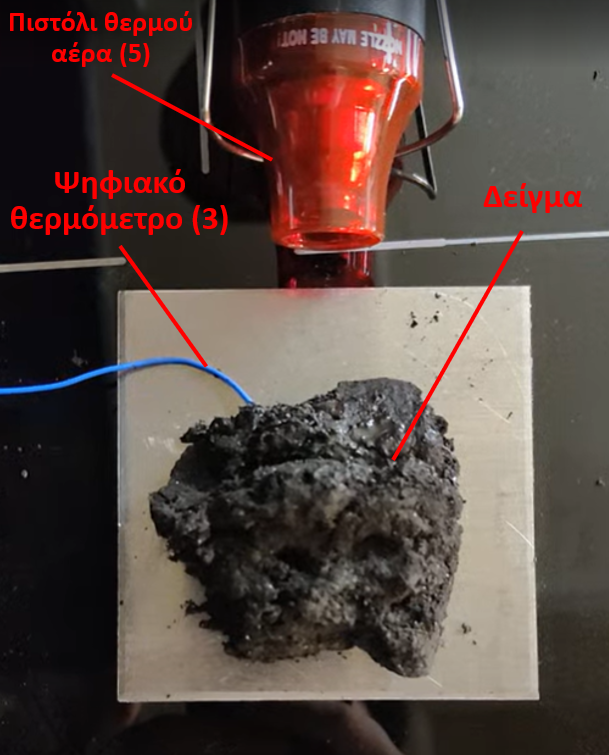
MD-Lab configured the thermal-test arrangement, including the heating source, stainless-steel vessel, thermocouple placement and temperature readout. The procedure included staged heating, controlled exposure to a preheated surface, continuous temperature tracking and time-stamped visual observations at defined points in the experiment.
Across the tests, MD-Lab measured the temperature history of the setup, the duration of each exposure step, the timing of observable material responses and repeatability notes between runs. The resulting record gave STASY a consistent laboratory basis for internal comparison of scenarios, maintenance planning and technical discussion of old-grease behavior.
The laboratory documented the apparatus, measurement chain, test sequence and observation protocol. Chemical analysis was performed separately by the Fuels and Lubricants Technology Laboratory of NTUA and was incorporated only as supporting input to the internal deliverable.
This public version describes the thermal-testing workflow only. Site-specific context, internal observations, risk interpretation and numerical conclusions remain confidential.