Nitinol Superelastic DCP
Nitinol Superelastic Compression Plate for Femoral Fracture Fixation
This project investigates a Nitinol superelastic compression plate for femoral fracture fixation. By using the nearly constant-force response of superelastic Nitinol, the design aims to maintain fracture-site compression as bone resorption and loading change the gap conditions during healing.
Project Scope and Orthopedic Problem
Internal fixation plates are central to fracture treatment because they align bone fragments and provide immediate stability. Conventional dynamic and locking compression plates, however, can lose compression as bone resorption progresses, concentrate load in the implant, and introduce risks such as stress shielding, delayed union, screw pull-out and insufficient micromotion at the fracture site.
The project explores whether a superelastic compression plate can provide a more adaptive fixation behavior. Instead of acting as a mostly rigid bridge, the plate is designed to store elastic deformation and maintain useful compression over a clinically relevant range of fracture-gap change.
MD-Lab’s Contribution
MD-Lab developed and assessed the conceptual plate designs, defined mechanical specifications for compression, deformation and micromotion, and built finite element workflows for plate pretension and femoral fracture simulations.
The work compares circular-hole and slot-hole variants, evaluates non-pre-bent and pre-bent application states, and studies representative femoral shaft fracture configurations under rest and walking load cases.
Superelastic Nitinol Concept
The design uses Nitinol in its superelastic regime. Under loading, Nitinol can undergo large recoverable strains while operating across a plateau-like stress response; after unloading, the material returns through a hysteretic path. This behavior is useful for bone fixation because it can help maintain compressive force even when the fracture gap changes.
The plate specification targets several coupled requirements: 3-6 mm of recoverable deformation, approximately 5-6% strain in the compliant regions, high initial compression to account for stress relaxation, fatigue-safe stresses and micromotion in a range that can support callus formation without destabilizing the fracture.
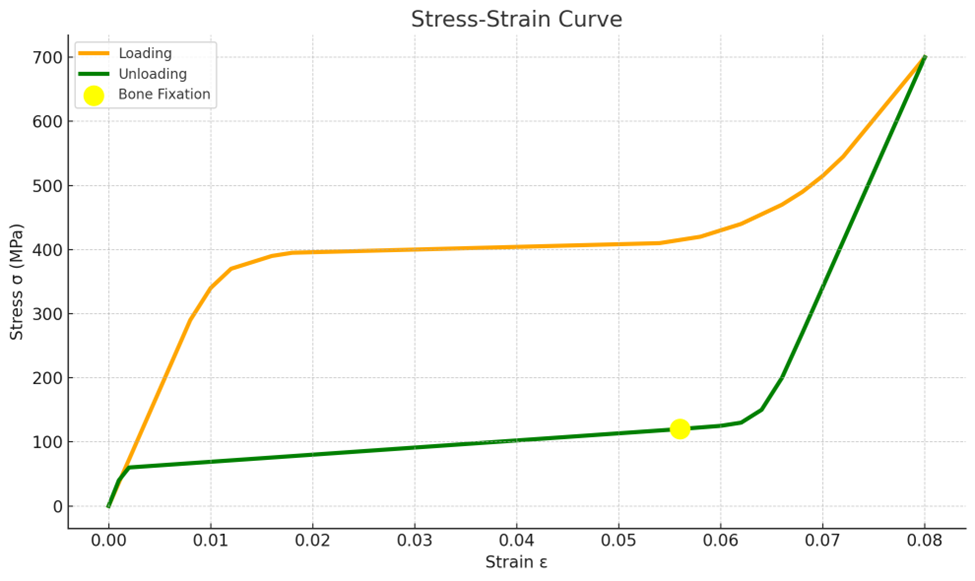
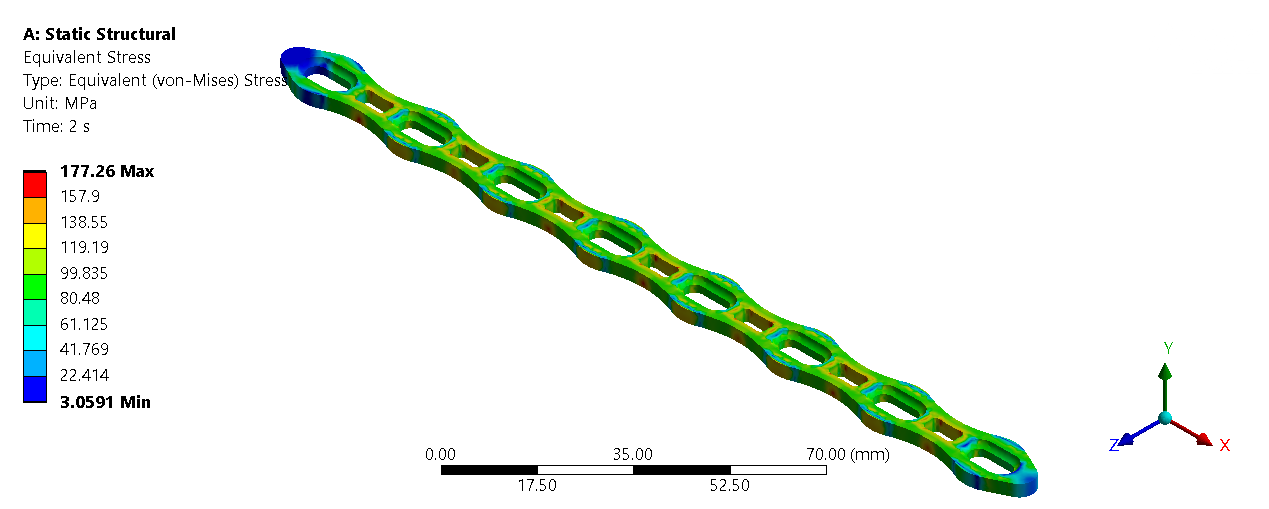
Plate Geometry and Pretension Analysis
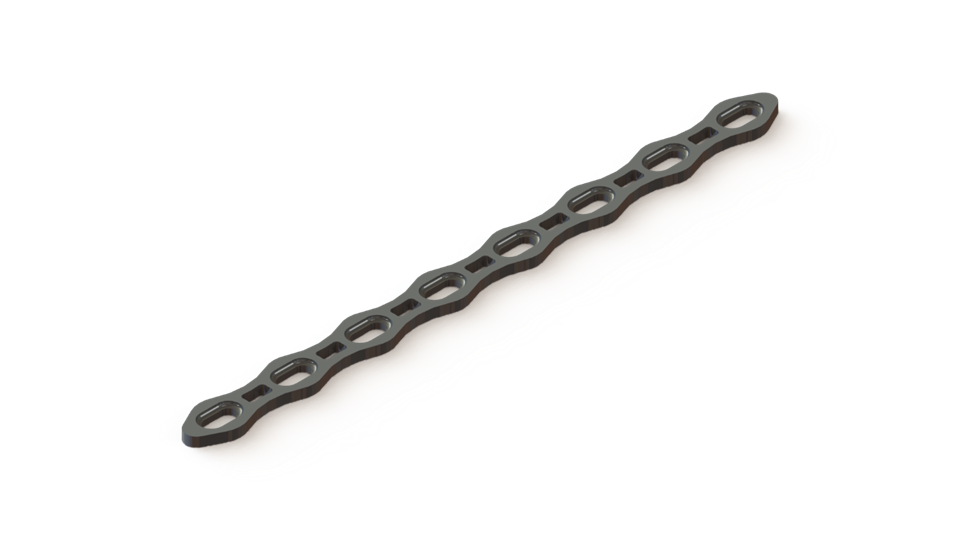
The plate geometry uses repeated spring-like cuts to create controlled compliance along the implant. This modular pattern allows the plate to deform under preload while preserving the overall outline and fixation logic of contemporary compression plates.
Finite element pretension analyses were used to simulate an initial high loading step followed by reduction to the target compression state. The slot-hole design showed stronger utilization of the compliant geometry than the earlier circular-hole concept and became the preferred design direction for more demanding fracture cases.
Femoral Fracture Simulation Workflow
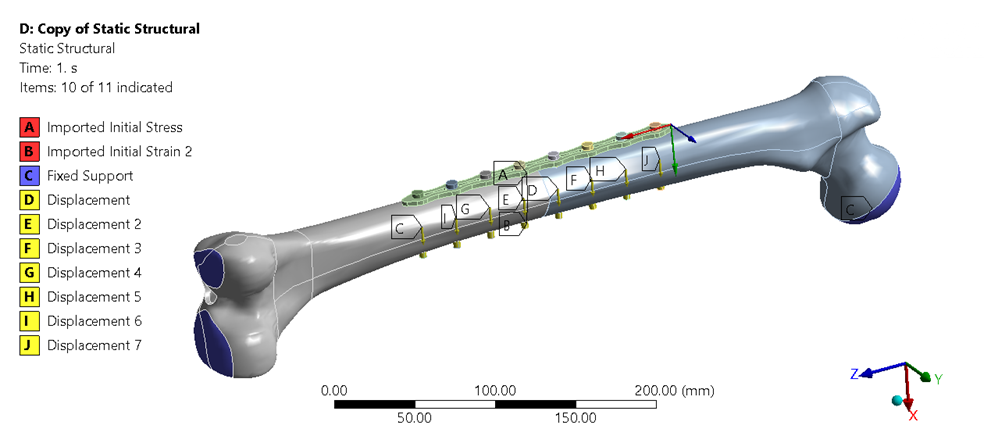
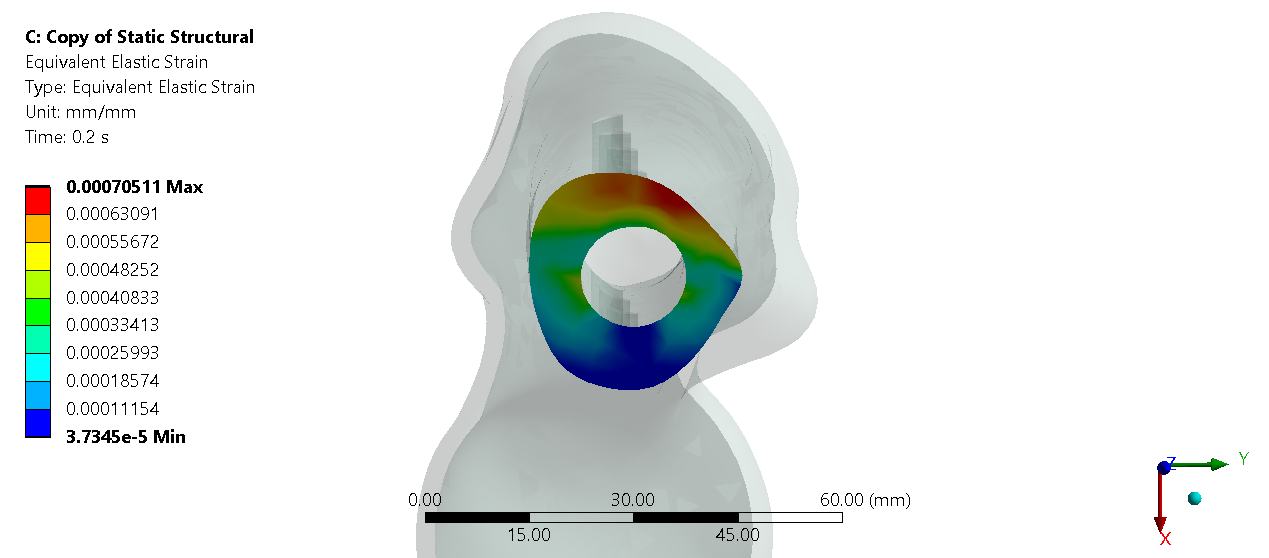
The design was evaluated on femoral shaft fracture models, including A2, A3, B2 and C2 configurations. The simulations considered both rest and walking conditions, using metrics tied to osteogenesis and structural safety: compression force, fracture-area strain, micromotion, implant stress, screw stress and screw pull-out force.
A pre-bent application state was also studied. Pre-bending the plate with screw displacement improved the elastic behavior of the bone-plate assembly, increased walking-state micromotion into a more favorable range for A3 fracture conditions, and reduced stress demand on the screws compared with the non-pre-bent case.
Slot-Hole Design for Challenging Fractures
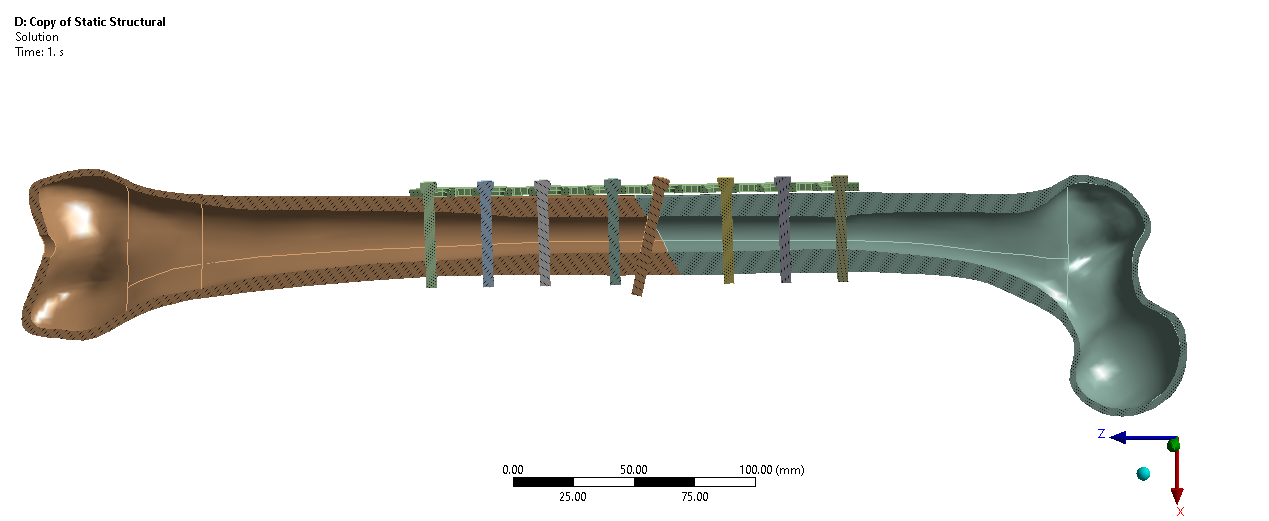
The circular-hole design performed adequately for A3 and C2 femoral shaft fracture cases, but it did not meet the desired performance for A2 and B2 fractures because of excessive mobility and elevated stresses. The slot-hole design was therefore assessed for the A2 case, where diagonal screw placement could help stabilize the fragments.
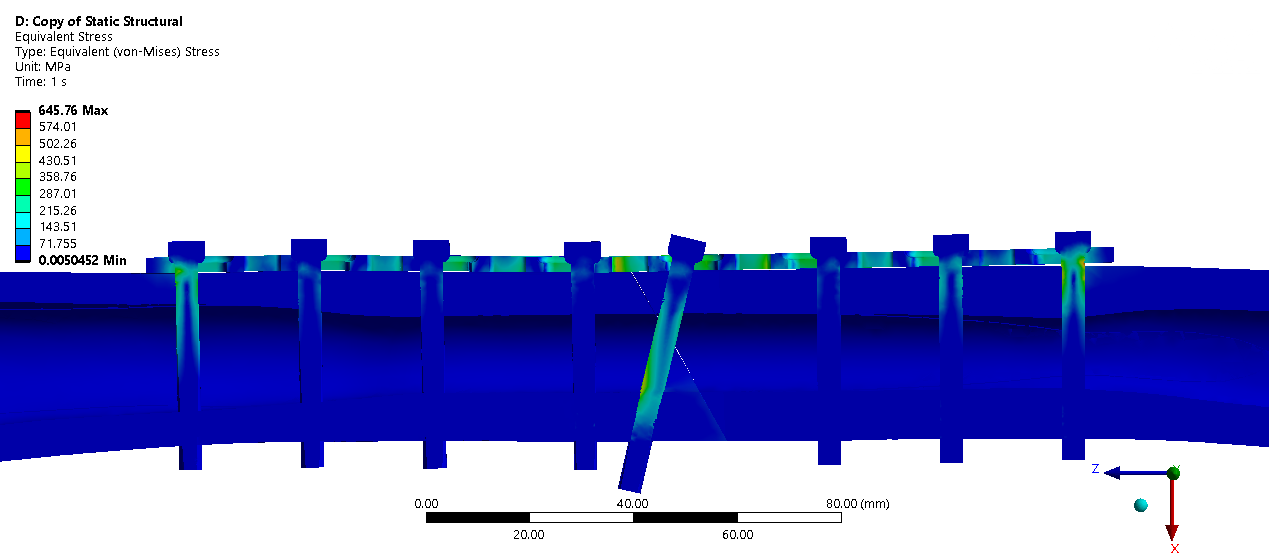
Compared with the circular-hole design, the slot-hole configuration increased rest-state compression, improved strain distribution across the fracture area, and reduced micromotion into the specified range. The remaining limitation was elevated stress in the diagonal screw, which identifies a clear target for future design refinement.
Main Findings
Pretension analysis validated the feasibility of using compliant Nitinol plate geometry to generate controlled compression. Pre-bent plate application improved the mechanical response of the bone-plate assembly relative to the non-pre-bent case, particularly by increasing beneficial micromotion and reducing screw stress.
Across fracture types, the circular-hole design was most suitable for A3 and C2 cases, while A2 and B2 cases required additional fixation logic. The slot-hole design improved the A2 fracture response substantially, although diagonal screw fatigue remains the major design concern.
Engineering Significance
The project is significant because it treats bone plating as an adaptive mechanical system rather than a purely rigid fixation problem. By using superelastic Nitinol, the plate can be designed to maintain compression, permit controlled micromotion and reduce stress-shielding tendencies that can compromise healing.
The work provides a simulation-supported design framework for next-generation orthopedic compression plates. Further experimental validation, including material behavior testing and in-vitro or in-vivo assessment, would be needed before translating the concept toward clinical use.