3BUILD: 3D printing in construction
3BUILD

Design and development of a novel large-scale 3D printer for concrete buildings and infrastructure
3BUILD developed a lightweight, portable robotic mortar printer for buildings and infrastructure, bringing large-scale 3D printing in construction from laboratory trials to a full-scale demonstrator. The project concluded with the construction of the first 3D-printed house in Greece at the TITAN Elefsina Plant.
Scope
The scope of 3BUILD was to design, develop and validate a novel large-scale 3D printing system for constructing concrete buildings and structural components. The project combined printer architecture, printable cementitious materials, automation, prototype construction and structural validation into one integrated construction workflow.
The work moved deliberately from controlled laboratory development to full-scale demonstration. Small and half-scale prototypes helped the team refine printing parameters and material behavior, while the final full-scale printer proved that the approach could be deployed on an industrial site and used to produce a real building envelope.
- Mechanical design of a full-scale robotic mortar printer.
- Development of specialized printable mortars and process parameters.
- CAD/CAM and CNC-like automation for controlled deposition.
- Experimental validation of printed components, including structural and seismic performance considerations.
Impact
3BUILD brought 3D printing in construction beyond small-scale laboratory applications and into a full-scale building demonstration. The project targeted faster and more automated construction, reduced labor-intensive site operations, lower material waste and greater freedom to create geometries that are difficult or costly with conventional formwork.
The combination of a deployable robotic printer and tailored printable mortars is especially relevant for construction in remote or challenging locations, including islands and mountainous regions. At the same time, the project kept structural reliability at the center of the work, linking digital construction methods with mechanical performance, seismic requirements and practical site constraints.
MD-Lab’s Contribution
Mechanical design of a deployable construction printer
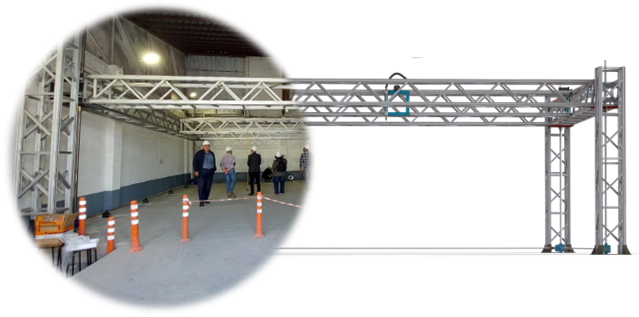
MD-Lab was responsible for the detailed engineering design, analysis and optimization of the full-scale 3D printing system. The lab defined the printer architecture, its major subsystems and its operational principles, translating the project requirements into a gantry-type machine that could position the printing head precisely over large construction areas.
The full-scale concept used four support pillars and an X-Y motion stage, with a modular structural layout intended for transport, rapid assembly and adaptation to different construction sites. This modularity was one of the key practical contributions of the design, because construction-scale 3D printing needs machinery that can be deployed without becoming a permanent factory installation.
Prototype pathway and experimental validation
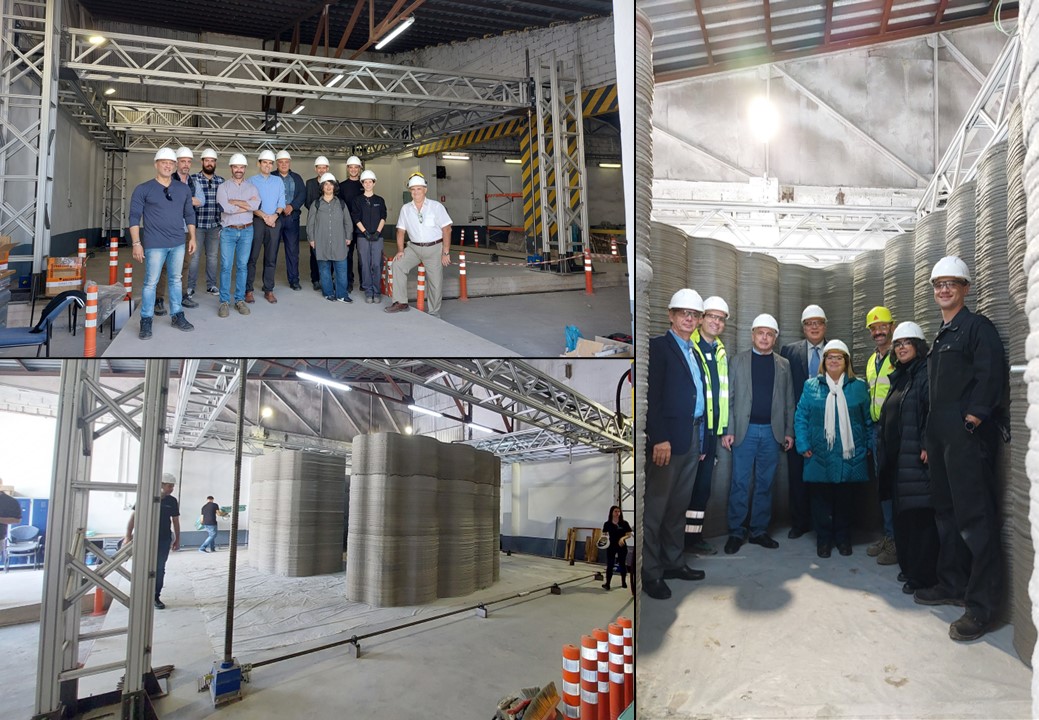
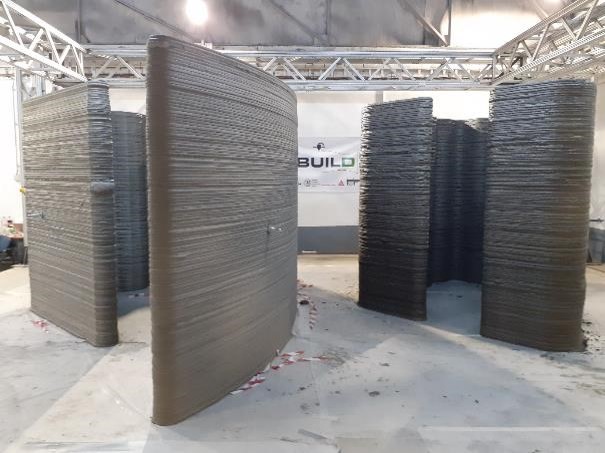
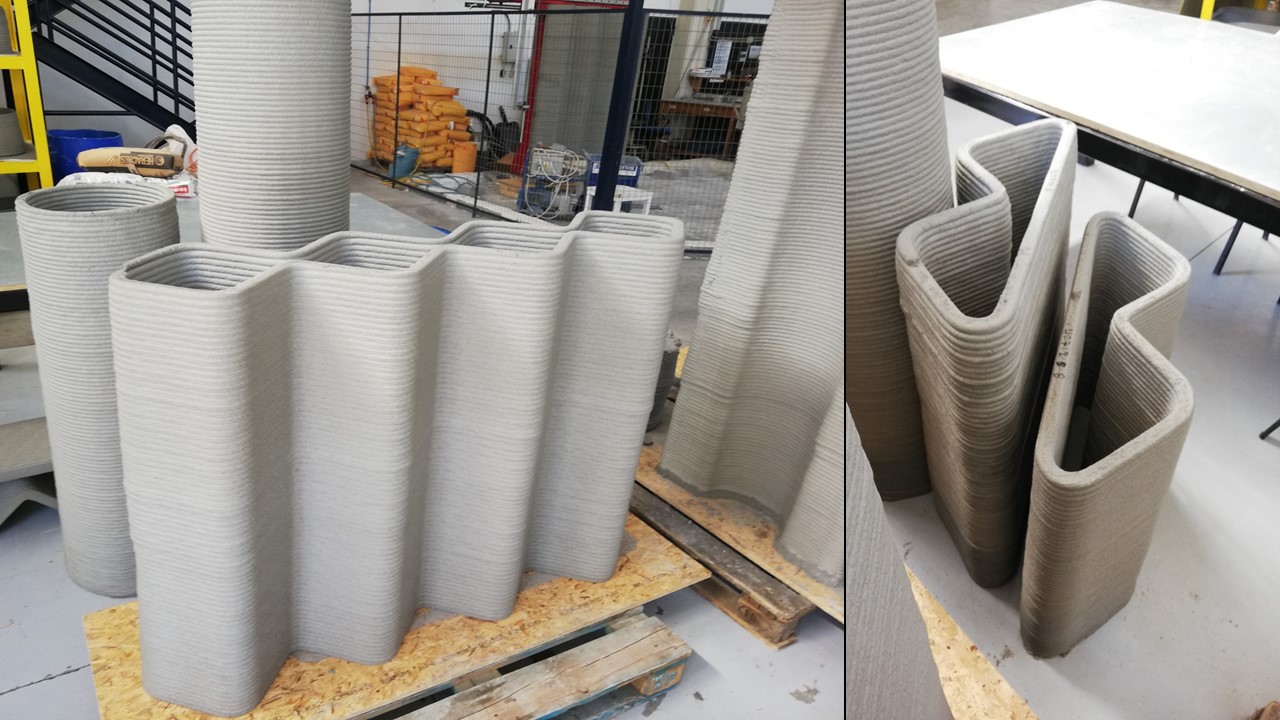
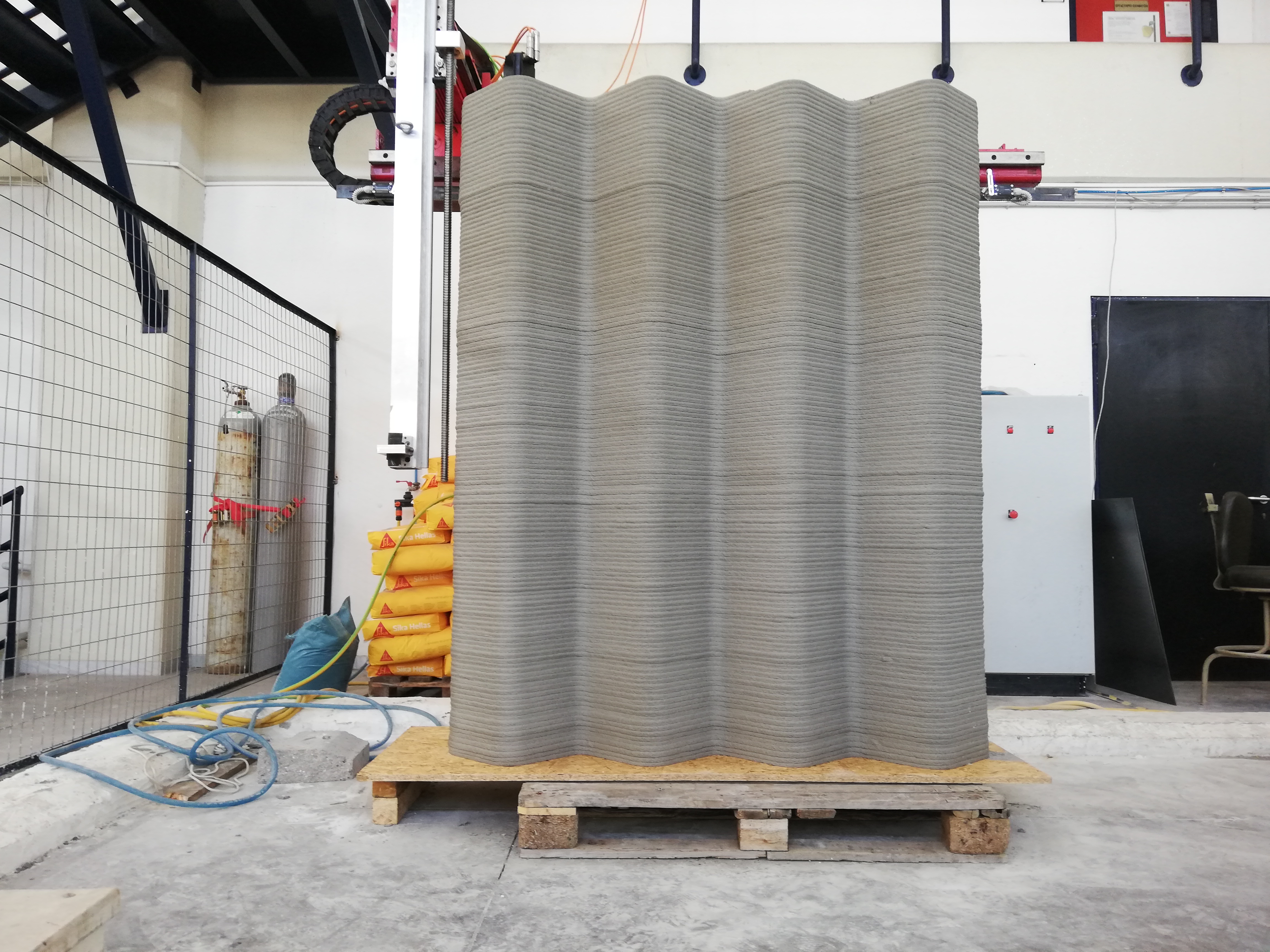
The project advanced through a sequence of prototypes. At NTUA, a half-scale 3D printer enabled the team to optimize printing parameters, validate deposition behavior and evaluate the mechanical performance of printed mortar under realistic conditions. The half-scale printer remains part of MD-Lab’s research infrastructure, with the ability to build structures of approximately 2 m x 2 m in plan and up to 3 m in height.
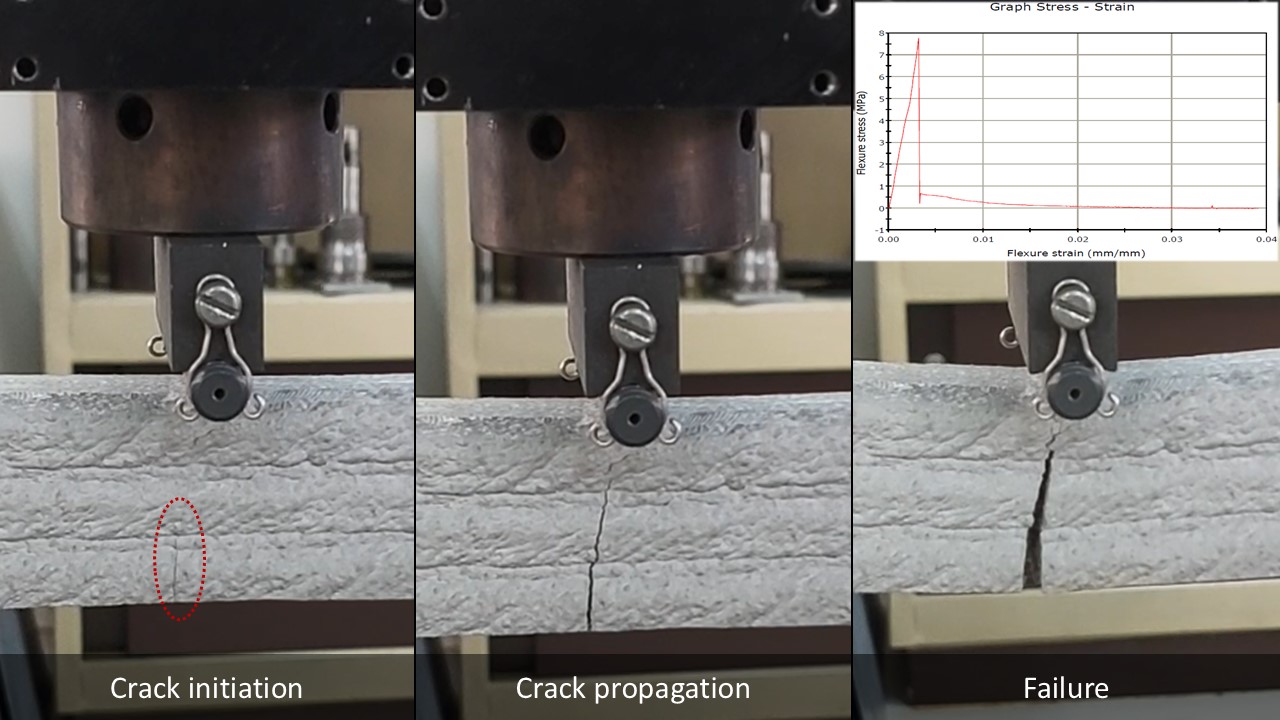
Experimental testing connected the construction process to engineering performance. Printed material specimens and structural components were investigated so that the final demonstrator would be supported by data, not only by successful fabrication.
Full-Scale Demonstration
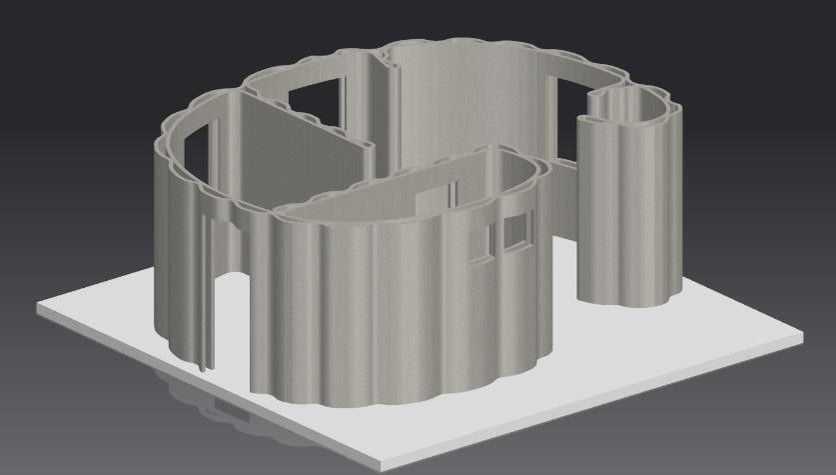
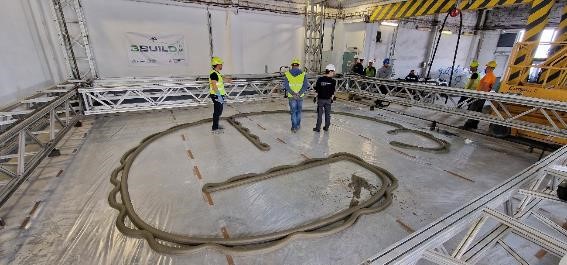
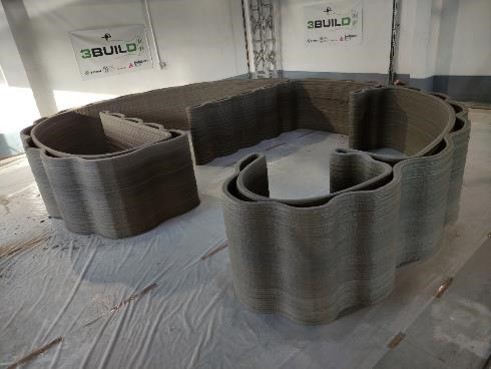
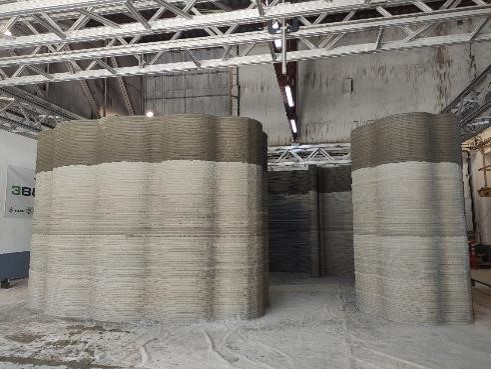
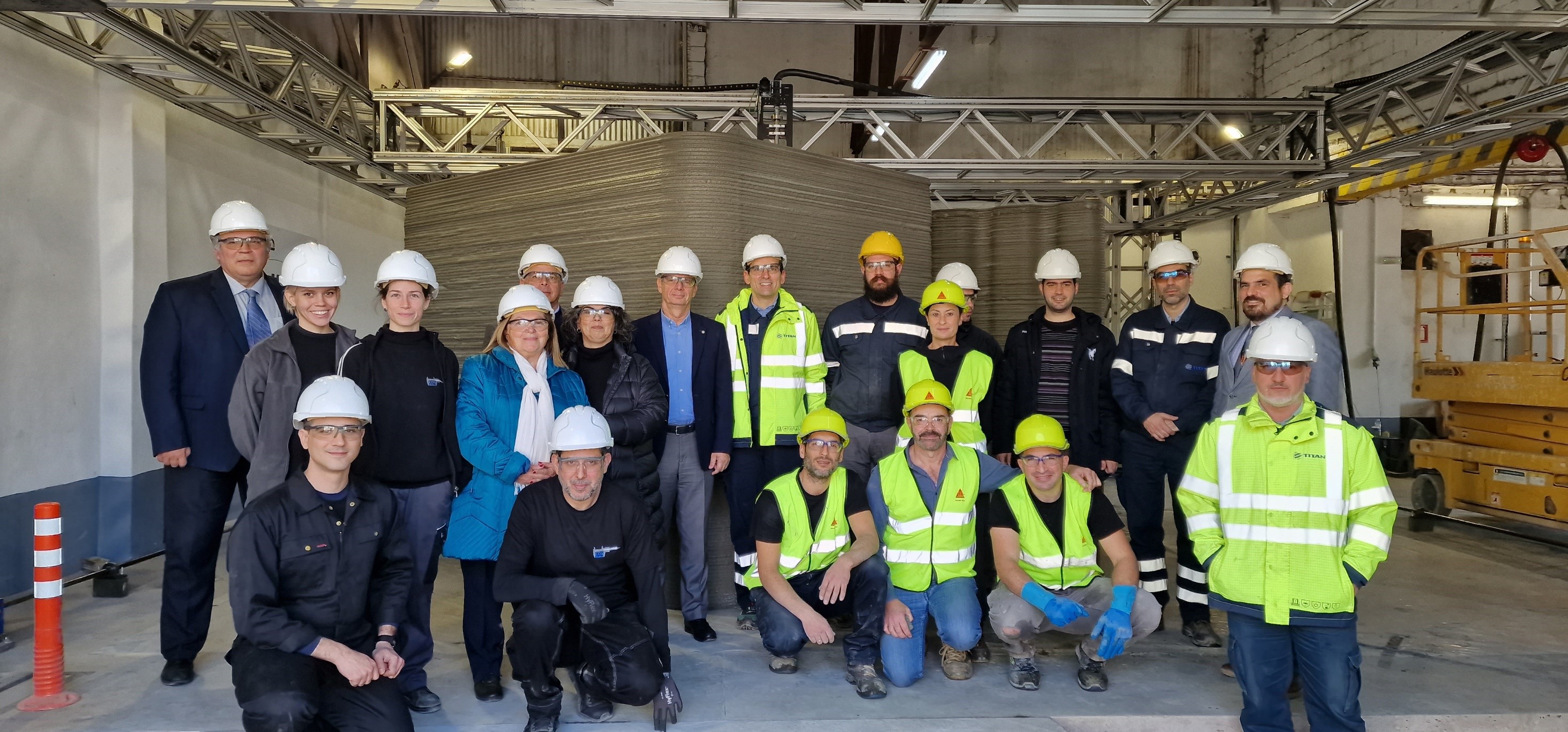
The final printer was constructed and installed at TITAN’s Elefsina Plant, where it produced the first 3D-printed house in Greece. The printed structure reached a height of 2.6 m, with a total printing time of 22 hours distributed over three days. The demonstrator showed that the 3BUILD system could move from design intent to an industrial construction environment while preserving the precision and continuity required by robotic mortar deposition.