Loss Factor Characterization
Loss Factor Characterization of Composite Aluminium Plates
A controlled experimental characterization project for ELVAL COLOUR S.A., focused on the damping behavior of composite aluminium plates. MD-Lab developed the mechanical test setup, manufactured a dedicated auxiliary aluminium plate and fixture system, and carried out vibration measurements according to DIN EN ISO 6721-1 and -3. Detailed numerical results and material comparisons are omitted from this public summary due to confidentiality.
Purpose and Impact
Composite aluminium plates are often selected for applications where weight, stiffness, surface quality, acoustic comfort, and dynamic response must be balanced. For ELVAL COLOUR, the project provided a controlled way to evaluate damping behavior under a standardized laboratory procedure.
The value of the work was not only in the measurement campaign, but in the creation of a reliable test environment around a demanding material-characterization problem. MD-Lab translated the standard into a practical setup, controlled the excitation path, and produced an internal technical dataset for ELVAL COLOUR. The confidential numerical results are intentionally not published here.
MD-Lab’s Contribution
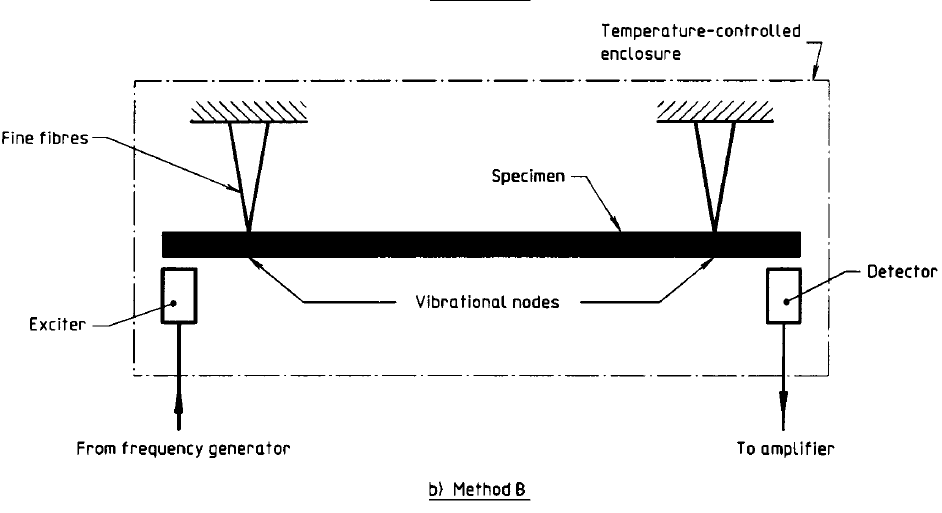
MD-Lab designed and executed the experimental workflow required by DIN EN ISO 6721-1 and DIN EN ISO 6721-3. The laboratory configured the forced-vibration setup, performed frequency-domain scans, refined measurements around the dominant dynamic response regions, and processed velocity signals in the time and frequency domains.
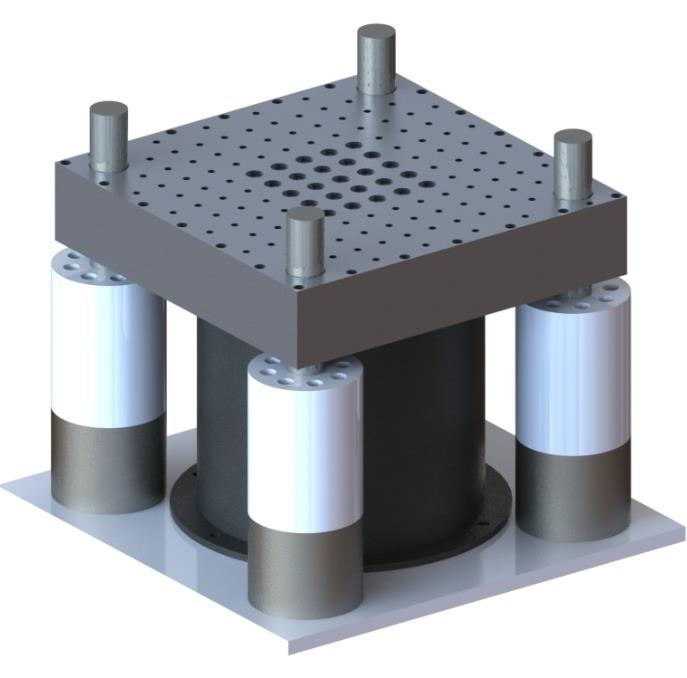
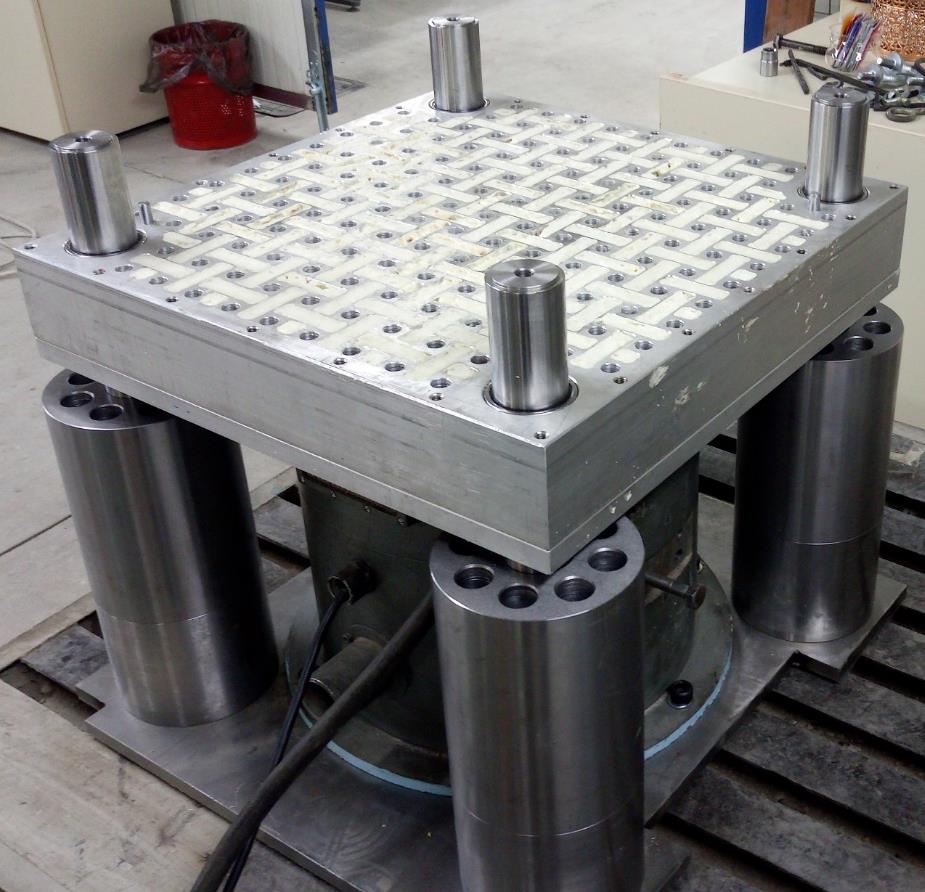
A central part of the contribution was the mechanical design and manufacture of the support system. The team developed an auxiliary aluminium plate and guide architecture that could transfer vibration in a controlled axial direction while reducing unwanted motion in other directions. This made the measurement chain more stable and helped isolate the material response from fixture behavior.
Manufactured Plate and Fixture System
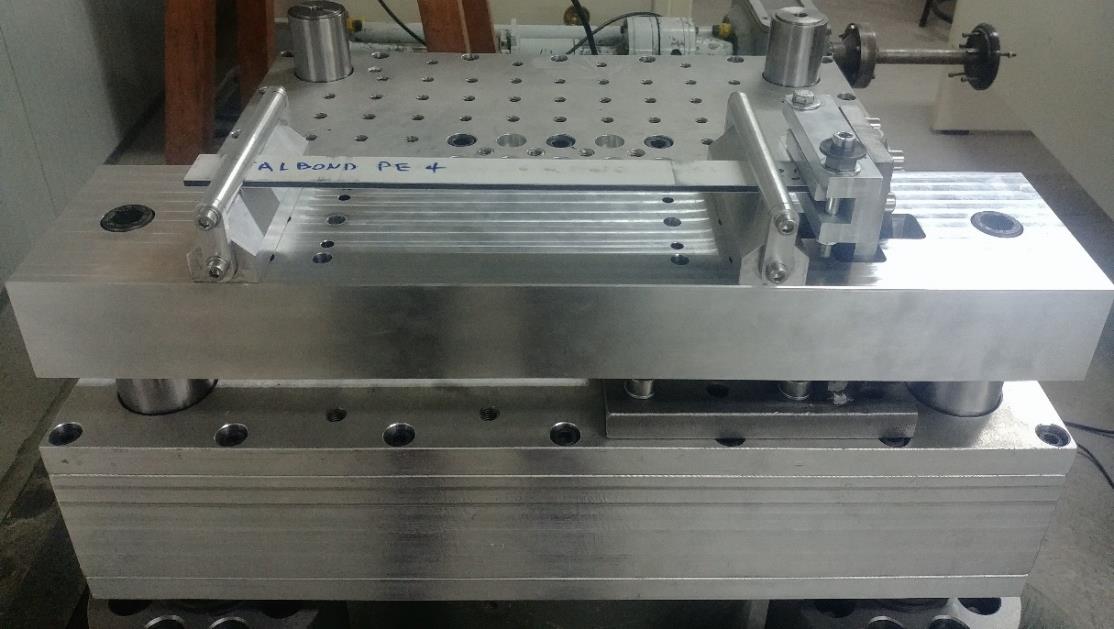
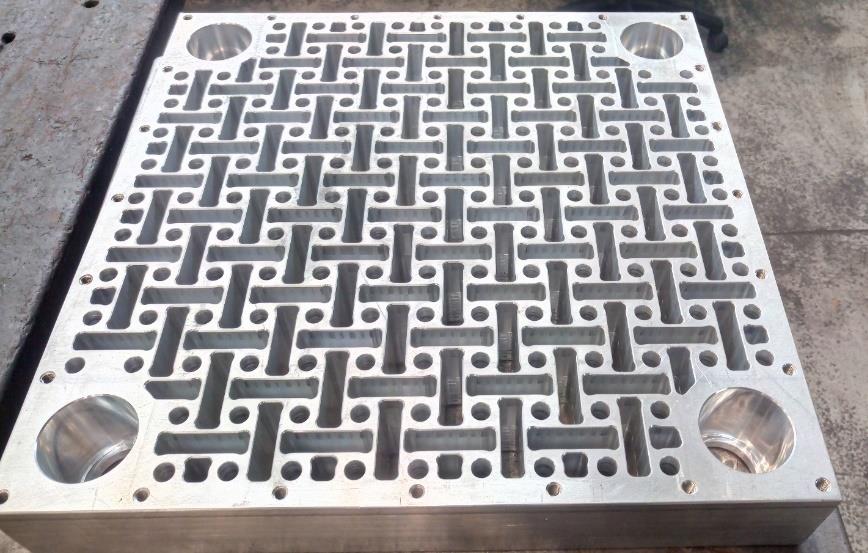
The auxiliary plate was a key engineering deliverable of the project. It was designed as a stiff, repeatable mechanical interface between the electromagnetic vibrator and the sample fixture. Its geometry, hole pattern, guide interfaces, and reduced-mass construction were selected so that the imposed motion would remain as clean and directional as possible.
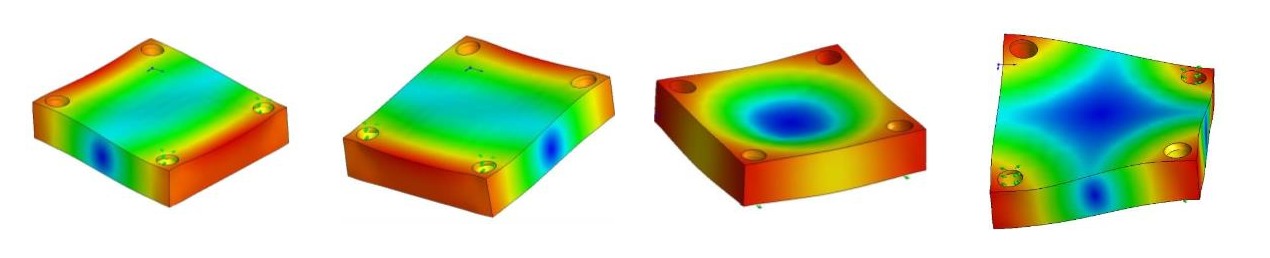
To keep the fixture practical without sacrificing stiffness, the manufactured plate incorporated lightened regions filled with polyurethane. Together with the four linear guides, the plate helped suppress off-axis vibration and improved repeatability during the measurement campaign. Finite element checks were used during development to keep fixture resonances away from the useful test range.
Testing Method and Equipment
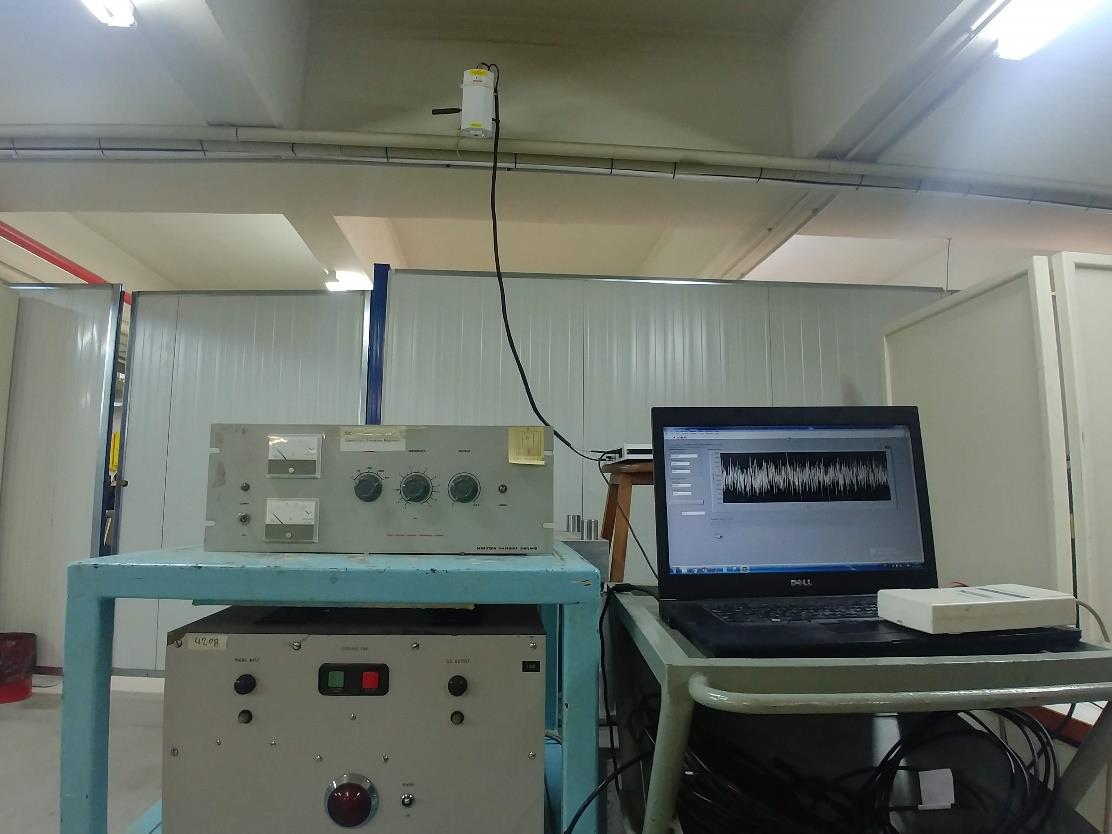
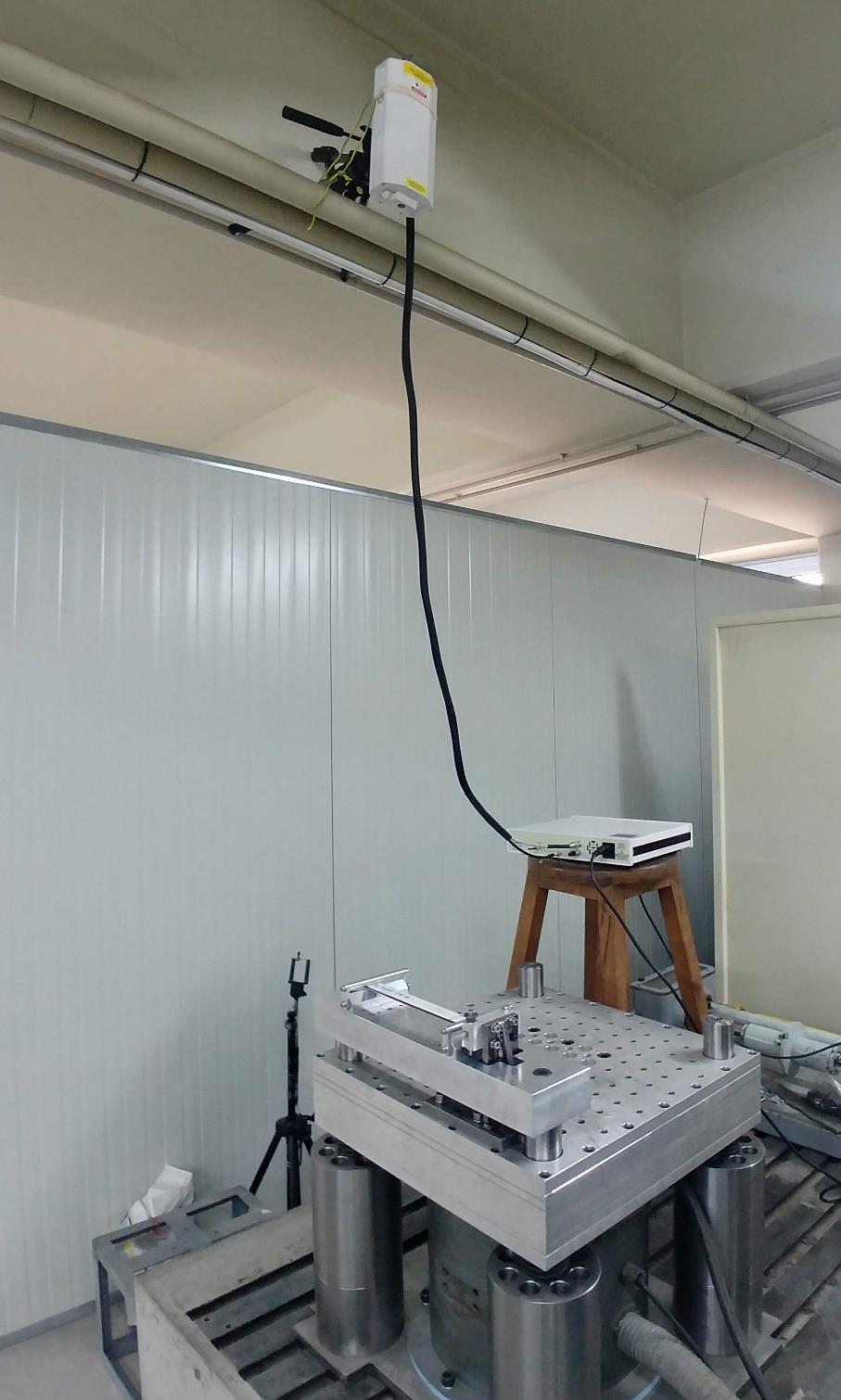
The measurement procedure followed the resonance-curve approach of DIN EN ISO 6721. Forced vibration was applied under controlled conditions, while the vibration response was captured without contact using a laser Doppler vibrometer. The data-acquisition chain and LabVIEW interface supported repeatable scans, signal capture, and post-processing.
The equipment stack combined a DERRITRON VP 25M electromagnetic vibrator, a VibroMet-500V laser Doppler vibrometer, an NI USB data-acquisition card, and an in-house LabVIEW interface. The custom fixture system connected these instruments into a coherent test platform rather than a collection of separate devices.