Elements of Machinery I

No posts

  • Introduction to the mathematical modelling of Machine Elements (ME) and assemblies.
  • Construction materials (CM) and their selection process.
  • Types of stresses and failures in SM.
  • The concepts of design for life and fail safe.
  • Static and dynamic stress calculation. Woehler, Soderberg and Goodman-Smith diagrams for the calculation of dynamic strength.
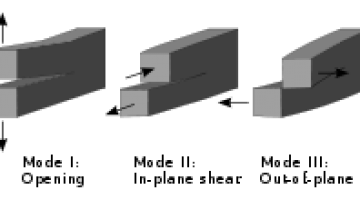
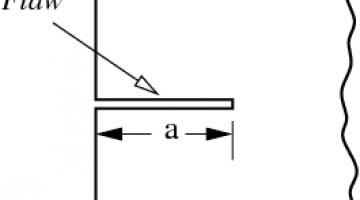
  • Elements of fracture mechanics and Paris diagrams.
  • Stress intensity and stress concentration coefficients in SM. Cumulative effect of fatigue and Palmgren-Miner rule. Strength of cross-sections under composite stress.
  • Axles and spindles.
  • Calculation of adhesive and adherent joints.
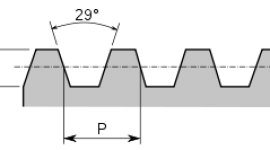
  • Mechanics and calculation of threads and threaded joints.
  • Spindle-to-cup connections (wedges, multi-wedges, friction connections, tight fittings).
  • Links, clutches (form-friction) and brakes.
  • Bearings with rolling elements and dry friction bearings. Rotary mechanical blockages.
  • Engine springs and tyres. Wire ropes and linear – surface flexible SM and its applications.
  • Protective coatings SM.

The assessment of the students in the course of Elements of Machinery I is carried out in the following ways:

1. Exam [d]

It is conducted during the period of the regular or repeat examinations announced by the School and is compulsory for everyone in order to pass the course. It usually lasts between one and one and a half hours. If a person fails to attend it, he/she receives a course grade of dash (-) regardless of whether he/she has handed in a subject and whether he/she has participated in the midterm exam receiving any grade. The exam grade is not retained for the next time if it is promotional but the overall grade is non-promotional (e.g. due to low scores in laboratory exercises).

2. Intermediate examination [P]

It is conducted once during the semester and lasts approximately one hour. It is optional and students are tested on the material taught up to that point. The grade of the midterm examination can only be carried forward to the re-examination of the same academic year but not to the next academic year.

3. Laboratory exercises [E]

They are optional and concern the design of machine and construction elements, their calculation in fatigue, as well as the construction of a prototype to scale, the computational and laboratory testing of the prototype and the evaluation/assessment of the results. Students who wish to participate must declare it in writing, presenting proof of identification in a special form and once they sign, the weightage of their marks in them is compulsorily calculated in the final mark of the course, both for the regular and the re-examination . Depending on the number of participants, the lecturer will define working groups, which will deliver a common report of results and will be examined orally. During the oral examination, all members of the group are assumed to know all the individual elements of the group, regardless of whether they have divided the work internally. The grade for laboratory exercises is not carried forward to the next academic year. If a student fails to attend the oral examination of any of the laboratory exercises, or decides to withdraw from all or some of them, he/she will receive a grade of zero for the respective exercises.

4. Computational Theme [T]

It is optional, must be registered on specific dates and more information is announced on the workshop website.

Final Score

The final grade of the course [B] is determined by the grade of the written assignments [D] and the laboratory exercises [E] in the following ways:

[C] = max( [D], 0.8x[D]+0.2x[P] )

a’ way:
[B] = 0.3x[I]+0.3x[E]+0.4x[C] if the student has indicated that he/she will do the laboratory exercise and the computational question.

way b’:
[B] = 0.3x[I]+0.7x[C] if the student has stated that he/she will work on the computational topic.

way c’:
[B] = 0.3x[E]+0.7x[C] if the student has stated that he/she will do the laboratory exercise.

way d’:
[B] = [C] in case the student has not declared either the laboratory exercise or the computational topic

Dates for the midterm examination, the deadline for submitting lab registrations, and the delivery and oral examination will be announced during the semester in the course and on the course website.

Course Notes
  • Makris P., Elements of Machinery I, E.M.P. Notes.
Featured Program (Eudoxos)
  • Papadopoulos Ch., Machine Elements – Introduction to Machine Design, Volume A’, Giola Publications
Greek relevant bibliography
  • Augustine I., Elements of Machinery, G. Fountas, 2004
  • Vassiliou D., Vlatta K., Elements of Machinery, G. Fountas, 2000
  • Graikusis R., Elements of Machinery, S. Yahoudis & CO., 1983
  • Katsikis G., Machine Elements, Simeon, 2010
  • Stergios I., Stergios K., Elements of Machines, Synchroni Ekdotiki, 2003
  • Friedakis M., Elements of Machinery, Synchronic Publishing, 2004
  • Niemann G., Elements of Machinery, G. Fountas, 2005
Foreign-language relevant bibliography
  • Ashby M.F., Materials Selection in Mechanical Design, 4th Edition, Elsevier, 2011
  • Avallone E., Baumeister T., Sadegh A., Marks’ Standard Handbook for Mechanical Engineers, 11th Edition, McGraw-Hill, 2006
  • Brown T.H., Marks’ Calculations for Machine Design, (e-book), Adobe Digital Editions, 2005
  • Budynas R.G., Nisbett K., Shigley’s Mechanical Engineering Design, 9th Edition, McGraw-Hill, 2011
  • Collins J.A., Busby H., Staab G., Mechanical Design of Machine Elements and Machines: A Failure Prevention Perspective, 2nd Edition, J. Wiley & Sons, 2010
  • Hicks T., Handbook of Mechanical Engineering Calculations, 2nd Edition, (e-book), Adobe Digital Editions, 2006
  • Hicks T., Mechanical Engineering Formulas Pocket Guide, 1st Edition, McGraw-Hill, 2003
  • Juvinall R.C., Marshek K.M., Fundamentals of Machine Component Design, 4th Edition, John Wiley & Sons, 2006
  • Mott R.L., Machine Elements in Mechanical Design, 4th Edition
  • Norton R.L., Machine Design: An Integrated Approach, 2nd Edition, Prentice Hall
  • Parmley R., Machine Devices and Components Illustrated Sourcebook, 1st Edition, Mc-Graw-Hill, 2005
  • Rothbart H., Brown T., Mechanical Design Handbook, 2nd Edition, (e-book), Adobe Digital Editions, 2006
  • Shigley J., Mischke C., Brown T., Standard Handbook of Machine Design, 3rd Edition, McGraw-Hill, 2004
Educational material

MATERIAL
Visualizing Mechanics: Rotating Reference Frames – Merry-Go-Round
Visualization of the Coriolis and centrifugal forces

types of diamonds

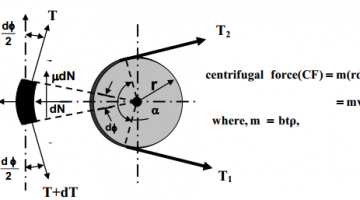
belt calculation

Dodge CVT Animation
Continuously Variable Transaxle (CVT) Operation
How Clutches Work
How a clutch works – internals of transmission and clutch assembly
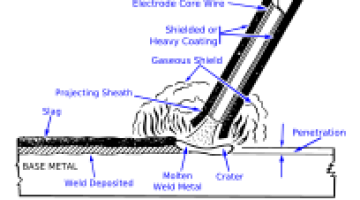
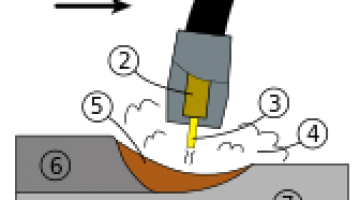
How Arc Welding Works
Inertia Friction Welding Demonstration – Manufacturing Technology, Inc.
MMT Series Threading Tools from Mitsubishi Materials
Thrufeed Thread Rolling

Laboratory Exercise 2014-2015

DESIGN, CALCULATION AND EXPERIMENTAL TESTING OF MACHINE ELEMENTS

Exercise Objective

The design of machine components (MC), their calculation under dynamic stress and stress control in a scale model with the help of photoelasticity.

academic year 2018-2019

semester computational topic

The scope of the Computational Theme includes the following:

  • The selection by the working group of a mechanical construction/mechanism from the field of industry or construction – products in general
  • The preparation of technical specifications based on literature, experience or practice
  • The creation, examination and evaluation of alternative construction solutions
  • The design/printing of the preferred manufacturing solution for the selected structure/mechanism in the form of a complete functional sketch
  • The analysis of the loads acting on the structure based on the technical specifications
  • The choice of construction materials
  • The control of the structure in terms of its static and endurance strength
  • The detailed design of the sub-assemblies that make up the structure and its assemblies/sub-assemblies.

For the execution of the above tasks, the knowledge that students receive from the course should be applied in combination with the basic knowledge of physics (engineering in particular), mathematics, programming, electronic machines and mechanical design that have been taught. Students will prepare a Technical Report which they will hand in at the end of the semester for evaluation by the teacher and a short presentation on a computer which they will make in front of an audience and then answer questions from the teacher.

The groups of students participating in the Theme will have the opportunity to attend lectures during class time during the semester, during which they will be able to ask the teacher questions and discuss options and concerns in class. In addition, on Mondays and Thursdays (3:00 to 5:00 p.m.) they will have the opportunity to come to the SM Lab (Building M, Ground Floor) to discuss their design choices with the instructor and Lab staff, exchange ideas with each other, and see SM and structures in person. Due to space constraints and lack of lab staff, it is suggested that team members coordinate with each other and the Lab staff so that there are no more than 4 teams at a time.

Each team is invited to submit a hard copy of the Technical Report at a time to be determined by the instructor immediately after the end of the winter semester examinations and at a time to be set by the instructor during the semester. A few days later, at a time also to be determined, the teams will prepare a presentation of their work in electronic format and present it during the oral examination of the Computational Topic. On that day they will provide the instructor with a CD containing the final paper with its appendices, any CAD and computer files created and presented in the paper, and the PowerPoint type file of the final presentation. The files will be in their original format (e.g. Word, not pdf) and will not be locked and password protected for review and evaluation. Topics will not be corrected and will not be returned.

Those who wish may form four/six-person groups of their choice from students who are registered and owe the course. Groups will be declared by sending an email from a member of the group to the instructor listing the members of the group and mandatory notification to their accounts. Student teams may submit registrations until the date set by the instructor in class, after which no registration for participation will be accepted.

Each group should submit a proposal to the teacher for approval within one week of its formation. The submission is to be made to the instructor’s email address and must have attached a file in MS Word written in Calibri 11pts font that includes a brief (up to 300 words) description of the mechanical structure to be studied, and is accompanied by a declarative photograph or solid model or drawing or schematic. The tutor, if he/she approves the proposal and ensures that no similar proposal has been submitted, gives by e-mail his/her approval for the group to proceed with the study and registers the subject in favour of the group. Subjects are registered in the chronological order in which they are submitted.

The Computational Topic counts for 40% of the course grade. The grade is individual and results both from the score of the common Technical Report and from the oral presentation – evaluation of the student, who, after informing the lecturer about the part of the project he/she has worked on (if the workload has been divided internally in the group), presents his/her work and is asked about it. The oral presentation should not exceed 15min in total per group.

The Technical Report will be written on a computer and will be printed on white A4 paper with printing on both sides of each sheet in black ink (except for colour photographs). All pages will be numbered except for the cover page. If the annexes contain written text, the pages corresponding to the annexes will also be numbered separately.

The font will be Calibri 11pts and all margins will be 1cm. Paragraphs will not be left indented, words will befully justified with single-spacing and paragraph spacing 6pts. Page numbering will be done on the footer and the header will have the group no. and subject title. Only the cover page is excluded from the standardization of the font size, on which the title of the Topic, the a/r of the group, the names of the members of the group and their codes in the School, the academic year and any other information – indicative photo that the students consider necessary. Binding will be in laminated plain envelopes in a colour of the students’ choice.

The structure of the Technical Report and the maximum number of pages (except for the Annexes where there is no maximum page limit) are presented below:

1. Summary

Maximum length 350 words

It includes a summary of the subject matter and working method and a brief report of its main results.

2. Abstract (in English)

Maximum length 350 words

Contains a brief account of the scope and the work performed and a short presentation of the most important technical findings

3. Description of the mechanical construction/mechanism. Preparation of technical specifications.

Maximum length 5 pages

It contains a description of the operation of the mechanism/construction and the application in which it is used. The description shall be given in the form of diagrams – drawings as appropriate to clearly show the function and/or integration into the wider mechanism or system to which it belongs. The figures / diagrams necessary shall be placed in the Annex to the Report. Based on literature and/or experience, technical specifications for construction and operation shall be prepared and presented in detail in an appropriate table. Cost estimation and analysis, material availability, as well as feasibility or market penetration study, as well as specific study of the product’s external appearance and aesthetics are not required nor will be evaluated within the scope of the work.

4. Evaluation of alternative construction solutions, brainstorming and selection of the final solution

Maximum length 6 pages

It contains the main alternatives proposed and critically evaluates them in terms of the relative advantages and disadvantages they offer. It also contains the results of the quick brainstorming process to select the appropriate solution. The solutions are given in schematic form and accompanied, if necessary, by the quick calculations devised during their formulation. If these sketches are detailed and there is insufficient space available then they are included in Appendix B. This paragraph shall include a list of the comparison/evaluation criteria, a comparative evaluation of the proposed solutions and a reasoned choice of the most appropriate one.

5. Analysis/determination of construction stresses and design.

Maximum length 25 pages

It includes the placement of external loads and stress/strain analysis (if required). The loads applied to the structure are either taken from regulations – literature or estimated directly from experience or by other indirect calculation. The construction is drawn / mapped (by dimensional measurements derived from existing drawings or literature or by direct measurement on a physical prototype) and recorded on a series of engineering drawings (components, sub-assemblies and assemblies) which are placed in Annex A of the report. The analysis of the loads is 2-D or 3-D where required and, in terms of their variation over time, static or dynamic – copotectic as appropriate. In each SM the dangerous cross-sections are identified and checked for their strength (permanent or not according to the specifications). Kinematic/dynamic analyses are included in this section. The design includes full dimensioning of all subsystems and design of all non-standard SMs on the necessary faces and sections in accordance with international (ISO) engineering design regulations.

6. Conclusions – Comments

Maximum length 6 pages

The extent to which the requirements set out in paragraph 3 in detail are met shall be assessed. A critical review of the previous paragraphs is made, errors are identified, improvements are suggested and recommendations for further research – study are made.

7. Bibliography

Maximum length 1 page

The bibliographical references used (books, manuals, scientific and technical texts, standards, regulations, factory catalogues, etc.) shall be indicated.

Annex A

File of construction drawings

It shall include the engineering drawings referred to in the above paragraphs with all necessary information. If ready-made memoranda are used then all fields in the memorandum should be completed and not simply take up unnecessary useful space. The drawings need not be printed to scale but must be clearly printed on the necessary faces and sections on either A4 or A3 folded to A4 dimensions.

Annex B

Computer programs. Equations. Miscellaneous data

If computer programs are written the program lists should be listed in this Annex. Also, if any equations or systems of equations involve many steps (not trivial) and cannot be included in the given maximum page length, they may be included here. The same applies to simulations and analyses (e.g. in Matlab, FORTRAN, MathCAD, Solidworks, etc.). Finally, anything else that arises that does not fit in the main paragraphs of the Report and is deemed appropriate to include can be included in this Appendix B. It is not recommended that pages be filled with copies of parts lists and images from the internet etc., but it is sufficient to quote the specific paragraph relating to the specific material/SM and only if deemed necessary.

student groups

Computational Theme Groups SM I
for the Academic Year 2017-2018

educational material

Educational material on the computing theme 2014-2025

pronunciation – instructions

Instructions for the computational theme
2017-2018

CodeFinal Grade
211400410
21140139
21140589
21120878
21140018
21140108
21140198
21140548
21140758
21142478
21100467
21100947
21106347
21106467
21110967
21130177
21140027
21140037
21140117
21140127
21140147
21140157
21140207
21140287
21140347
21140357
21140367
21140737
21140857
21140987
21141097
21142577
21142697
21143247
21143397
21143617
21143847
21143987
21144047
21144147
21146047
21040716
21077176
21080236
21090606
21090806
21096086
21114136
21116046
21120206
21140056
21140096
21140326
21140336
21140406
21140426
21140466
21140686
21140706
21140726
21140866
21141026
21142556
21142566
21142616
21142736
21142796
21142806
21142916
21143056
21143136
21143256
21143516
21143896
21144186
21145506
21146006
21146016
21067405
21070505
21085015
21086425
21090475
21096385
21096585
21096635
21097025
21097285
21100145
21100365
21100445
21100495
21100705
21100765
21100835
21100865
21100925
21106235
21106405
21106545
21106605
21110415
21110465
21110485
21110575
21110725
21110755
21116035
21116095
21116105
21116125
21116165
21116305
21116335
21116435
21116805
21120075
21120085
21120125
21120145
21120305
21120355
21120575
21120595
21120645
21120825
21120965
21126215
21130575
21130885
21135035
21135225
21139075
21140215
21140235
21140255
21140315
21140415
21140495
21140565
21140625
21140665
21140745
21140775
21140925
21140975
21141015
21141045
21141065
21141125
21142435
21142715
21143015
21143075
21143145
21143195
21143325
21143425
21143535
21143715
21143725
21143765
21143795
21146025
21147105
21067053
21070363
21096953
21106563
21106763
21135043
21135203
21140173
21140393
21140453
21140503
21140533
21140573
21140693
21140893
21140903
21140933
21140943
21140953
21141033
21142443
21142663
21142763
21143083
21143273
21143333
21143383
21143503
21143743
21146033
21146313
21146523
21050932
21066712
21070162
21076892
21080522
21086782
21090642
21090952
21096222
21096402
21100092
21100302
21100342
21104012
21106332
21106502
21106632
21106792
21107262
21110362
21110732
21110812
21116142
21116312
21116622
21120262
21120482
21120502
21120612
21120652
21120732
21120762
21120772
21120842
21126192
21135132
21140182
21140302
21140432
21140522
21140802
21140822
21140872
21140882
21142422
21142602
21142722
21142842
21142862
21142972
21143032
21143062
21143112
21143462
21143602
21143692
21143882
21143972
21146542
21096731
21097081
21100741
21106881
21120831
21120931
21140511
21143201
21143291
21148011
20980690
21106550
21116250
21120090
21134010
21134030
21142620
21143450
21143660
Out of condition
21096542